
 简体中文
简体中文
 English
 Français
 日本語
日本語
 Deutsch
0086-574-88881358
0086-574-88473625

RP02-Mini CO2 Regulator
Specifically designed for beer dispensing systems using 2L, 4L, and 5L mini-kegs and compatible with a variety of small gas cartridges. Its versatile design also makes it suitable for a wide range of other low-pressure and low-flow applications.
Compact and lightweight for easy portability and handling.
Leak-free cartridge puncture technology for maximum gas utilization and user safety.
Stable working pressure and flow rate for consistent pouring and minimal foam.
Multiple configuration options, including adjustable output, an integrated pressure gauge, and cartridge holder accessories.
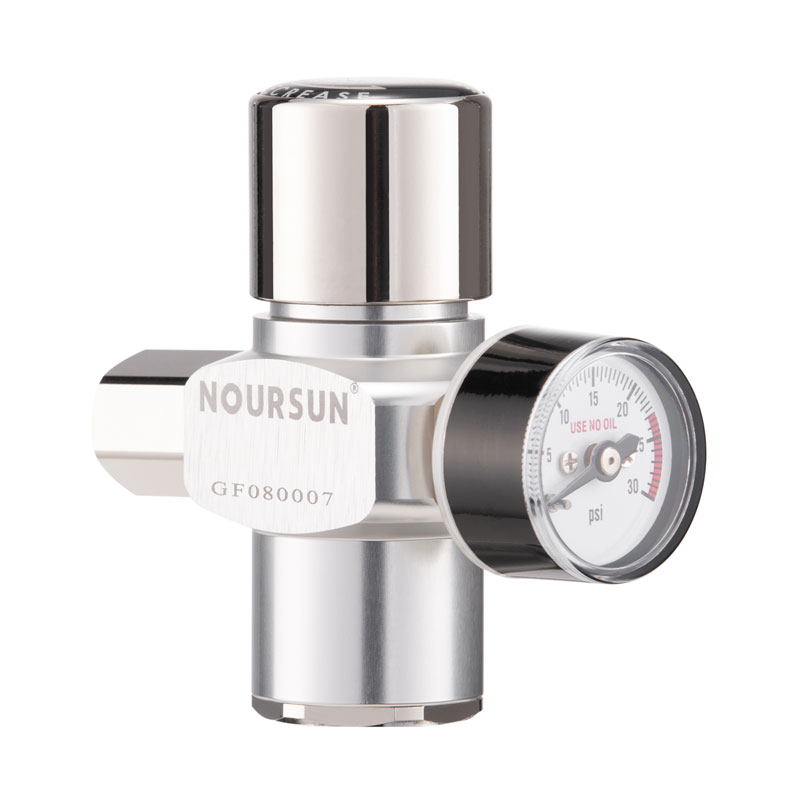
| Material | ▲ | Aluminum | ||
| Medium | N2、CO2 | |||
| Operating Temperature | -5℃~43℃ | |||
| Max. Working Pressure | 12Mpa | |||
| Proof Pressure | 30Mpa | |||
| Output Pressure | ▲ | 0.07~0.4Mpa | ||
| Output Pressure Accuracy | ±0.03MPa | |||
| Pressure Indication | Axial pressure gauge | |||
| Indication Accuracy | Class IV (EN 837-1) | |||
| Inlet Port | ▲ | 3/8-24UNF / 5/8-18UNF | ||
| Outlet Port | ▲ | M8*0.75 / G1/8 | ||
| Net Weight | 113g | |||
| (▲ marked parts are standard customizable spec.) | ||||
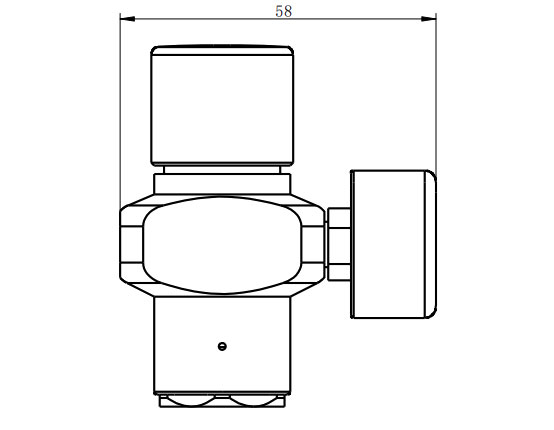
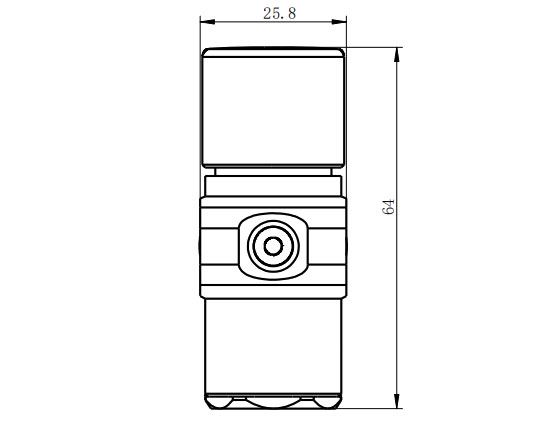
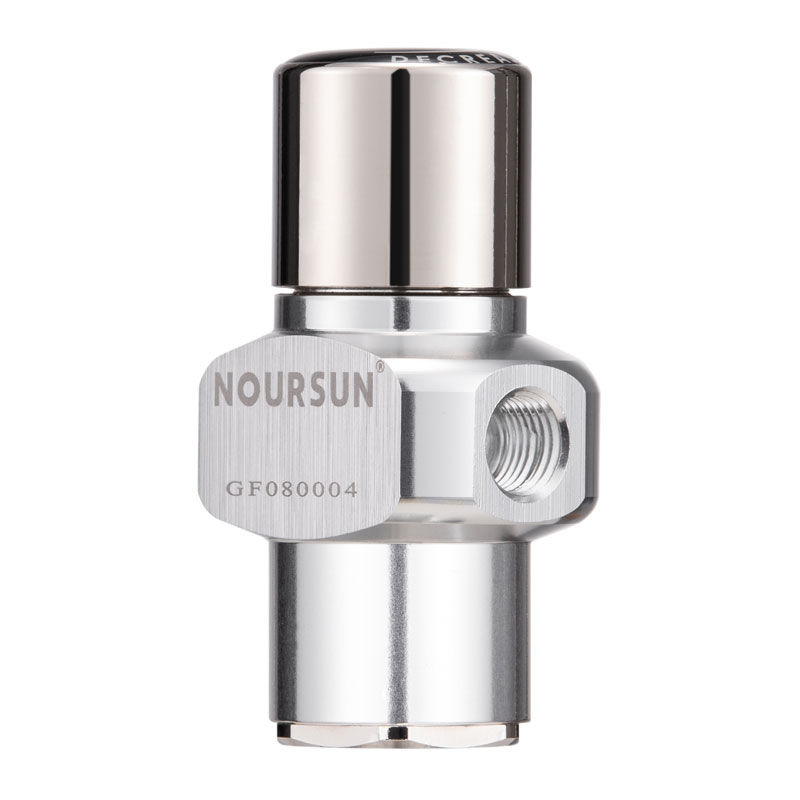
| Material | ▲ | Aluminum | ||
| Medium | N2、CO2 | |||
| Operating Temperature | -5℃~43℃ | |||
| Max. Working Pressure | 12Mpa | |||
| Proof Pressure | 30Mpa | |||
| Output Pressure | ▲ | 0.07~0.4Mpa | ||
| Output Pressure Accuracy | ±0.03MPa | |||
| Pressure Indication | Handwheel indicator dial | |||
| Inlet Port | ▲ | 3/8-24UNF / 5/8-18UNF | ||
| Outlet Port | ▲ | M8*0.75 / G1/8 | ||
| Explosion-proof Plate Pressure | 20±2Mpa | |||
| Net Weight | 98g | |||
| (▲ marked parts are standard customizable spec.) | ||||
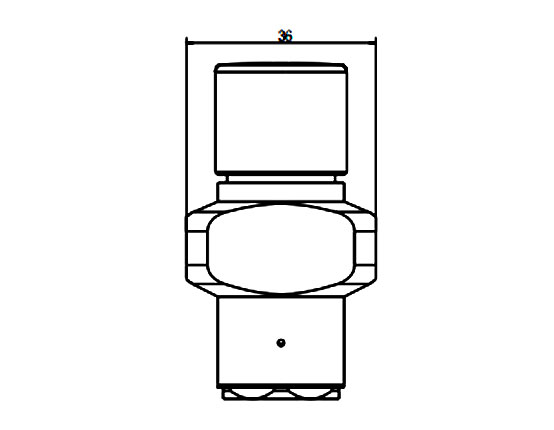
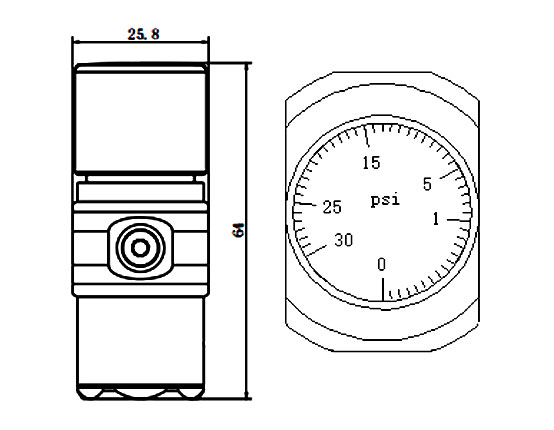
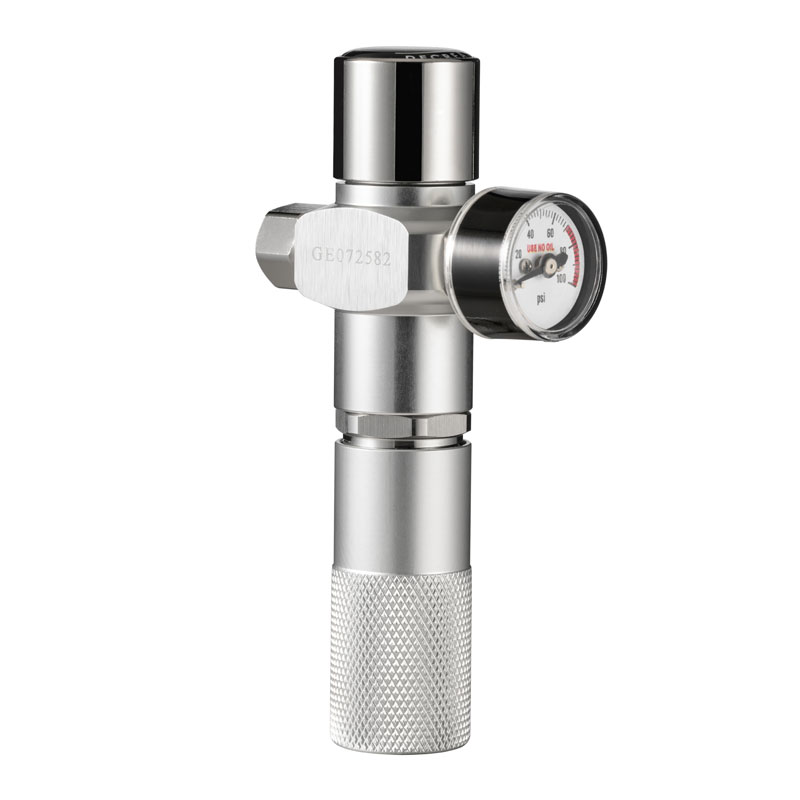
| Material | ▲ | Aluminum | ||
| Medium | N2、CO2 | |||
| Operating Temperature | -5℃~43℃ | |||
| Max. Working Pressure | 12Mpa | |||
| Proof Pressure | 30Mpa | |||
| Output Pressure | ▲ | 0.07~0.4Mpa | ||
| Output Pressure Accuracy | ±0.03MPa | |||
| Pressure Indication | Axial pressure gauge | |||
| Indication Accuracy | Class Ⅳ (EN 837-1) | |||
| Inlet Port | ▲ | 8g threadless gas cylinder | ||
| Outlet Port | ▲ | M8*0.75 / G1/8 | ||
| Net Weight | 146g | |||
| (▲ marked parts are standard customizable spec.) | ||||
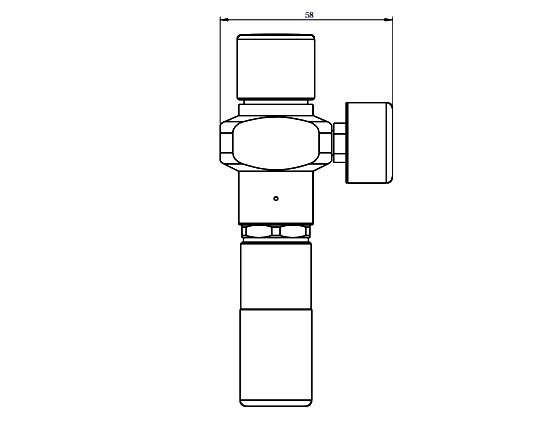
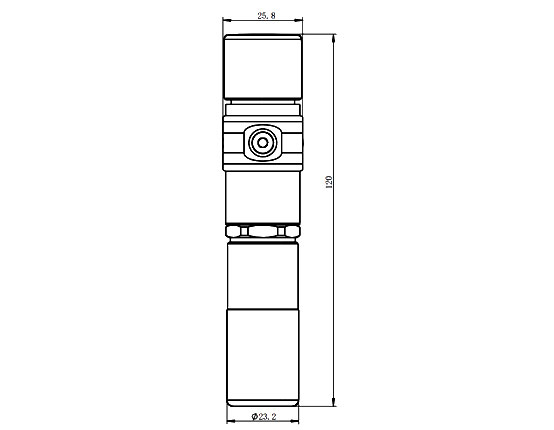
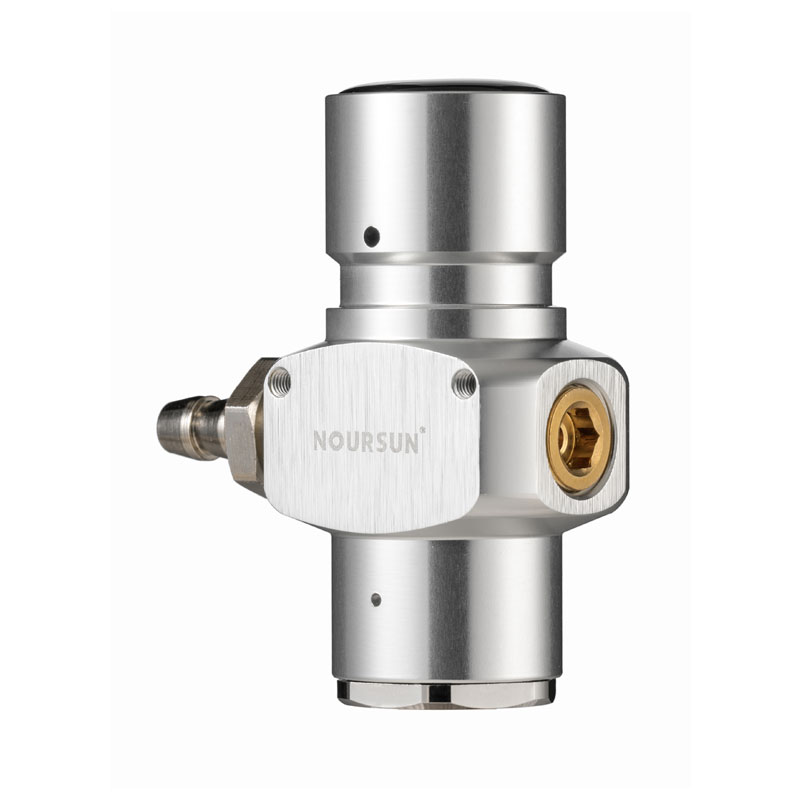
| Material | ▲ | Aluminum | ||
| Medium | N2、CO2 | |||
| Operating Temperature | -5℃~43℃ | |||
| Max.Working Pressure | 12Mpa | |||
| Proof Pressure | 30Mpa | |||
| Output Pressure | ▲ | 0.07Mpa≤Preset pressure≤0.4Mpa | ||
| Output Pressure Accuracy | ±0.03MPa | |||
| Inlet Port | ▲ | 3/8-24UNF / 5/8-18UNF | ||
| Outlet Port | ▲ | M8*0.75 / G1/8 | ||
| Explosion-proof Plate Pressure | 20±2Mpa | |||
| Net Weight | 101g | |||
| (▲ marked parts are standard customizable spec.) | ||||
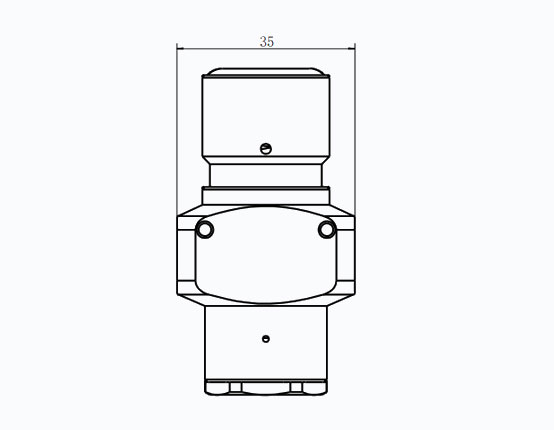
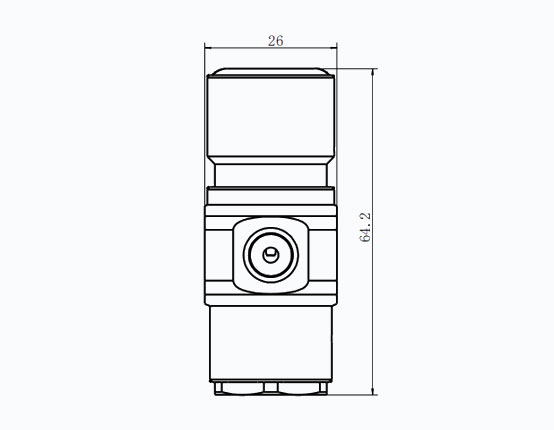
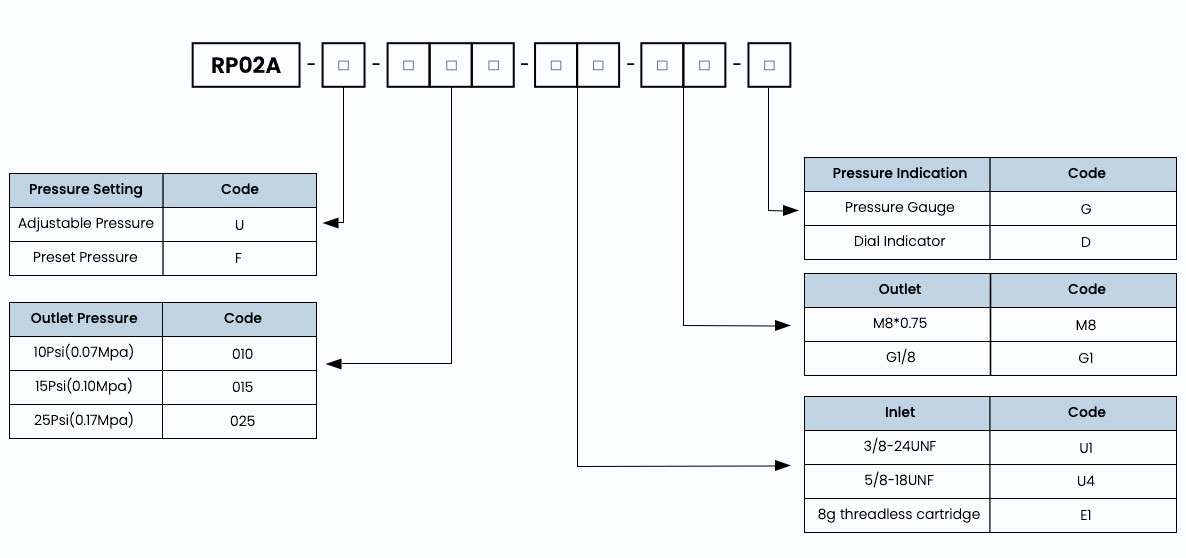
* Ordering code = Model +"Pressure Setting"+ "-" +Outlet Pressure+"-" + "Inlet"+"-"+"Outlet"+"-"+"Pressure Indication"
Example: RP08BF-A-010-U1-M8-G
Contact Us to Place Your Order
Get quotations, request custom configurations, or receive technical support
Contact Us Now
A Mini CO2 Regulator sits at the center of nearly every draft beverage line, controlling how gas moves from a small CO2 cylinder into a keg so that beer, soda, or cold brew pours at a consistent, drinkable carbonation level. This category covers everything people usually search under different names — Beer Keg Regulator setups for homebrew and countertop dispensers, compact Beer Keg Pressure Regulator assemblies for portable kegerators, and general-purpose miniature pressure regulator bodies that adapt to different cylinder threads. Whether it's labeled a co2 pressure regulator or a co2 gas regulator, the underlying job is the same: step down high cylinder pressure to a low, stable working pressure so the beverage inside the keg stays properly carbonated without over-foaming or going flat.
As a manufacturer of gas pressure control components, Noursun sees the same question repeated by first-time keg owners: why does my beer pour foamy one week and flat the next? The answer is almost always pressure drift or an inconsistent regulator, not the beer itself. A keg co2 regulator that can't hold a steady output pressure will let dissolved CO2 in the liquid slowly fall out of balance with the headspace pressure, changing carbonation over just a few days.
Different beverage styles are typically served at different working pressures, and getting this wrong is the single most common cause of pour problems. The chart below reflects commonly used reference ranges for CO2-dispensed beverages; actual settings still depend on serving temperature, line length, and system design.
Commonly referenced serving pressure ranges by beverage type — figures are general guidelines, not fixed values for every system.
This is exactly why a dependable co2 pressure regulator matters more for higher-carbonation drinks like cider: a small deviation in output pressure translates into a much larger swing in dissolved gas, and the pour either gushes or turns flat within days.
Shrinking a regulator down to fit inside a compact kegerator or travel cooler is not simply a matter of scaling down a full-size industrial part. A true miniature pressure regulator still has to hold a stable output under a wide range of cylinder pressures, resist the constant vibration of a mini fridge compressor, and keep sealing reliably after hundreds of tank swaps — all while, in the middle of this design process, Noursun's engineering team relies on its own testing facility to confirm every one of these behaviors before a design is finalized.
To ensure the performance and long-term reliability of every pressure regulator, Noursun has equipped itself with an industry-leading professional testing laboratory. Its assessments cover durability, environmental adaptability, mechanical strength, and safety limits, simulating real-world conditions so the data collected can be fed straight back into product improvement rather than sitting in a report. The radar view below illustrates how these four testing dimensions relate to one another in a typical evaluation cycle.
Illustrative view of the testing dimensions applied to a compact gas pressure control component during development.
In practice, this means a Beer Keg Pressure Regulator body needs a gauge face that stays readable after repeated temperature cycling, a diaphragm that keeps sealing after thousands of open-close cycles on the cylinder valve, and threads that don't gall after being screwed and unscrewed by hand for years.
Most regulator failures are gradual rather than sudden — a slow creep in output pressure, a gauge needle that starts lagging, or a slight hiss around the cylinder connection. Catching these early is mostly a matter of habit rather than special tooling.
| Setting | Typical Check Interval | Main Wear Point |
|---|---|---|
| Home / countertop | Every cylinder change | Cylinder connection washer |
| Bar / restaurant | Weekly | Diaphragm and gauge |
| Mobile / event trailer | Before every event | Body threads and seals |
Consistency at this level is also why a co2 gas regulator line benefits from being designed rather than assembled from generic parts. Noursun will focus on gas pressure control components and solutions going forward, pushing digitalization, intelligentization, and environmental sustainability across its product range, while strengthening its own team and internal management to work toward becoming a leading manufacturer of refrigerant gas pressure control components and solutions. Part of that effort is building a talent symbiotic system that lines up individual expertise with company performance, so the people refining a keg co2 regulator design today are the same people accountable for how it performs three years from now.
A single-body Mini CO2 Regulator is built to feed one line at a set pressure. Running multiple kegs off one output usually requires a secondary manifold with individual shutoffs, otherwise every keg is forced to the same pressure regardless of beverage type.
This almost always points to a slow leak somewhere between the regulator outlet and the keg, most often at a loose disconnect or a hardened gasket, rather than a fault inside the regulator body itself.
Not for beverage service. A Beer Keg Regulator only needs enough working range to cover the beverage styles being served; an oversized rating just makes fine adjustment harder near the low pressures most beers actually require.
No — a regulator built and calibrated for pure CO2 should not be repurposed for nitrogen blends, since the gauge calibration and flow characteristics differ between gas types.
ADD: No. 50, Zhongxing East Road, Xikou Town, Fenghua District, Ningbo City, Zhejiang Province, P.R. China
0086-574-88881358
0086-574-88473625
About Us
Industry Applications
News & Events
