
 简体中文
简体中文
 English
 Français
 日本語
日本語
 Deutsch
0086-574-88881358
0086-574-88473625

RP04-Dual Stage Argon Regulator
Engineered for applications demanding a higher level of precision than the RP02. It is a perfect solution for the most demanding tasks, such as wine dispensing (with an error of less than 1cc), and is also equally adept for laboratory gas analysis and similar applications.
Ultra-high precision in both output pressure and flow stability.
Leak-free cartridge puncture technology for maximum gas utilization.
Integrated gas overflow orifices relief mechanism to ensure user safety in all operating environments.
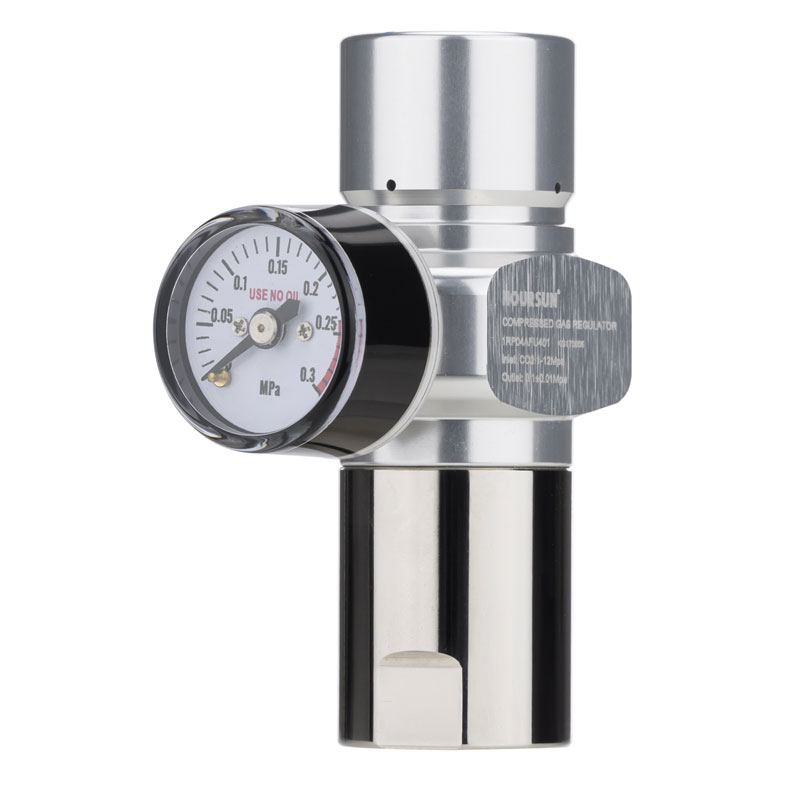
| Material | ▲ | Aluminium | ||
| Medium | N2、CO2、Ar | |||
| Operating Temperature | -5℃~43℃ | |||
| Max. Working Pressure | 12Mpa | |||
| Proof Pressure | 30Mpa | |||
| Output Pressure | ▲ | 0.05~0.4Mpa | ||
| Output Pressure Accuracy | ±0.01MPa | |||
| Pressure Indication | Axial pressure gauge | |||
| Indication Accuracy | Class IV (EN 837-1) | |||
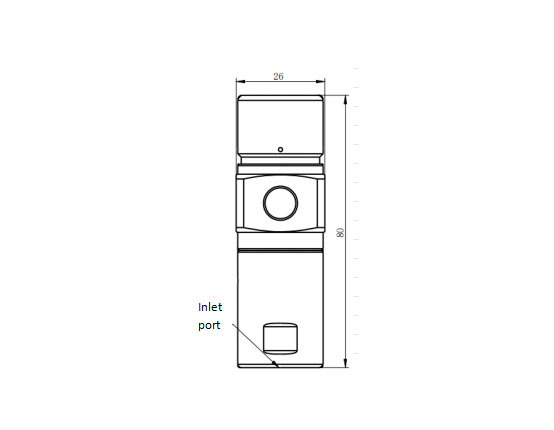
| Inlet Port | ▲ | 3/8-24UNF / 5/8-18UNF | ||
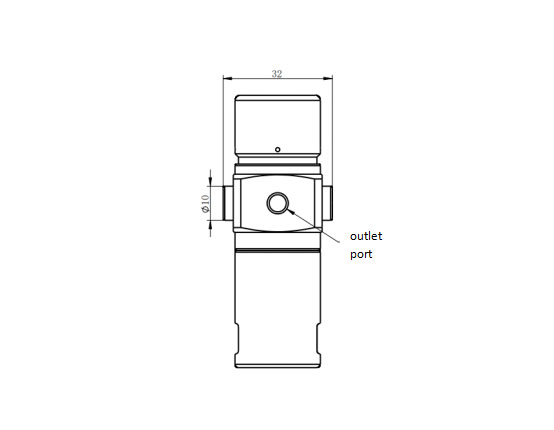
| Outlet Port | ▲ | M8*0.75 / G1/8 | ||
| Relief Pressure(LP side) | Overflow orifice relief mechanism | |||
| Net Weight | 113g | |||
| (▲ marked parts are standard parameters available for customization.) | ||||
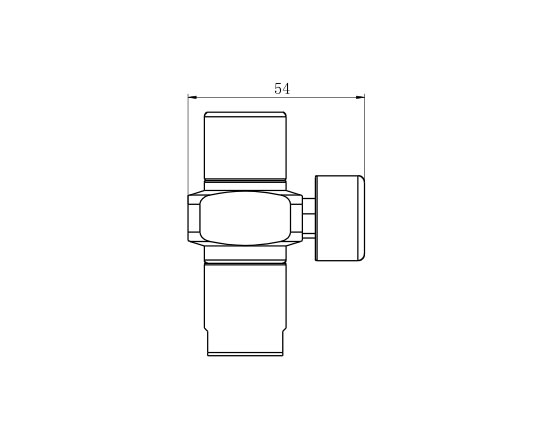
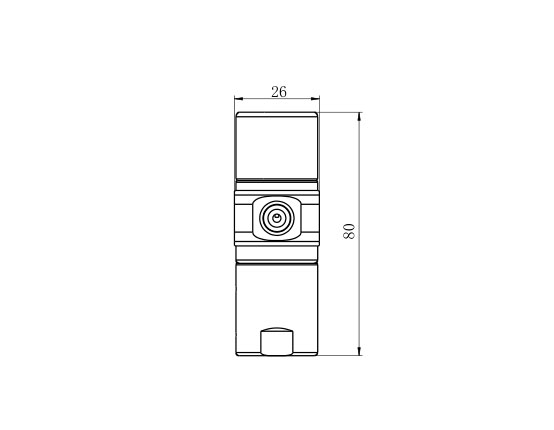
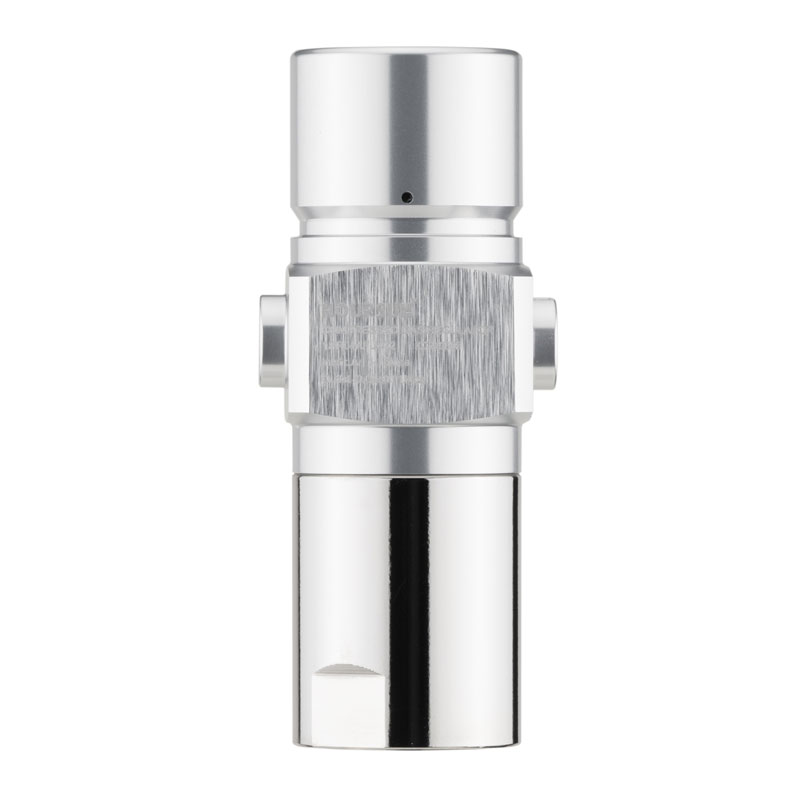
| Material | ▲ | Aluminum | ||
| Medium | N2、CO2、Ar | |||
| Operating Temperature | -5℃~43℃ | |||
| Max. Working Pressure | 12Mpa | |||
| Proof Pressure | 30Mpa | |||
| Output Pressure | ▲ | 0.05Mpa≤Preset pressure≤0.4Mpa | ||
| Output Pressure Accuracy | ±0.01MPa | |||
| Inlet Port | ▲ | 3/8-24UNF / 5/8-18UNF | ||
| Outlet Port | ▲ | M8*0.75 / M6 | ||
| Relief Pressure(LP side) | Overflow orifice relief mechanism | |||
| Net Weight | 140g | |||
| (▲ marked parts are standard parameters available for customization.) | ||||
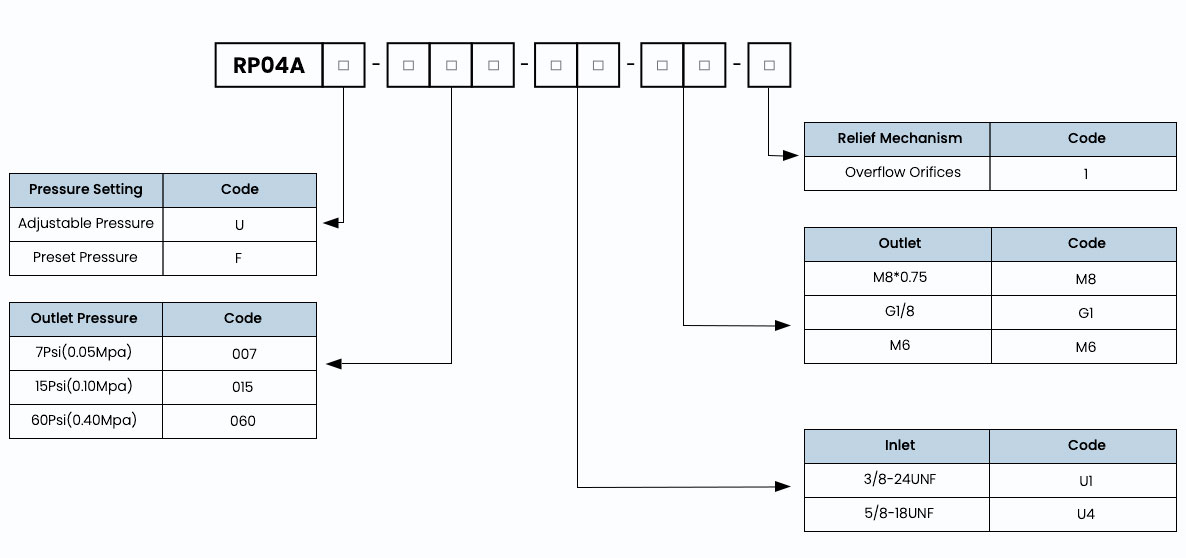
* Ordering code = Model +Pressure Setting+ "-" +Outlet Pressure+"-" + Inlet+"-"+Outlet+"-"+Relief Mechanism
Example: RP04AF-060-U1-M8-1
Contact Us to Place Your Order
Get quotations, request custom configurations, or receive technical support
Contact Us Now
Gas delivery equipment lives or dies on one thing: how steady the outlet pressure stays as the source pressure keeps dropping. That's the whole reason the Dual Stage Argon Regulator exists as its own category rather than just a variation on a basic valve. A dual stage regulator splits the pressure drop into two separate reductions instead of one, and the same logic shows up under different names across industries — a two stage gas regulator on a welding cart, a double gas regulator on a beverage line, or an argon setup in a lab. Different labels, same engineering problem: keep the downstream pressure flat no matter what the cylinder pressure is doing.
At Ningbo Noursun Industrial Co., Ltd, we get asked the same question constantly: why does my outlet pressure creep up as the cylinder empties? A single-stage regulator does one pressure cut, so as inlet pressure falls from, say, 200 bar toward 20 bar, the spring-and-diaphragm balance shifts and outlet pressure can drift by 1-2 bar over the tank's life. A Dual Stage Argon Regulator breaks that same drop into two smaller reductions — high pressure to an intermediate pressure, then intermediate to working pressure — so each stage only has to manage a narrow window instead of the whole swing.
The chart below illustrates the difference across a typical cylinder discharge cycle, from full to near-empty.
That flat red line is the entire selling point of two-stage design: stable output regardless of how much gas is left upstream. For argon shielding, beverage carbonation, or lab calibration work, that stability is what keeps a process repeatable from the first pour to the last.
Not every application that calls for a dual stage regulator needs the same flow capacity. A wine preservation system sipping argon a few liters a minute has very different demands than a TIG welding torch or a nitrogen-blanketed storage tank. Sizing a regulator too small for its flow duty causes freeze-up and pressure sag under load; sizing it too large wastes precision and money.
| Application | Typical flow | Pressure sensitivity |
|---|---|---|
| Beverage/wine dispensing | 1-8 L/min | High |
| TIG welding shielding | 8-20 L/min | Medium |
| Lab/analytical instruments | 0.1-2 L/min | Very high |
Whichever category a project falls into, the underlying part is still doing the same two-step reduction — which is why the terms two stage gas regulator and beverage-grade argon regulator often describe hardware that is mechanically very close, just tuned differently for seat material, diaphragm size, and outlet gauge range. This is a point our engineering team at Ningbo Noursun walks buyers through regularly, since picking the wrong flow-range unit is the single most common sourcing mistake we see.
A two-stage design only performs as well as it's built. Diaphragm fatigue, seat wear, and gauge calibration drift are the three things that quietly ruin a regulator's accuracy over time, long before the housing itself fails. We fully adopt the internationally advanced Advanced Product Quality Planning (APQP) framework throughout the entire process — from conceptual design to mass production delivery — and that's true across the double gas regulator line as much as anything else we produce. This ensures comprehensive control over project quality, cost, and schedule, thereby guaranteeing product quality and reliability from the outset, which in practical terms means fewer field failures and more consistent unit-to-unit performance.
Every dimension on that chart maps to a stage in the APQP process — material traceability starts at incoming inspection, seal integrity gets validated across pressure cycling tests, and gauge accuracy is checked before a unit ever leaves the line.
When data drives equipment and algorithms predict demand, intelligent manufacturing is redefining production logic. Ningbo Noursun connects equipment networks via the Internet of Things and builds an efficiency system through the Industrial Internet, embedding "smart genes" into every process — including the assembly lines that produce a double gas regulator batch. The goals behind this are second-level traceability of raw materials, real-time early warnings for production anomalies, and a 30% reduction in order delivery cycles.
From flexible production line switching to digital twin-based full-process simulation, this isn't just equipment upgrading — it's reshaping a new paradigm of collaboration between humans, machines, and materials. Beyond cost reduction, quality improvement, and efficiency gains, it empowers manufacturing with sharper market forecasting, and every regulator that leaves the plant benefits from that same discipline, whether the customer calls it a two stage gas regulator or something else entirely.
Does a two-stage unit need more maintenance than a single-stage one?
Not meaningfully. There's a second diaphragm and seat to inspect, but because each stage handles a smaller pressure differential, wear on both stages is typically slower than on a single-stage unit doing the full drop alone.
Can the same regulator handle both argon and other inert gases?
Body material and seal compatibility need checking case by case. Argon service typically pairs well with the same brass or stainless bodies used for nitrogen, but oxygen or CO2 service usually calls for different seal materials.
Why does outlet pressure still creep slightly even with a two-stage design?
Some minor drift is physically unavoidable in spring-loaded diaphragm regulators. What two-stage design does is compress that drift into a much smaller window compared to a single reduction, not eliminate it entirely.
How often should the gauge accuracy be re-checked?
For process-critical use like beverage carbonation or lab calibration, an annual check is a common practice; for general shop use, checking whenever a unit is serviced is usually sufficient.
ADD: No. 50, Zhongxing East Road, Xikou Town, Fenghua District, Ningbo City, Zhejiang Province, P.R. China
0086-574-88881358
0086-574-88473625
About Us
Industry Applications
News & Events
