
 简体中文
简体中文
 English
 Français
 日本語
日本語
 Deutsch
0086-574-88881358
0086-574-88473625

RP07-Soda Water CO2 Regulator
Designed for household carbonation systems, allowing users to precisely adjust the output pressure to create their preferred level of carbonation.
Equipped with overflow orifices relief mechanism for enhanced system and user protection
Sealing-before-Opening mechanism ensures maximum gas utilization
Internal installation allows for a compact and space-saving design
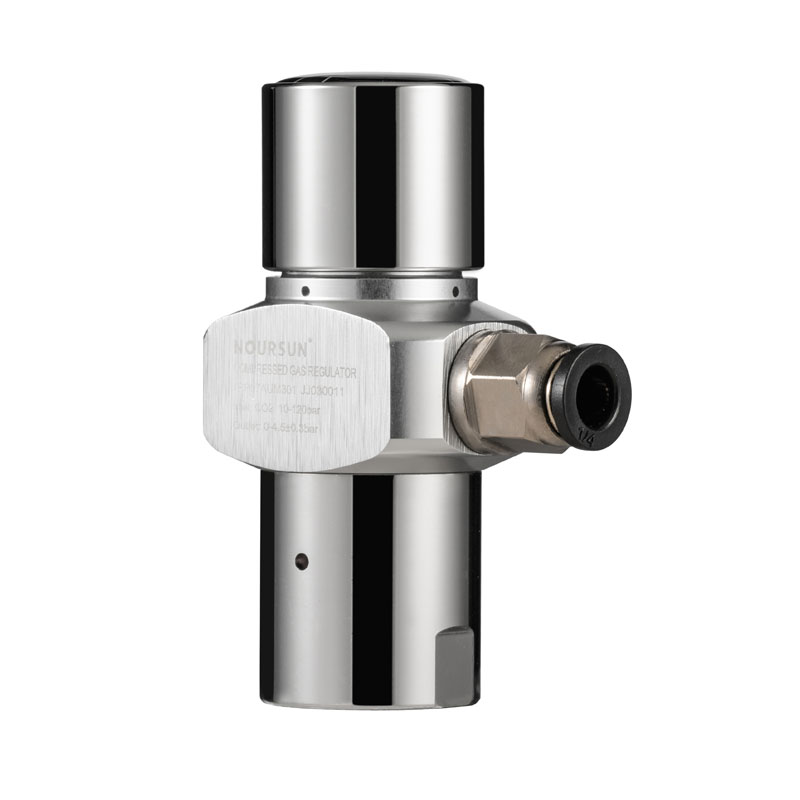
| Material | ▲ | Aluminum | ||
| Medium | CO2 | |||
| Operating Temperature | -5℃~43℃ | |||
| Max.Working Pressure | 12Mpa | |||
| Proof Pressure | 30Mpa | |||
| Output Pressure | ▲ | 0.05~0.55Mpa | ||
| Output Pressure Accuracy | ±0.03MPa | |||
| Pressure Indication | Indicator dial | |||
| Inlet Port | ▲ | TR21×4 / M22×2.5 / ∅21-6ACME-2G | ||
| Outlet Port | ▲ | G1/8 | ||
| Relief Pressure(LP side) | Overflow orifice relief mechanism | |||
| Net Weight | 128.7g | |||
| (▲ marked parts are standard parameters available for customization.) | ||||
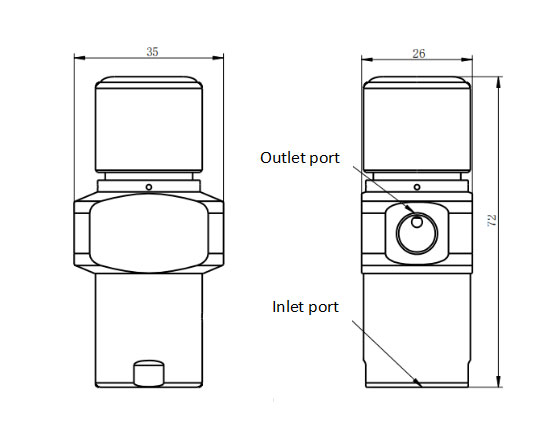
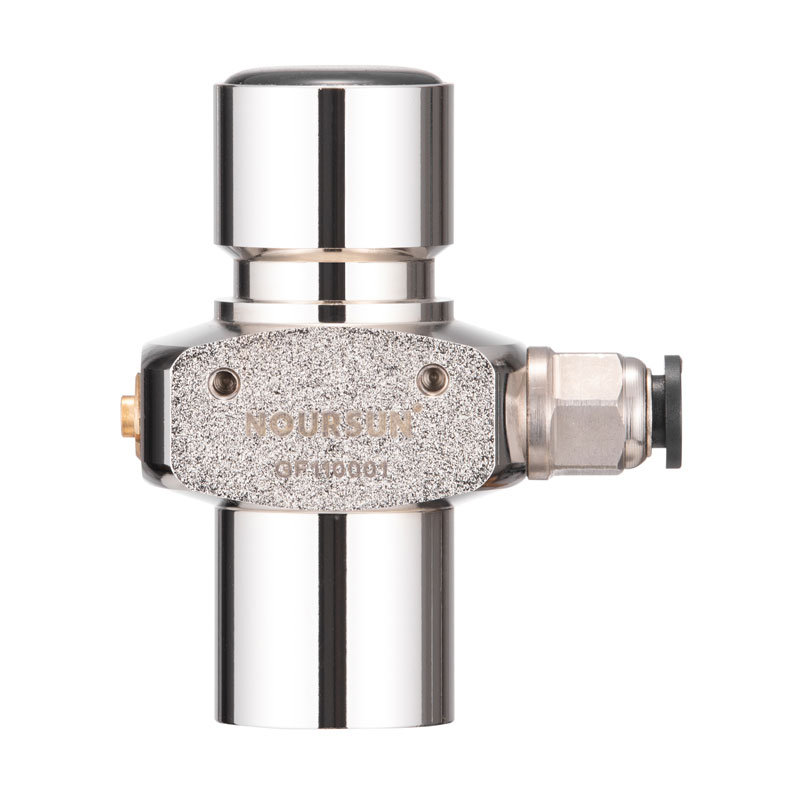
| Material | ▲ | Aluminum | ||
| Medium | CO2 | |||
| Operating Temperature | -5℃~43℃ | |||
| Max.Working Pressure | 12Mpa | |||
| Proof Pressure | 30Mpa | |||
| Output Pressure | ▲ | 0.3Mpa≤Preset pressure≤0.55Mpa | ||
| Output Pressure Accuracy | ±0.03MPa | |||
| Inlet Port | ▲ | TR21×4 / M22×2.5 / ∅21-6ACME-2G | ||
| Outlet Port | ▲ | G1/8 | ||
| Relief Pressure(LP side) | Overflow orifice relief mechanism | |||
| Net Weight | 128g | |||
| (▲ marked parts are standard parameters available for customization.) | ||||
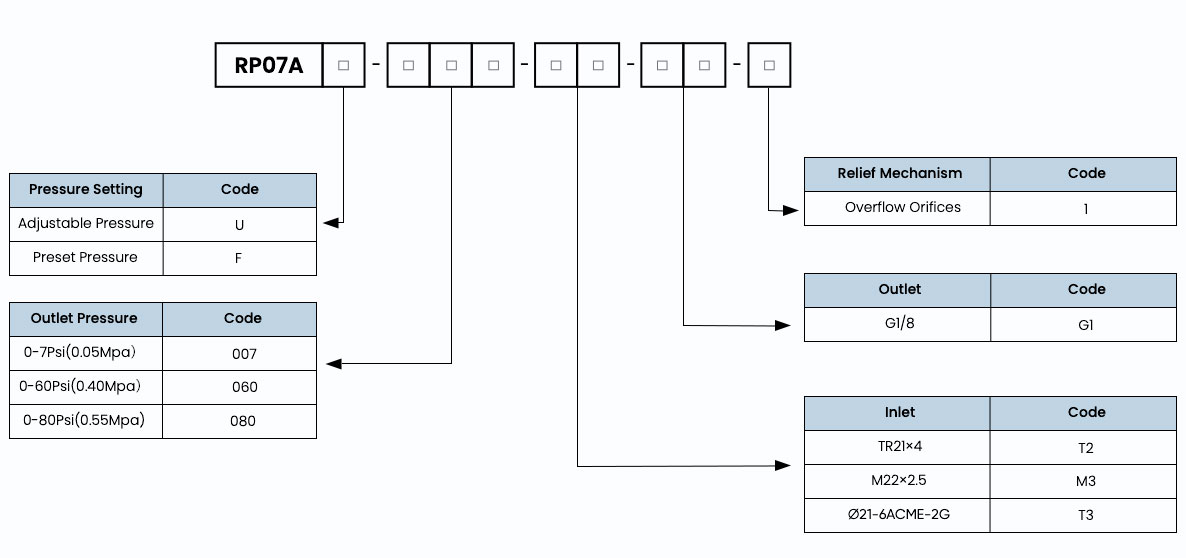
* Ordering code = Model +Pressure Setting+ "-" +Outlet Pressure+"-" + Inlet+"-"+Outlet+"-"+Relief Mechanism
Example: RP07AU-060-T2-G1-1
Contact Us to Place Your Order
Get quotations, request custom configurations, or receive technical support
Contact Us Now
A Soda Water CO2 Regulator has one job: turning a single gas cylinder into a controlled, repeatable pressure source that carbonates water consistently, pour after pour. The scope runs from a compact co2 regulator for soda machine set up on a kitchen counter to a multi-outlet manifold feeding several dispensers across a busy café line. What separates a good regulator from a mediocre one isn't a single number on a gauge — it's how the inlet rating, outlet range, and flow capacity behave together under real, changing conditions. This piece walks through what happens inside that pressure path: how it shapes carbonation, where it tends to break down, how it gets bench-tested before it ships, and how to match one to an actual setup.
Ningbo Noursun Industrial approaches this from the design side, integrating R&D, manufacturing, and service into one continuous loop — an approach the company describes as fostering innovation, drawing on collective input, and pushing the industry forward step by step rather than by accident. That loop matters here because carbonation isn't just "more pressure equals more fizz." Dissolved CO2 is measured in volumes of gas per volume of water, and every beverage type sits in its own target band. Push a Soda Water CO2 Regulator past that band and the drink comes out sharp and foamy at the tap; undershoot it and the water tastes flat within minutes of pouring. Water temperature compounds the effect — colder water holds gas far more readily than warm water, so the same regulator setting can produce noticeably different results between a chilled line and one sitting at room temperature.
General reference ranges only — actual targets vary by recipe, line length, and dispensing temperature.
Most complaints about a soda water setup trace back to three patterns rather than a single defect. The first is slow pressure creep, where the outlet setting drifts upward over weeks of use and the drink starts coming out over-carbonated. The second is icing at the regulator body — halfway through a long pour, rapid gas expansion pulls heat out of the metal fast enough that moisture in the air freezes on the housing, and output briefly stalls. This is exactly the kind of lifecycle issue Noursun designs against, embedding low-carbon principles across the entire product lifecycle to build what it calls a green responsibility ecosystem, working with partners to share value rather than just shipping a part and moving on. The third pattern is diaphragm fatigue, where thousands of open-close cycles gradually reduce how precisely the regulator holds its set point, so the same dial reading no longer means the same output pressure it did on day one.
Illustrative pattern of gradual drift under continuous operation, not measured data from a specific unit.
None of the failure patterns above show up reliably on a short factory line test — they surface after weeks or months in the field, which is exactly the gap bench testing is meant to close. A thorough program covers durability under repeated cycling, environmental adaptability across temperature and humidity swings, mechanical strength under load, and behavior at the outer safety limits of the pressure range, simulating real-world conditions rather than just a single ideal one. Thorough testing like this is what turns a design revision into reliable data rather than guesswork, which is why Ningbo Noursun Industrial equips itself with an industry-leading in-house testing laboratory that runs exactly these assessments before a design change ships, feeding the results back into longer service life, tighter safety margins, and steadier performance on the next batch.
Relative emphasis across a typical bench-testing program, shown for illustration.
Buying decisions in this space usually go wrong for the same reason: choosing a regulator by cylinder connection alone and ignoring flow capacity. A single-tap countertop unit and a four-head café dispenser can share the same inlet fitting while needing very different flow ranges, and undersizing the regulator on the busier setup is what produces the "first drink is fine, third drink goes flat" complaint. A properly sized co2 regulator for soda machine use should be selected against peak simultaneous draw, not average draw, since carbonation drop-off tends to happen at the busiest moment rather than the quiet ones.
| Setup Type | Simultaneous Draw | Suggested Outlet Range |
|---|---|---|
| Home countertop machine | 1 outlet | Low–mid range |
| Single-tap dispenser | 1 outlet | Mid range |
| Multi-head café line | 2–4 outlets | Mid–high range |
| Bulk bottling line | 4+ outlets | High range, high flow |
Relative comparison only, not absolute flow figures for any specific product.
It depends on the target carbonation level, water temperature, and line length, so there isn't one universal number — the right approach is to start at the low end of the recommended range for the beverage type and adjust upward in small steps while tasting the output.
Rapid gas expansion pulls heat out of the regulator body, and if there's enough ambient moisture it can freeze on the housing. Short recovery pauses between long draws usually prevent it from building up.
Yes, provided its flow capacity is sized for peak simultaneous draw across every outlet rather than just the average — this is the most common sizing mistake in multi-head setups.
Only up to the target band for that beverage type. Past that point, extra pressure mostly produces foaming and inconsistent pour behavior rather than more dissolved gas in the finished drink.
A quick check of the outlet reading against a known target every few weeks catches slow pressure creep early, before it shows up as an obvious taste difference in the finished drink.
ADD: No. 50, Zhongxing East Road, Xikou Town, Fenghua District, Ningbo City, Zhejiang Province, P.R. China
0086-574-88881358
0086-574-88473625
About Us
Industry Applications
News & Events
