
 简体中文
简体中文
 English
 Français
 日本語
日本語
 Deutsch
0086-574-88881358
0086-574-88473625

RP08-Soda Water Pressure Regulator
Ideal for various sparkling water machines, including both instant-mix and carbonation-tank-based hybrid models.
A wider pre-set pressure range offers users more customization options to achieve their desired carbonation level and taste.
The lead-free forged brass body provides high thermal conductivity, ensuring a more stable output pressure even under varying temperature conditions.
The Zero-Leakage Valve-Actuation Mechanism ensures maximum gas utilization during the bottle-opening process.
The left and right shafts serve as mounting bracket, allowing radial rotation during cylinder installation or removal to facilitate operation.
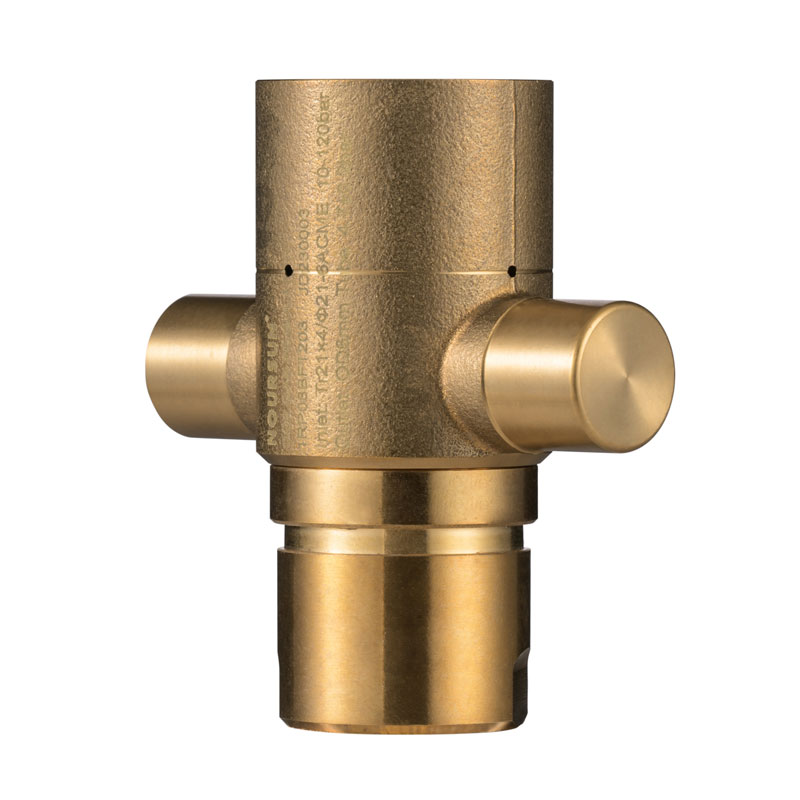
| Material | ▲ | Brass | |||
| Medium | CO2 | ||||
| Operating Temperature | -5℃~43℃ | ||||
| Max.Working Pressure | 12Mpa | ||||
| Proof Pressure | 30Mpa | ||||
| Output Pressure | ▲ | 0.30Mpa≤Preset pressure≤0.80Mpa | |||
| Output Pressure Accuracy | ±0.02MPa | ||||
| Inlet Port | ▲ | TR21×4 / M22×2.5 / ∅21-6ACME-2G | |||
| Outlet Port | ▲ | φ6 plug / 1/4“plug | |||
| Relief Pressure(LP side) | Overflow orifice relief mechanism | ||||
| Mounting | Left and right rocker arm mounting shafts | ||||
| Net Weight | 244.3g | ||||
| (▲ marked parts are standard parameters available for customization.) | |||||
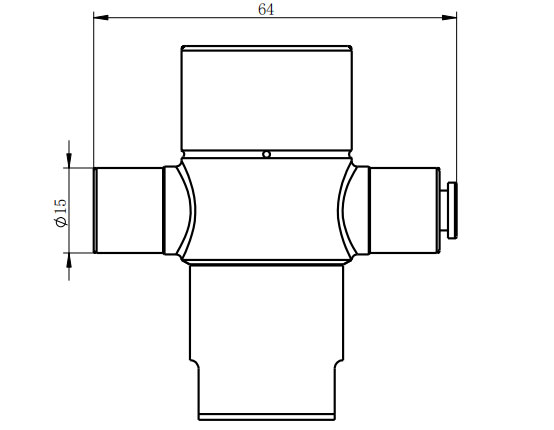
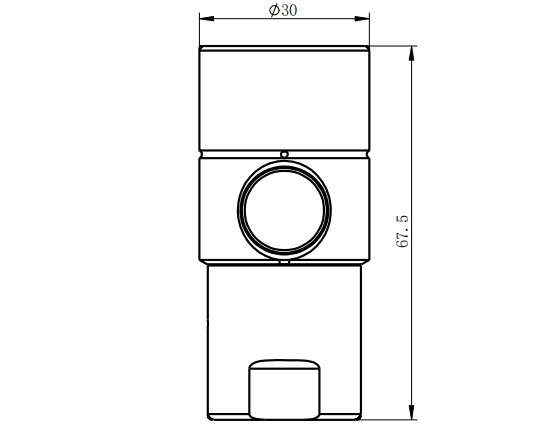
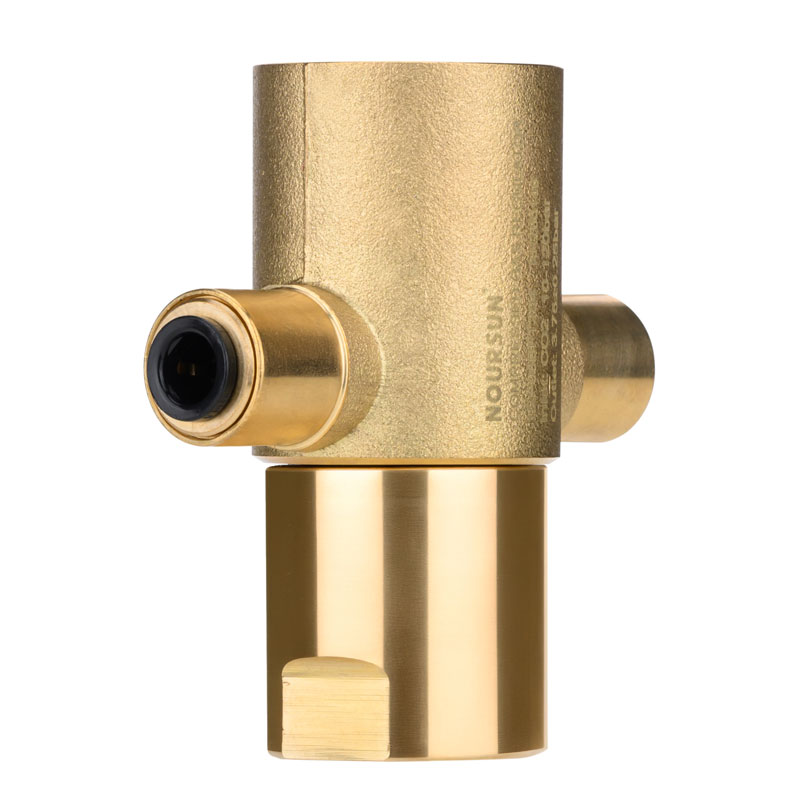
| Material | ▲ | Brass | |||
| Medium | CO2 | ||||
| Operating Temperature | -5℃~43℃ | ||||
| Max.Working Pressure | 12Mpa | ||||
| Proof Pressure | 30Mpa | ||||
| Output Pressure | ▲ | 0.30Mpa≤Preset pressure≤0.80Mpa | |||
| Output Pressure Accuracy | ±0.02MPa | ||||
| Inlet Port | ▲ | TR21×4 / M22×2.5 / ∅21-6ACME-2G | |||
| Outlet Port | ▲ | φ6 plug / 1/4“plug | |||
| Relief Pressure(LP side) | Direct-action spring pressure relief valve | ||||
| Mounting | Left and right rocker arm mounting shafts | ||||
| Net Weight | 247.5g | ||||
| (▲ marked parts are standard parameters available for customization.) | |||||
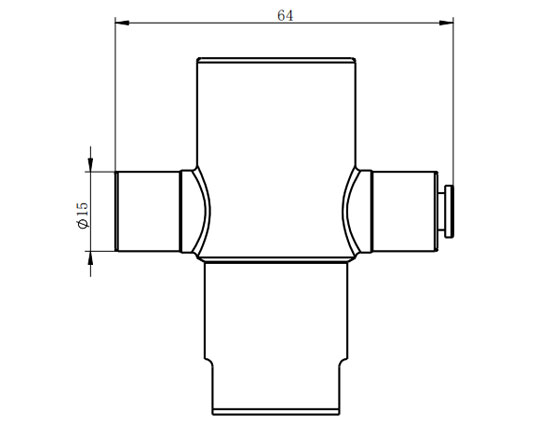
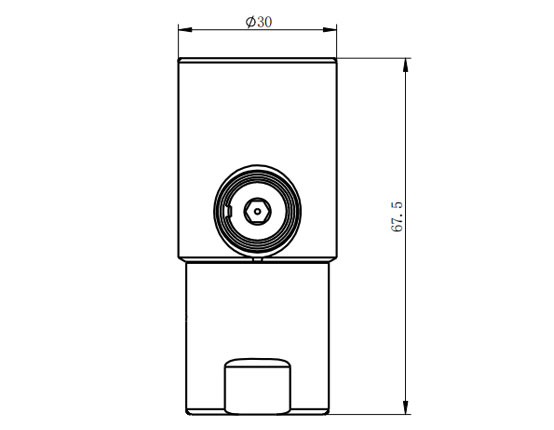
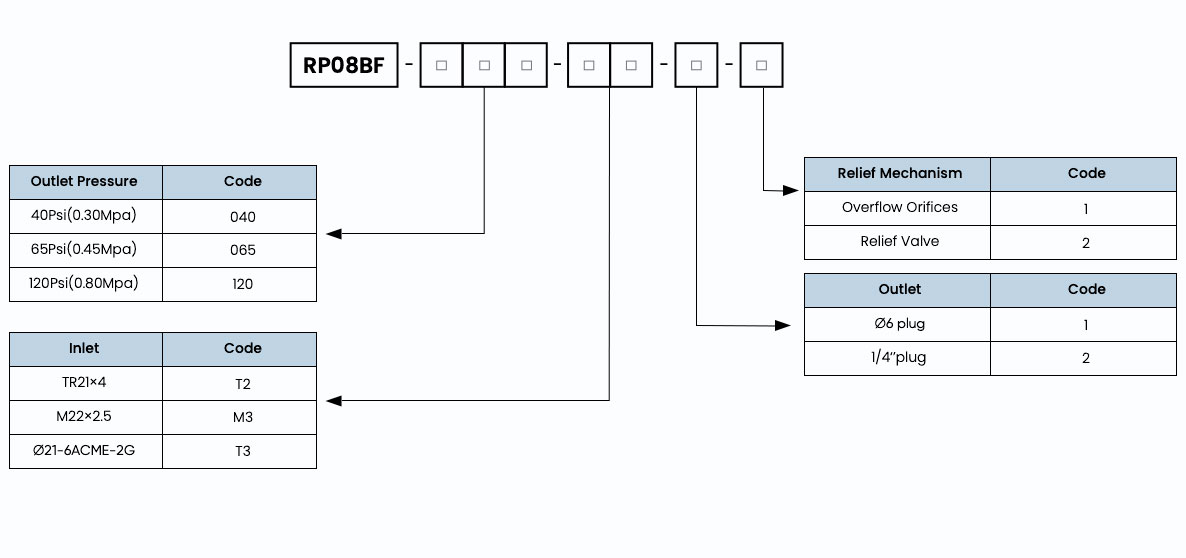
* Ordering code = Model + "-" +Outlet Pressure+"-" + Inlet+"-"+Outlet+"-"+Relief Mechanism
Example: RP08BF-065-T2-1-1
Contact Us to Place Your Order
Get quotations, request custom configurations, or receive technical support
Contact Us Now
A soda water pressure regulator sits between the CO2 cylinder and the dispensing line, and its only job is to turn an unstable, high-pressure gas source into a steady, usable pressure downstream. In practice, a soda water regulator has to do this across cold rooms, warm counters, half-empty cylinders, and busy service hours without drifting off target. This piece looks at how regulation actually behaves inside a soda water system, what specifications matter when matching a regulator to an application, and the kind of engineering groundwork that keeps performance predictable once a unit leaves the factory floor.
At Ningbo Noursun Industrial Co., Ltd, the starting point for any soda water pressure regulator discussion is that carbonation quality depends less on peak pressure and more on how tightly that pressure is held over time. As a CO2 cylinder empties, inlet pressure can swing by a wide margin, yet the diaphragm and spring assembly inside the regulator is designed to compensate so that outlet pressure barely moves. The chart below illustrates the kind of deviation pattern seen across three inlet pressure bands on a typical single-stage design.
The gap widens slightly at higher inlet pressure simply because the spring is working against a larger force differential, but a well-tuned regulator keeps that swing well inside a range that a soda fountain or bottling line will not notice in the glass. This is the practical difference between a regulator that "sort of works" and one that a beverage line can run on for years.
Choosing a soda water regulator is really a sizing exercise. A unit built for a countertop fountain and a unit feeding a multi-head bottling line share the same basic mechanism but need very different flow capacity and adjustable range. Sourcing teams working with Ningbo Noursun Industrial Co., Ltd typically start from three questions: how much gas needs to move per minute, what outlet pressure the dispensing valves expect, and what port size the existing tubing already uses.
| Application | Adjustable Range | Flow Capacity | Common Port Size |
|---|---|---|---|
| Countertop Fountain | 0-6 bar | Low | 1/4" |
| Mid-Volume Beverage Line | 0-10 bar | Medium | 3/8" |
| High-Throughput Bottling | 0-16 bar | High | 1/2" |
Undersizing a regulator for its flow requirement is the most common mistake buyers make: the unit looks correct on paper but chokes under peak demand, causing pressure to sag exactly when a line is busiest. Sizing one step above expected peak flow, rather than average flow, is usually the safer call.
Consistency in the field starts long before assembly. We fully adopt the internationally advanced Advanced Product Quality Planning (APQP) framework throughout the entire process, from conceptual design to mass production delivery, so that quality, cost, and schedule stay under control from the outset rather than being fixed after problems show up downstream.
Noursun has also built a comprehensive digital finite element simulation system, which allows a soda water pressure regulator design to be fully validated before a single physical prototype is cut. Using CAE, CAD, and CAM tools together, structural strength analysis, fluid dynamics analysis, and process feasibility verification all happen in a virtual environment first. The line chart below sketches how flow rate and downstream pressure typically interact across a regulator's working range once a design has gone through that kind of verification.
The flatter that curve stays as flow climbs toward peak, the less a line operator has to worry about pressure sagging during busy periods. Simulating this behavior in advance significantly shortens the development cycle and cuts down on trial-and-error costs, since geometry problems get caught on screen instead of on a test bench.
Most complaints about a soda water regulator trace back to a handful of recurring causes rather than a defect in the unit itself. The chart below groups the most common root causes reported in beverage dispensing settings.
Debris carried in from the cylinder valve and moisture forming ice on the diaphragm at high flow rates tend to be the biggest disruptors, followed by loose downstream fittings that leak gas slowly enough to go unnoticed until pressure starts drifting. A simple inline filter ahead of the regulator and a routine check of fitting torque handle most of these before they ever become a service call. Ningbo Noursun Industrial Co., Ltd builds this kind of field feedback back into new design cycles, since the failure patterns seen in the field are often the clearest signal for where a regulator design still has room to improve.
A properly sized regulator will keep outlet pressure stable well below the point where the cylinder is considered empty, so carbonation quality should hold steady until the tank genuinely runs dry.
A quick check every few months, or whenever a dispensing line changes noticeably in taste or fizz level, is usually enough to catch a regulator that has started to drift.
Not reliably. A unit sized for peak flow on a busy line will be oversized for a small fountain, and one sized for a fountain will choke on a busy line's peak demand.
Adding an inline filter ahead of the regulator and checking downstream fittings for tightness addresses the large majority of field issues before they escalate.
ADD: No. 50, Zhongxing East Road, Xikou Town, Fenghua District, Ningbo City, Zhejiang Province, P.R. China
0086-574-88881358
0086-574-88473625
About Us
Industry Applications
News & Events
