
 简体中文
简体中文
 English
 Français
 日本語
日本語
 Deutsch
0086-574-88881358
0086-574-88473625

RP12-Carbonated Water CO2 Regulator
Designed for hybrid sparkling water machines, it is typically installed inside the unit. It offers adjustable or preset pressure types and multiple gas cylinder connection options to.
Lowers the regulator height via a pressure-reducing mechanism.
Offers different inlet port types for various soda CO₂ cylinders.
Achieves zero leakage at connection points for optimal gas efficiency.
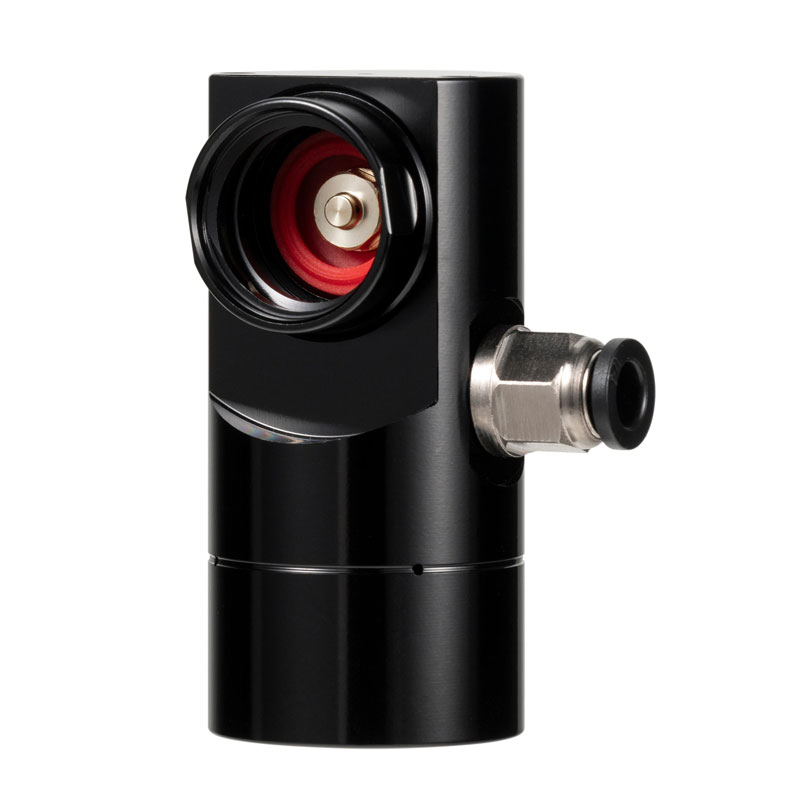
| Material | ▲ | Aluminum | |||
| Medium | CO2 | ||||
| Operating Temperature | ‑5℃~43℃ | ||||
| Max.working pressure | 12Mpa | ||||
| Proof Pressure | 30Mpa | ||||
| Output Pressure | ▲ | 0.30Mpa≤preset pressure≤0.80Mpa | |||
| Output Pressure Accuracy | ±0.03MPa | ||||
| Inlet Port | ▲ | TR21×4 / φ21-6ACME / G1/2-14 | |||
| Outlet Port | ▲ | 1/4" / 6mm quick connector / G1/8 | |||
| Relief pressure(LP side) | Overflow orifice relief mechanism | ||||
| Mounting | ▲ | Null / M4 x2 at the bottom / φ5.1 on the side | |||
| Net Weight | 154g | ||||
| (▲ marked parts are standard parameters available for customization.) | |||||
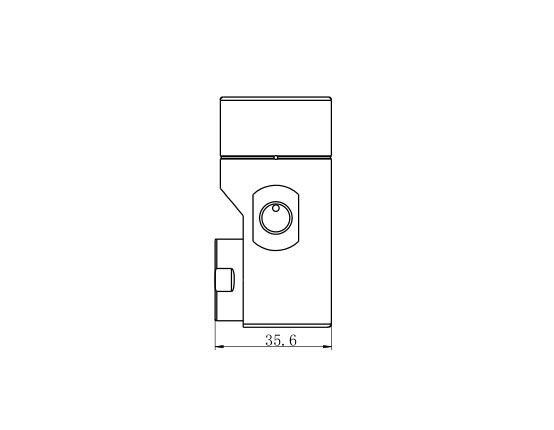
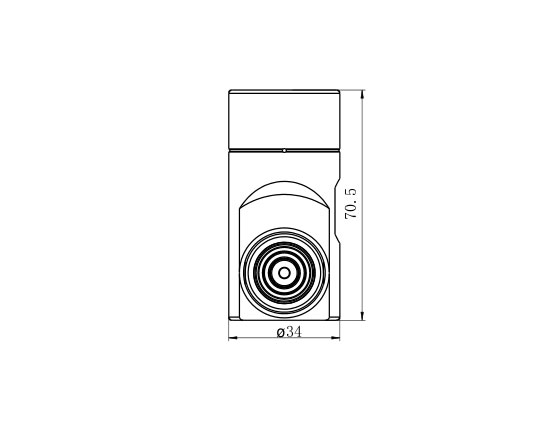
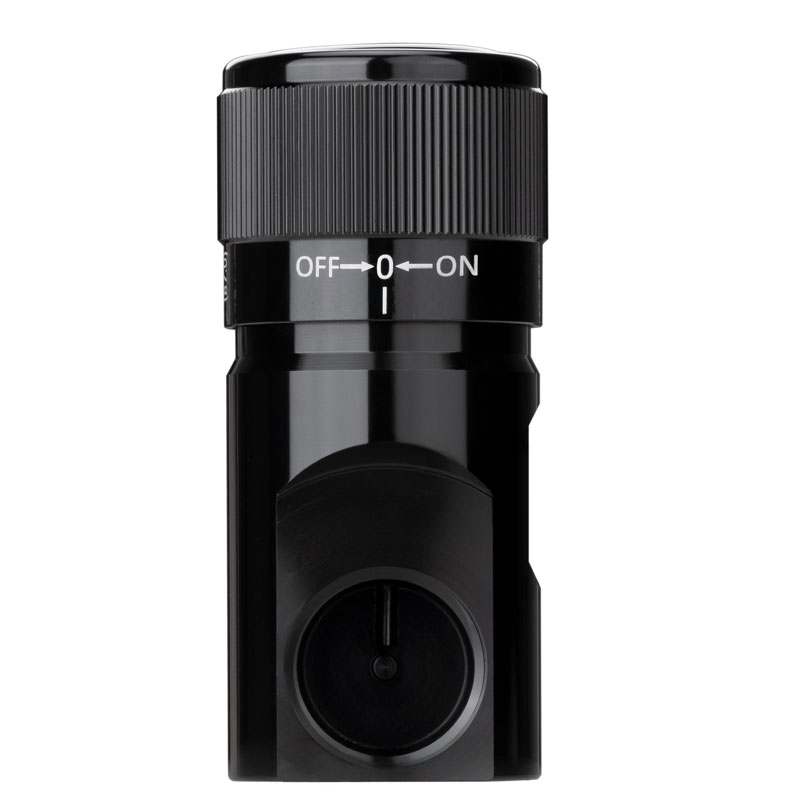
| Material | ▲ | Aluminum | |||
| Medium | CO2 | ||||
| Operating Temperature | ‑5℃~43℃ | ||||
| Max.Working Pressure | 12Mpa | ||||
| Proof Pressure | 30Mpa | ||||
| Output Pressure | ▲ | 0.3~0.80Mpa | |||
| Output Pressure Accuracy | ±0.02MPa | ||||
| Inlet Port | ▲ | G1/2(paintball cylinder) | |||
| Outlet Port | ▲ | 1/4" / 6mm quick connector / G1/8 | |||
| Relief Pressure(LP side) | Overflow orifice relief mechanism | ||||
| Mounting | ▲ | Null / M4 x2 at the bottom | |||
| Net Weight | 185g | ||||
| (▲ marked parts are standard parameters available for customization.) | |||||
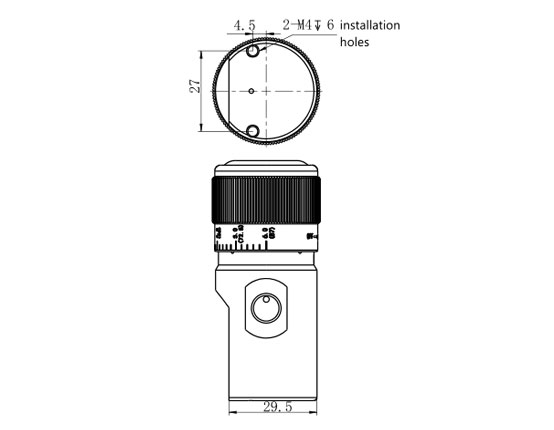
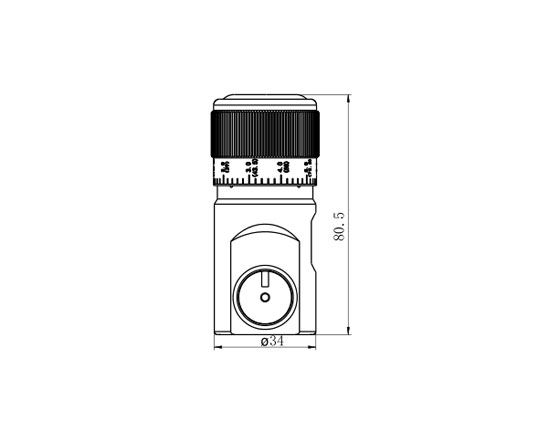
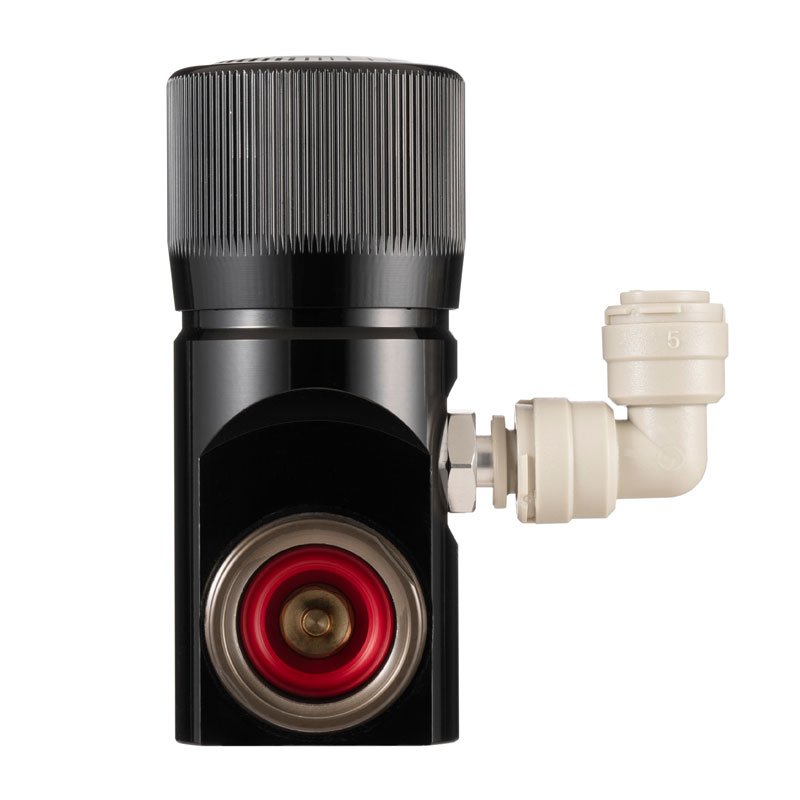
| Material | ▲ | Aluminum | |||
| Medium | CO2 | ||||
| Operating Temperature | -5℃~43℃ | ||||
| Max. Working Pressure | 12Mpa | ||||
| Proof Pressure | 30Mpa | ||||
| Output Pressure | ▲ | 0.30Mpa~0.80Mpa | |||
| Output Pressure Accuracy | ±0.03MPa | ||||
| Inlet Port | ▲ | TR21×4 / φ21-6ACME / G1/2-14 | |||
| Outlet Port | ▲ | 1/4" / 6mm quick connector / G1/8 | |||
| Relief Pressure(LP side) | Overflow orifice relief mechanism | ||||
| Mounting | ▲ | Null / M4 x2 at the bottom | |||
| Net Weight | 202g | ||||
| (▲ marked parts are standard parameters available for customization.) | |||||
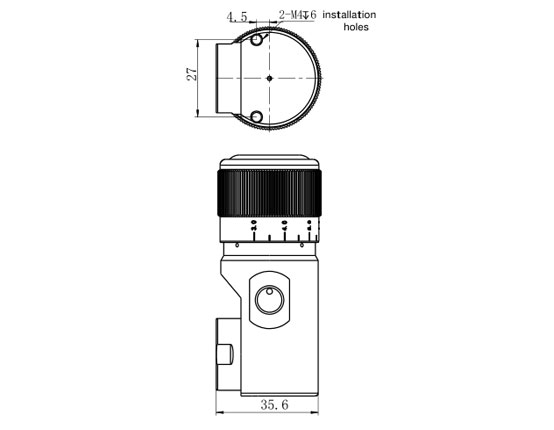
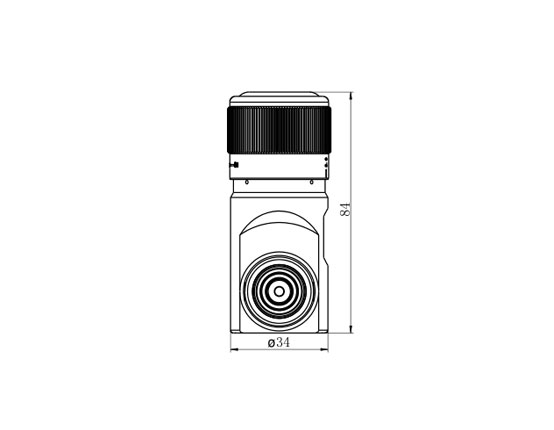
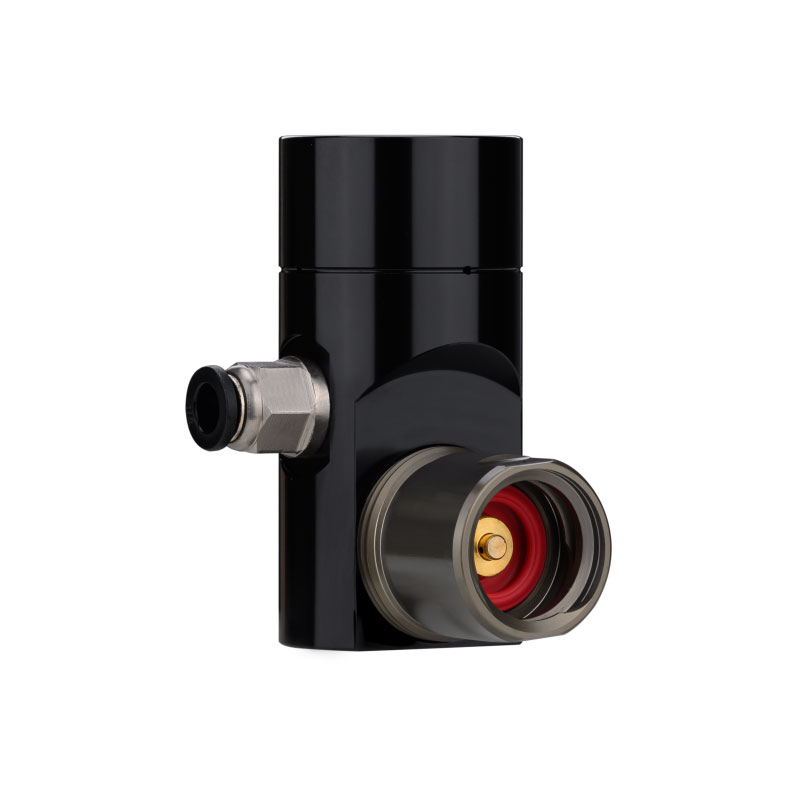
| Material | ▲ | Aluminum | |||
| Medium | CO2 | ||||
| Operating Temperature | ‑5℃~43℃ | ||||
| Max.working pressure | 12Mpa | ||||
| Proof Pressure | 30Mpa | ||||
| Output Pressure | ▲ | 0.30Mpa≤preset pressure≤0.80Mpa | |||
| Output Pressure Accuracy | ±0.03MPa | ||||
| Inlet Port | ▲ | TR21×4 / φ21-6ACME / G1/2-14 | |||
| Outlet Port | ▲ | 1/4" / 6mm quick connector / G1/8 | |||
| Relief pressure(LP side) | Overflow orifice relief mechanism | ||||
| Mounting | ▲ | Null / M4 x2 at the bottom / φ5.1 on the side | |||
| Net Weight | 154g | ||||
| (▲ marked parts are standard parameters available for customization.) | |||||
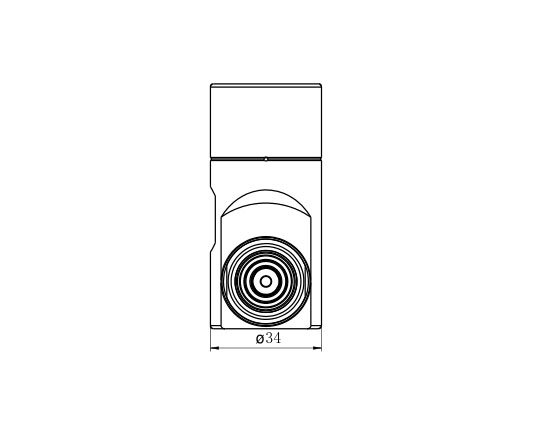
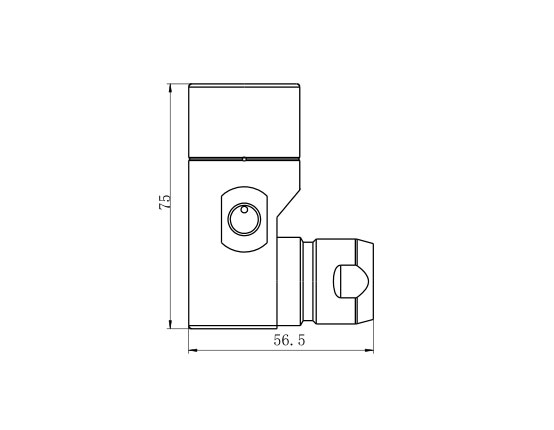
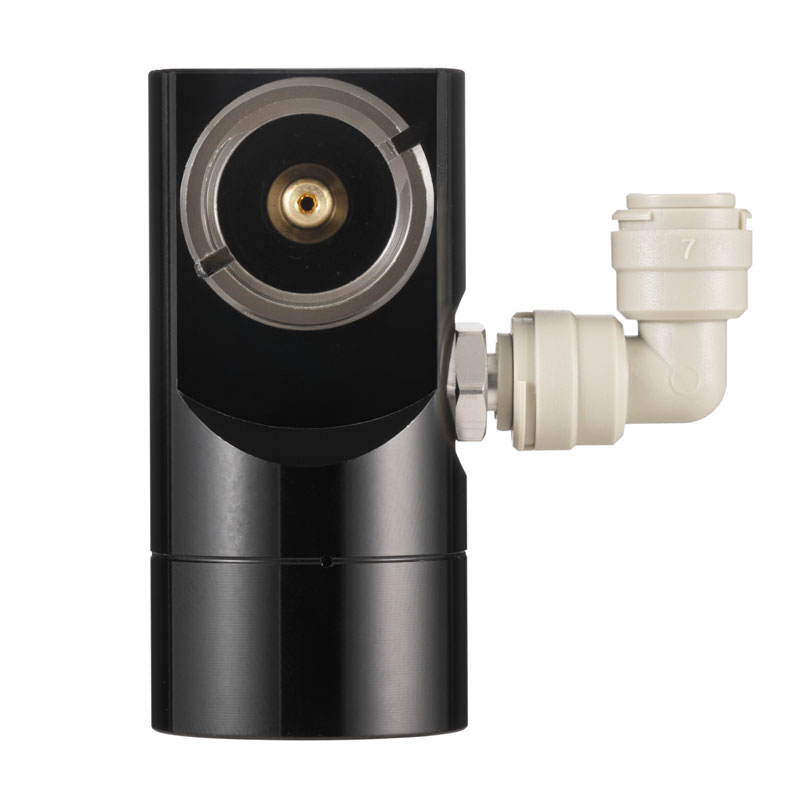
| Material | ▲ | Aluminum | |||
| Medium | CO2 | ||||
| Operating Temperature | ‑5℃~43℃ | ||||
| Max.working pressure | 12Mpa | ||||
| Proof Pressure | 30Mpa | ||||
| Output Pressure | ▲ | 0.30Mpa≤preset pressure≤0.80Mpa | |||
| Output Pressure Accuracy | ±0.02MPa | ||||
| Inlet Port | ▲ | TR21×4 / φ21-6ACME | |||
| Outlet Port | ▲ | 1/4" / 6mm quick connector / G1/8 | |||
| Relief pressure(LP side) | Overflow orifice relief mechanism | ||||
| Mounting | ▲ | Null / M4 x2 at the bottom / φ5.1 on the side | |||
| Net Weight | 163g | ||||
| (▲ marked parts are standard parameters available for customization.) | |||||
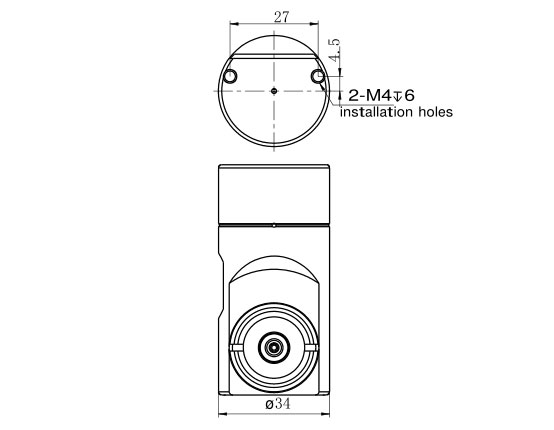
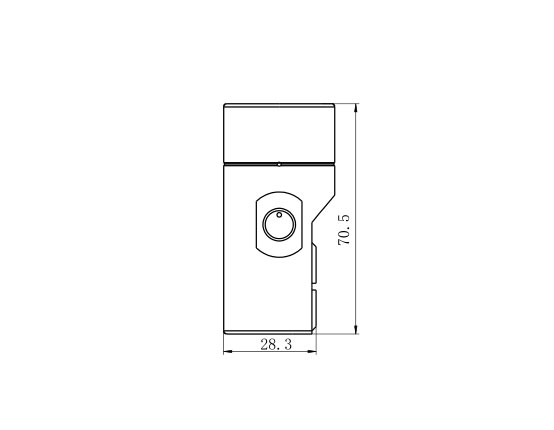
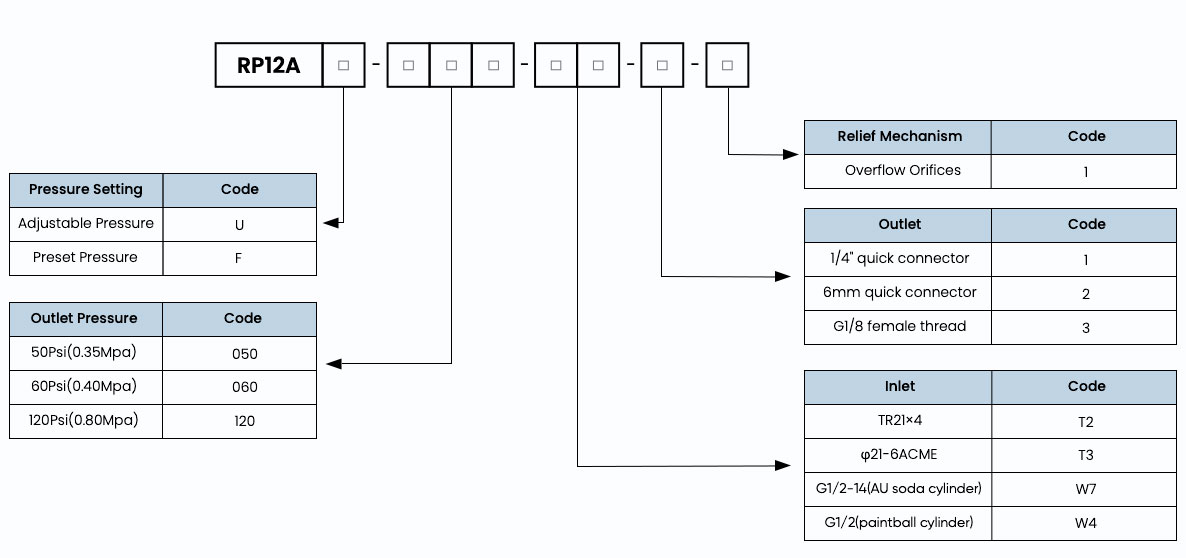
* Ordering code = Model +Pressure Setting+ "-" +Outlet Pressure+"-" + Inlet+"-"+Outlet+"-"+Relief Mechanism
RP12AU-060-T2-1-1
Contact Us to Place Your Order
Get quotations, request custom configurations, or receive technical support
Contact Us Now
Getting bubbles right is mostly a pressure problem, not a recipe problem. A Carbonated Water CO2 Regulator sits between the gas cylinder and the carbonation tank or dispensing line, and its only job is to keep that gas pressure exactly where the system needs it, pour after pour, day after day. Whether the setup is a countertop soda fountain, a bulk beverage filling line, or a draft dispensing tower, a properly matched Carbonated Water Regulator is what separates flat, inconsistent output from a drink that tastes the same at 8am and at close. This page walks through some of the practical regulation knowledge that operators and technicians actually run into once the equipment is installed and running.
At Ningbo Noursun Industrial Co., Ltd, we've noticed that most carbonation complaints trace back to one thing: the regulator isn't holding a flat line under changing draw rates. Carbonation level is a direct function of dissolved CO2 at a given temperature and pressure, so if outlet pressure wanders even slightly when a valve opens downstream, the drink poured a second later will taste different from the one poured a minute earlier. A well-built Carbonated Water CO2 Regulator is designed to resist that kind of droop, holding set pressure across a wide range of flow demand rather than just at the moment it left the factory bench.
The chart below illustrates a typical pattern seen across three common regulation approaches when flow demand jumps suddenly — a fixed-orifice design, a single-stage spring-loaded diaphragm, and a dual-stage regulator. The wider the pressure deviation, the more likely a customer will notice a flat or overly fizzy pour right after the swing.
Regulators rarely fail all at once — the drift is usually gradual, which is why it goes unnoticed until a batch of drinks tastes off. The most frequent symptoms we see reported from the field include:
Our engineering team at Ningbo Noursun Industrial has been building manufacturing processes around catching these patterns before they leave the factory, rather than leaving diagnosis entirely to the end customer. The comparison below shows how outlet pressure typically drifts over twelve months of continuous service, with and without a routine calibration check every quarter.
Not every application needs the same regulator body. A short countertop dispensing run has very different back-pressure characteristics than a long draft line running through a walk-in cooler, and choosing the wrong Carbonated Water Regulator for the layout is one of the most common sources of pour complaints that has nothing to do with the tank or the syrup.
| Dispensing Setup | Typical Line Length | Regulator Priority |
|---|---|---|
| Countertop soda fountain | Under 3 meters | Fast response, compact body |
| Draft tower with remote cooler | 6-15 meters | Stable pressure over distance |
| Bulk filling line | Manifold-fed, multiple heads | High flow capacity, dual-stage control |
Flow rate consistency across line length is a good way to check whether a regulator is actually suited to a layout. The column chart below shows how three regulator body styles hold flow rate as line length increases from 3 to 15 meters.
A regulator rarely dies suddenly; it degrades across a few specific dimensions, and each one degrades on its own schedule. Seal integrity, pressure accuracy, response time, and resistance to contamination all age differently depending on duty cycle and how often the unit is checked. The radar comparison below contrasts a unit on a routine maintenance schedule against one that's been left to run untouched.
This is part of why Ningbo Noursun Industrial ties equipment data into its own production line rather than treating regulation quality as a one-time inspection. When data drives equipment and algorithms predict demand, intelligent manufacturing is redefining production logic — we connect equipment networks via the Internet of Things and build an efficiency system through the Industrial Internet, embedding smart genes into every process, with second-level traceability of raw materials and real-time early warnings for production anomalies built into the goal. From flexible production line switching to digital twin-based full-process simulation, the aim isn't just upgrading equipment but reshaping how humans, machines, and materials work together, and every regulator that leaves the line is meant to hold up to that same standard.
This is almost always a pressure recovery issue rather than a carbonation tank issue. If the regulator takes time to settle back to its set point after a draw, the next pour gets slightly less or more dissolved gas than the first one.
A quick gauge and seal check on a quarterly rhythm catches most of the slow drift before it becomes noticeable to customers, based on the drift patterns shown earlier in this page.
Not bigger — better matched. A dual-stage design retains flow consistency over distance far better than a compact single-stage unit, even at the same nominal flow rating.
Not always — it's frequently a worn diaphragm seat seal, which is a smaller fix than replacing the whole unit, but it should still be checked before it turns into a pressure accuracy problem.
ADD: No. 50, Zhongxing East Road, Xikou Town, Fenghua District, Ningbo City, Zhejiang Province, P.R. China
0086-574-88881358
0086-574-88473625
About Us
Industry Applications
News & Events
