
 简体中文
简体中文
 English
 Français
 日本語
日本語
 Deutsch
0086-574-88881358
0086-574-88473625

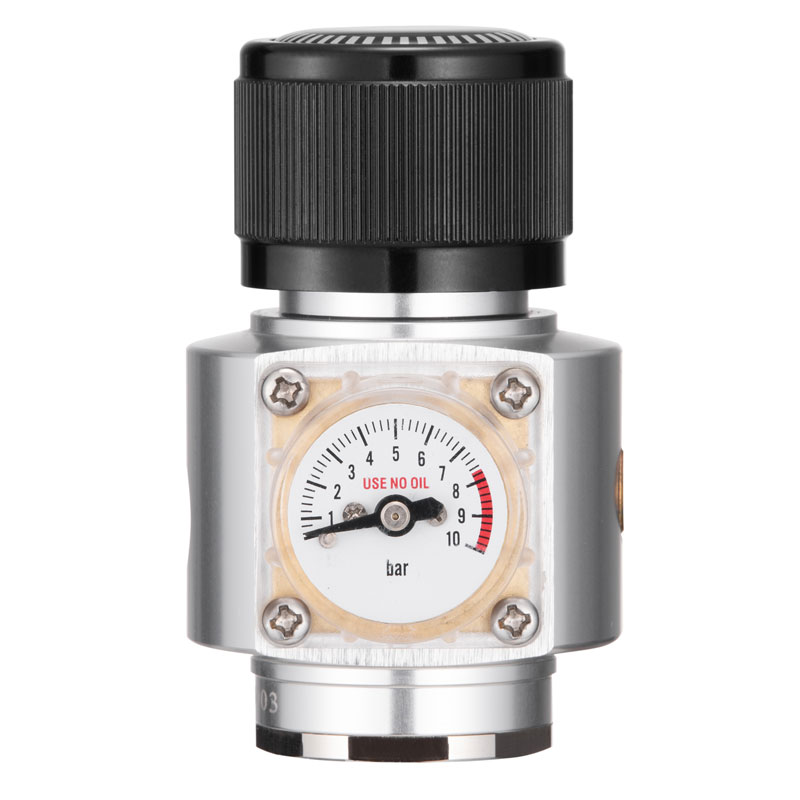
RP26-Soda Water Pressure Regulator
Compatible with various soda water machines for both internal and external installation, the RP26 comes in adjustable and preset pressure models to meet customer needs.
Wide pressure adjustment range.
Built-in pressure gauge for easy setting.
Zero-leakage mechanism maximizes cylinder efficiency.
| Material | ▲ | Aluminum | ||
| Medium | CO2 | |||
| Operating Temperature | ‑5℃~43℃ | |||
| Max.Working Pressure | 12Mpa | |||
| Proof Pressure | 30Mpa | |||
| Output Pressure | ▲ | 0.03~1.00Mpa | ||
| Output Pressure Accuracy | ±0.02MPa | |||
| Pressure Indication | Push-in type pressure gauge | |||
| Indication Accuracy | Class Ⅳ (EN 837-1) | |||
| Inlet Port | ▲ | Tr21×4 / φ21-6ACMEB21 / G1/2 | ||
| Outlet Port | ▲ | G1/8 / NPT1/8 | ||
| Relief Pressure(LP side) | Built-in pressure relief valve | |||
| Mounting | ▲ | Null / M3 on side | ||
| Net Weight | 233g | |||
| (▲ marked parts are standard parameters available for customization.) | ||||
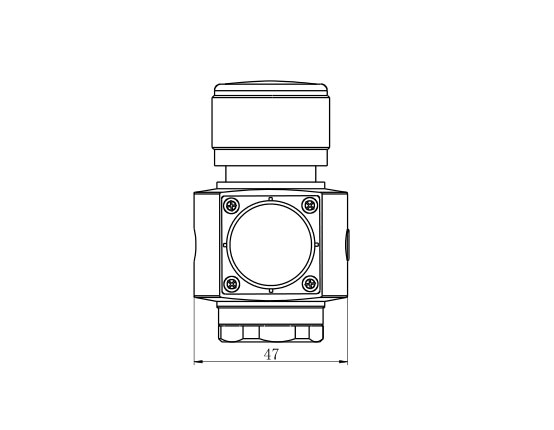
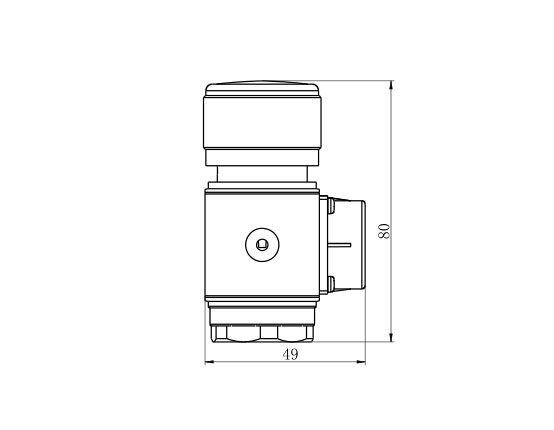
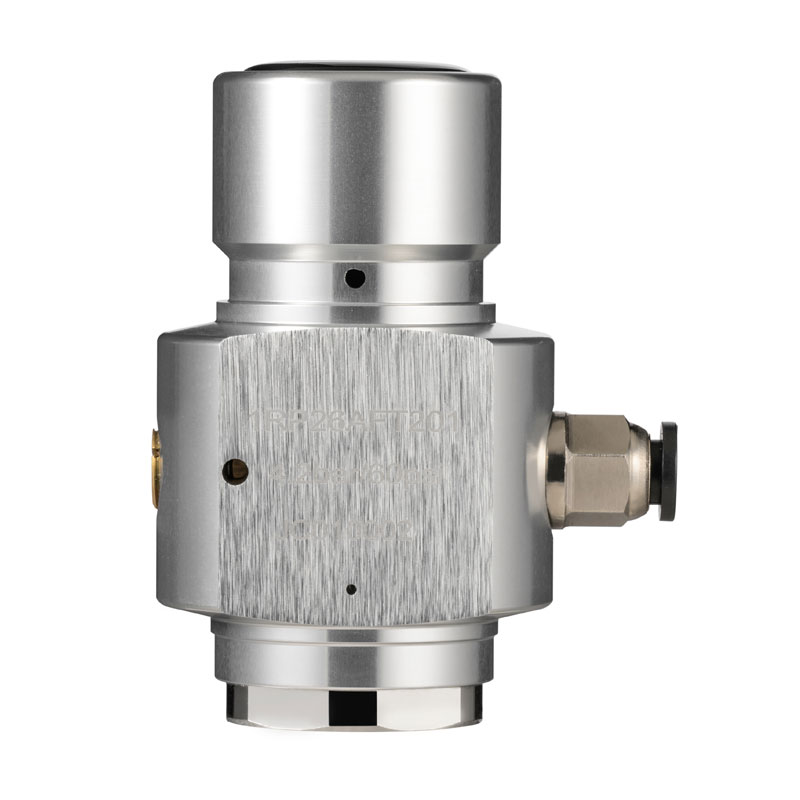
| Material | ▲ | Aluminum | ||
| Medium | CO2 | |||
| Operating Temperature | ‑5℃~43℃ | |||
| Max. Working Pressure | 12Mpa | |||
| Proof Pressure | 30Mpa | |||
| Output Pressure | ▲ | 0.03~1.00Mpa | ||
| Output Pressure Accuracy | ±0.02MPa | |||
| Inlet Port | ▲ | Tr21×4 / φ21-6ACMEB21 / G1/2 | ||
| Outlet Port | ▲ | G1/8 / NPT1/8 | ||
| Relief Pressure(LP side) | Built-in pressure relief valve | |||
| Mounting | ▲ | Null / M3 on side | ||
| Net Weight | 221g | |||
| (▲ marked parts are standard parameters available for customization.) | ||||
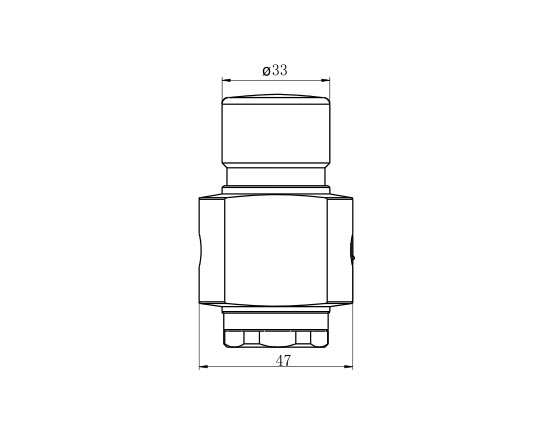
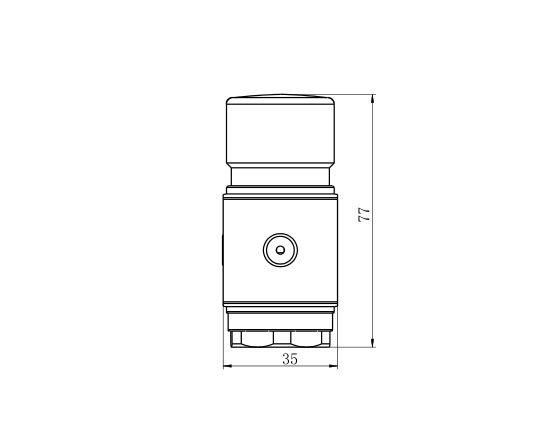
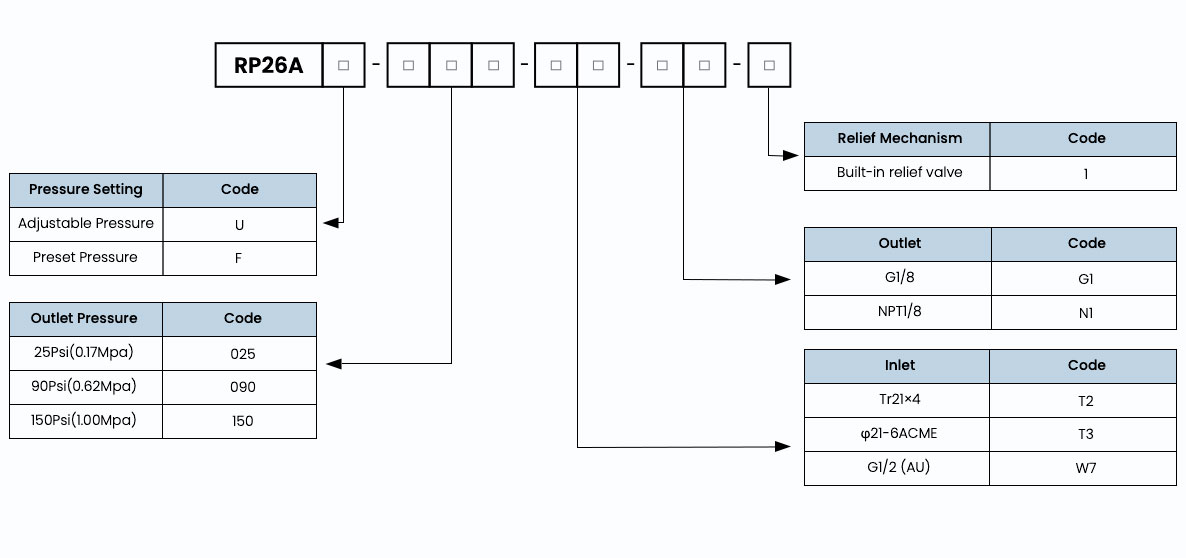
* Ordering code = Model +Pressure Setting+ "-" +Outlet Pressure+"-" + Inlet+"-"+Outlet+"-"+Relief Mechanism
Example: RP26AU-090-T2-G1-1
Contact Us to Place Your Order
Get quotations, request custom configurations, or receive technical support
Contact Us Now
Soda water pressure regulation is one of those unglamorous but essential pieces of engineering that keeps a carbonated beverage line running smoothly, whether that line sits inside a bottling plant, a commercial soda fountain, or a small-batch craft beverage setup. A component such as the RP26-Soda Water Pressure Regulator sits at the point where gas supply meets liquid delivery, controlling how much CO2 pressure reaches the water or syrup line so carbonation stays consistent from the first pour to the last. This article looks at the practical knowledge behind that kind of pressure control — why consistency matters, what goes into producing it reliably at scale, and how digital manufacturing methods are changing the way these components get made.
At Ningbo Noursun Industrial Co., Ltd, we spend a lot of time thinking about what happens when pressure isn't held steady. A regulator that drifts even slightly can turn a batch of drinks flat, cause foaming at the nozzle, or leave fill volumes inconsistent across a run. None of these problems show up as a single dramatic failure — they show up as small, cumulative quality issues that operators only notice after enough complaints or wasted product. That's really the core job of a component like the RP26-Soda Water Pressure Regulator: holding a narrow, stable pressure band no matter what's happening upstream in the gas supply.
Different application types put different demands on regulation. A high-volume bottling line runs continuously and needs the regulator to hold its setpoint under sustained flow. A soda fountain cycles on and off throughout the day, so the regulator has to recover quickly each time. Craft or small-batch carbonation setups often need finer adjustment range because recipes and CO2 levels vary more from batch to batch. The chart below is a general illustration of how regulation demands tend to differ across these settings — it's meant as a conceptual comparison, not a technical specification.
The takeaway for anyone specifying a regulator is that "precision" isn't a single number — it depends on how the line is actually used. A regulator built for steady, high-volume flow won't necessarily behave the same way in a stop-start fountain application.
When engineers evaluate a regulator, a handful of qualities tend to come up repeatedly: how precisely it holds pressure, how well it stands up to repeated cycling, how easily it can be adjusted or customized for a specific line, and how simple it is to service in the field. The radar shape below maps these focus areas as a general reference point, not as a certified rating of any specific model.
Consistency at the product level starts with consistency on the manufacturing floor. Situated in Ningbo, China, Noursun is a high-tech enterprise that puts roughly 7% of annual revenue back into R&D, which is a meaningful commitment for a component manufacturer and reflects how much of the work in this industry happens before a part ever reaches a customer's line. Over time that investment has resulted in more than 35 patents, with around 10 new applications filed each year — a steady pace rather than a one-off push.
That level of internal engineering matters because pressure regulators aren't really off-the-shelf items in the truest sense — most lines need some degree of customization, whether that's spring rate, port configuration, or adjustment range. Using advanced manufacturing equipment, the goal is to deliver customized pressure control solutions with high precision and consistency, which is what allows a single product family to serve fountain applications, bottling lines, and smaller craft setups without each one being a bespoke engineering project.
It's a common assumption that customized components sacrifice repeatability, since every variation adds a new source of potential deviation. In practice, the opposite tends to be true when customization is built into the manufacturing process itself rather than handled as a workaround. A regulator family designed from the outset to be configurable will hold tighter tolerances across variants than one that's modified ad hoc after the fact.
When data drives equipment and algorithms predict demand, manufacturing logic starts to look different from the traditional model of fixed production lines and manual inspection. Equipment networks connected via the Internet of Things, tied together through an Industrial Internet layer, are what make it possible to embed what amounts to a "smart gene" into every step of the process — from raw material intake through to final assembly of a part like the RP26-Soda Water Pressure Regulator.
Three goals tend to define this shift: second-level traceability of raw materials, so any batch can be traced almost instantly if a question comes up; real-time early warnings for production anomalies, catching drift before it becomes a defect rather than after; and a target of cutting order delivery cycles by around 30% through flexible line switching and digital-twin-based process simulation. The chart below shows that delivery-cycle target as a before-and-after comparison.
This isn't only about upgrading equipment for its own sake — it's really about reshaping how people, machines, and materials work together on the floor. Through this kind of digital management transformation, production efficiency and on-time delivery both benefit, which in a component category like pressure regulators translates directly into more predictable lead times for buyers who are planning their own production schedules around a delivery date.
There's no single interval that applies everywhere — it depends on cycle frequency and how demanding the application is. A high-cycle fountain setup generally needs more frequent checks than a slower-turning bottling line, simply because the diaphragm and internal components see more wear per day.
Often yes, provided the design allows for adjustment range and the right port configuration. This is exactly where customized manufacturing makes a difference — a regulator family built with configurability in mind can usually be adapted across several line types rather than requiring a separate design for each one.
Sometimes the regulator isn't the actual problem — supply-side pressure fluctuation, temperature swings, or a downstream restriction can all mimic a regulation issue. It's worth checking the whole gas path, not just the regulator itself, before assuming a component needs replacing.
If a batch issue ever comes up, being able to trace the materials and production step in question quickly makes the difference between a fast resolution and a long investigation. It's one of the reasons Ningbo Noursun Industrial Co., Ltd has been building toward second-level material traceability as part of its production process — it shortens the distance between a question being raised and an answer being available.
ADD: No. 50, Zhongxing East Road, Xikou Town, Fenghua District, Ningbo City, Zhejiang Province, P.R. China
0086-574-88881358
0086-574-88473625
About Us
Industry Applications
News & Events
