
 简体中文
简体中文
 English
 Français
 日本語
日本語
 Deutsch
0086-574-88881358
0086-574-88473625

RP30-Carbonated Water CO2 Regulator
Compatible with all commercial soda water machines and CO₂ cylinders from various countries, available in adjustable or preset pressure types.
Equipped with a pull ring relief valve to ensure users' safety.
Wide adjustable pressure range.
Bottom air inlet design for more convenient use.
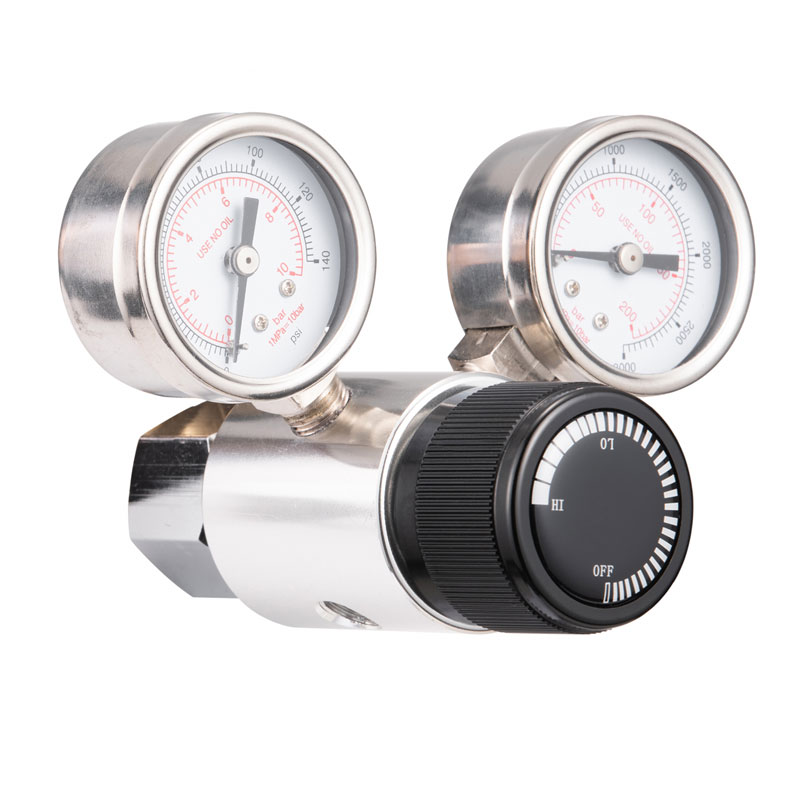
| Material | ▲ | Aluminum | ||
| Medium | CO2 | |||
| Operating Temperature | ‑5℃~43℃ | |||
| Max. Working Pressure | 12Mpa | |||
| Proof Pressure | 30Mpa | |||
| Output Pressure | ▲ | 0.03~1.00Mpa | ||
| Output Pressure Accuracy | ±0.02MPa | |||
| Pressure Indication | Y40 dual pressure gauges for inlet and outlet | |||
| Indication Accuracy | Class Ⅳ (EN 837-1) | |||
| Inlet Port | ▲ | W21.8-14 / W22-14 / CGA320 / G5/8 / G3/4 | ||
| Outlet Port | ▲ | G1/8 / NPT1/8 | ||
| Net Weight | 502g | |||
| (▲ marked parts are standard parameters available for customization.) | ||||
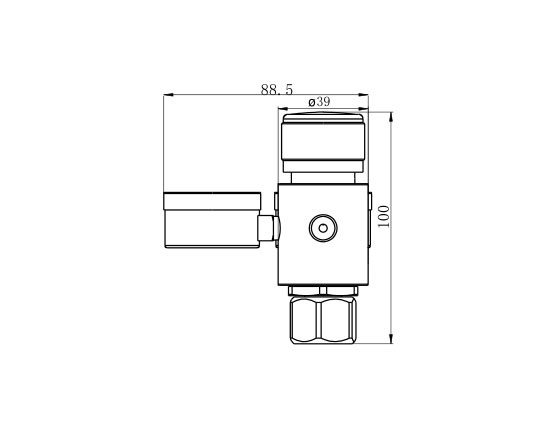
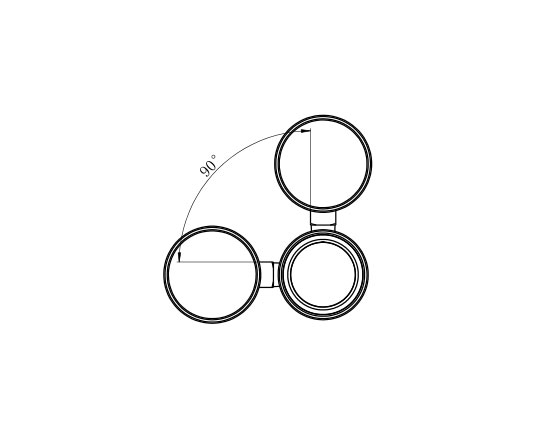
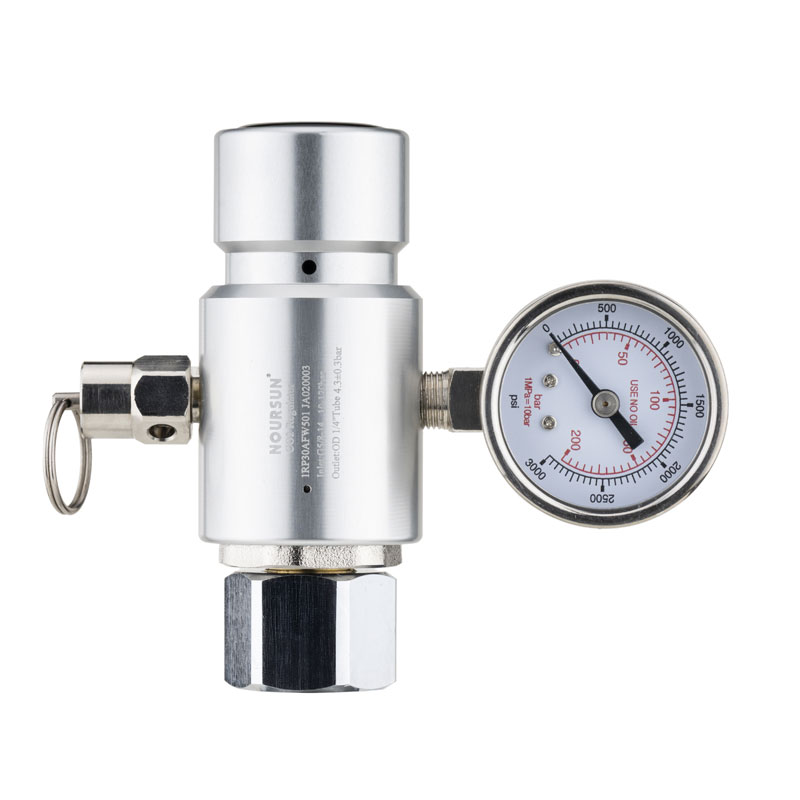
| Material | ▲ | Aluminum | ||
| Medium | CO2 | |||
| Operating Temperature | ‑5℃~43℃ | |||
| Max. Working Pressure | 12Mpa | |||
| Proof Pressure | 30Mpa | |||
| Output Pressure | ▲ | 0.20Mpa≤Preset pressure≤1.00Mpa | ||
| Output Pressure Accuracy | ±0.02MPa | |||
| Pressure Indication | Y40 axial pressure gauge | |||
| Indication Accuracy | Class Ⅳ (EN 837-1) | |||
| Inlet Port | ▲ | W21.8-14 / W22-14 / CGA320 / G5/8 / G3/4 | ||
| Outlet Port | ▲ | G1/8 / NPT1/8 | ||
| Relief Pressure(LP side) | External pressure relief valve | |||
| Net Weight | 432g | |||
| (▲ marked parts are standard parameters available for customization.) | ||||
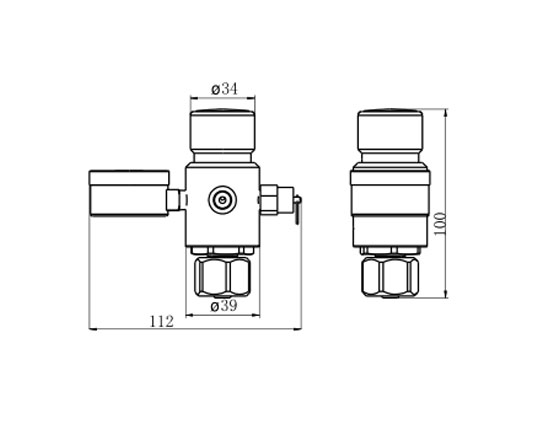
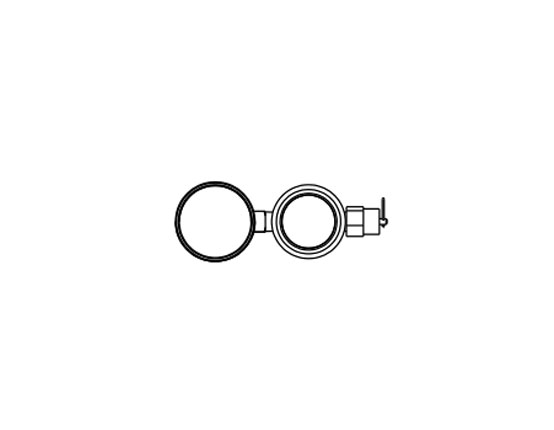
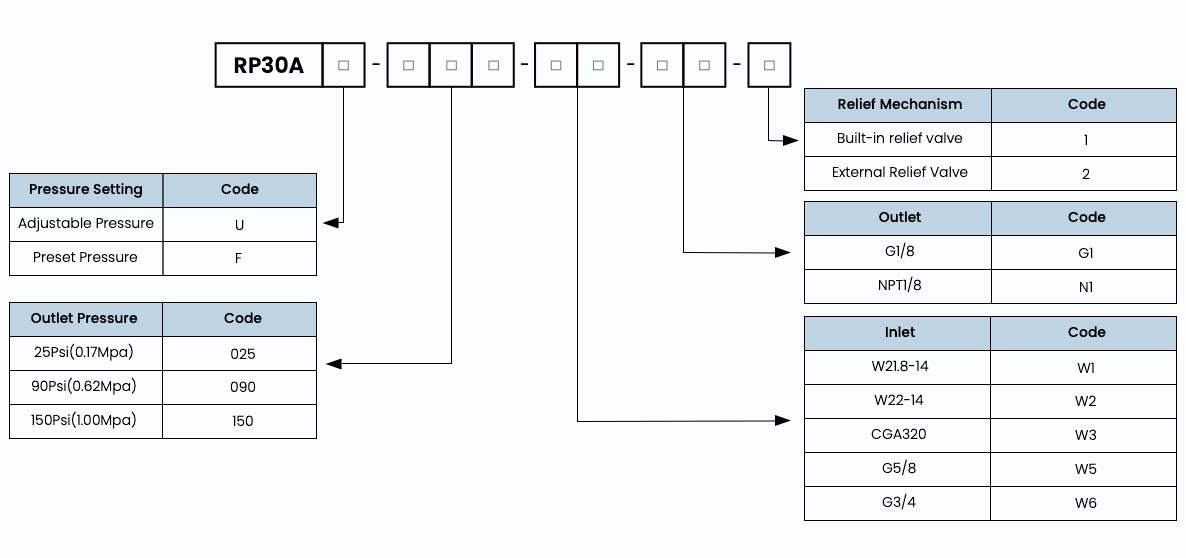
* Ordering code = Model +Pressure Setting+ "-" +Outlet Pressure+"-" + Inlet+"-"+Outlet+"-"+Relief Mechanism
Example: RP30AU-090-W1-G1-1
Contact Us to Place Your Order
Get quotations, request custom configurations, or receive technical support
Contact Us Now
Every carbonated system, whether it fills a bottle in a kitchen or runs a draft line behind a bar, relies on one quiet piece of engineering to keep the fizz consistent: a pressure regulator. Gas leaves the cylinder at a high pressure that drops steadily as the tank empties, and the regulator's job is to turn that moving target into a stable, usable output. The RP30-Carbonated Water CO2 Regulator belongs to this category of components built specifically for carbonated water and related beverage-gas applications, where even small pressure swings show up as flat drinks, uneven pours, or premature cylinder waste. Understanding how this kind of regulator behaves is more useful than reading a spec sheet, because the same principles decide whether any carbonation setup performs reliably day after day.
At Ningbo Noursun Industrial Co., Ltd, most of the pressure-control problems customers bring us trace back to the same root cause: a regulator that reduces pressure in one step instead of two. A single-stage design has to fight the full range of cylinder pressure as it falls from full to near-empty, so the output pressure drifts along with it. A two-stage regulator splits that work: the first stage knocks the cylinder pressure down to a fixed intermediate level, and the second stage fine-tunes it to the working pressure the appliance actually needs. The result is an output that barely moves even as the source pressure changes by hundreds of psi.
The chart below illustrates why this matters over time. A regulator holding tight tolerance keeps output pressure inside a narrow band across dozens of refill cycles, while a looser design lets that band widen as internal seals and springs respond less predictably to a nearly empty cylinder.
Illustrative pressure trace across repeated cylinder refills for a two-stage design holding a tight working band.
This is also where an RP30-Carbonated Water CO2 Regulator earns its place in a home or commercial soda setup: a stable band of output pressure means the carbonation level in the water stays predictable pour after pour, instead of degrading as the cylinder empties.
CO2 regulation is not a single fixed setting. Home soda making, draft beer dispensing, carbonated skincare devices, pest control equipment, hydroponic CO2 enrichment, and veterinary applications all draw from the same gas but need very different output pressures and flow behavior. This range of use cases is exactly what Ningbo Noursun serves, guided by a focus on collaboration, innovation, and sustainability across each of these industries, with products exported to customers in Europe, North America, East Asia, and Australia, including Fortune 500 companies and other industry leaders.
Typical operating pressure bands by application; actual settings vary by equipment and line length.
| Application | Typical pressure priority | Why it matters |
|---|---|---|
| Home soda making | Consistent mid-to-high pressure | Even carbonation from first bottle to last |
| Draft beer dispensing | Low, steady serving pressure | Avoids over-foaming through long lines |
| Carbonated skincare | Fine, repeatable adjustment | Consistent gas-to-liquid ratio at the skin |
| Hydroponic CO2 enrichment | Low-flow, long-duration stability | Prevents over- or under-dosing over hours |
A regulator's reliability is decided long before it reaches a cylinder, at the machining and assembly stage. Diaphragms, springs, and seats all have to hold tight tolerances, because a fraction-of-a-millimeter variance in a seat surface is enough to introduce creep, the slow pressure drift that shows up as a regulator that reads correctly on the gauge but drifts once gas is actually flowing. Using advanced manufacturing equipment, Noursun builds customized pressure-control solutions around this level of precision and consistency, and has moved production through a digital management transformation aimed at improving both efficiency and on-time delivery.
That precision is backed by ongoing engineering investment rather than a one-time design pass. Noursun is a high-tech enterprise that invests approximately 7% of annual revenue into R&D, holds more than 35 patents, and files around 10 new applications each year, work that continues to inform how components like the RP30 series are engineered and refined.
Patent portfolio size compared with the pace of new filings, both measured in count of patents.
The specs that matter to an engineer, seat material, spring rate, valve travel, are not the same things a person notices day to day. What people actually feel are the knob turning smoothly instead of catching, the gauge staying readable after months of handling, and the unit not leaking around a fitting after a cylinder swap. Noursun designs around four commitments that map directly onto that everyday experience: safety, stability, simplicity, and aesthetics.
Illustrative view of the design priorities balanced against one another in each unit.
In practice this shows up as rounded, glove-friendly knobs, gauges sized for a quick glance rather than close reading, and housings that resist the corrosion moisture around a soda system tends to cause over time. The RP30-Carbonated Water CO2 Regulator is built with that same balance of priorities in mind, since a regulator that is technically accurate but awkward to live with rarely gets used correctly for long.
If the regulator cannot hold a steady output pressure, the falling cylinder pressure passes through to the system, and less gas dissolves into the water at the same flow settings. A well-regulated two-stage design largely isolates the output side from that drop until the cylinder is nearly empty.
Not usually at the same settings. Beverage-grade regulators are built and sealed for food contact and typically run at higher pressure than a beer tap or a hydroponic enrichment line, so cross-using equipment without adjusting for the intended application is not recommended.
A quick visual and pressure check at every cylinder change is enough for most home and small commercial setups, with a closer look at seals and fittings if output pressure starts drifting between refills.
ADD: No. 50, Zhongxing East Road, Xikou Town, Fenghua District, Ningbo City, Zhejiang Province, P.R. China
0086-574-88881358
0086-574-88473625
About Us
Industry Applications
News & Events
