
 简体中文
简体中文
 English
 Français
 日本語
日本語
 Deutsch
0086-574-88881358
0086-574-88473625

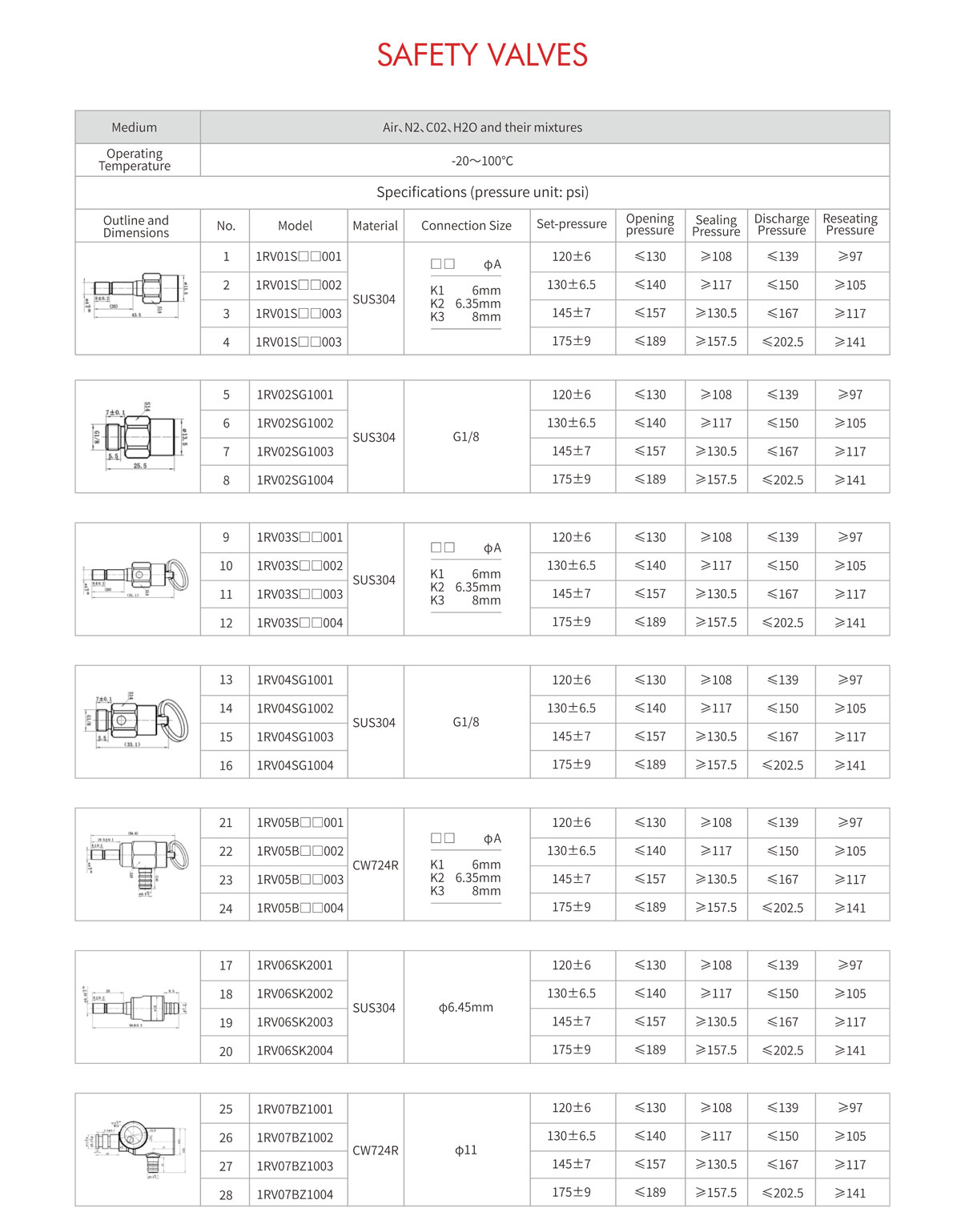
A safety valve is one of the most critical protective components in any pressurized system, opening automatically to release excess pressure before it can damage equipment or endanger operators. Within this broad category, a pressure safety valve is typically selected based on the working medium and the allowable set pressure range of the system it protects, while a high pressure safety valve is engineered specifically for demanding applications where system pressure, response accuracy, and sealing reliability must all hold under repeated cycling. Because these valves sit at the last line of defense in gas, liquid, and mixed-phase systems, understanding how they are rated, tested, and matched to an application is far more useful than simply knowing that a safety valve exists.
In practice, a safety valve is never chosen by pressure rating alone. The set pressure is derived from the maximum allowable working pressure of the vessel or line it protects, then adjusted for accumulation limits and back-pressure conditions. A pressure safety valve intended for a low-pressure gas line behaves very differently from a high pressure safety valve mounted on a compressed CO2 or industrial gas circuit, where even a small deviation in set point can mean the difference between a controlled release and a nuisance trip. At Ningbo Noursun Industrial Co., Ltd, zero-defect management is applied across the R&D-to-manufacturing chain, so that every valve leaving the line matches its intended set pressure without relying on post-production correction — a seamless path from demand definition to delivery.
As system pressure climbs, the margin for error in a safety valve's response narrows. A valve that opens a fraction of a second late, or reseats loosely, has a proportionally larger consequence on a high-pressure circuit than on a low-pressure one, simply because more stored energy is released in the same interval. This is one reason digital validation before physical prototyping has become so central to reliable design. Ningbo Noursun Industrial Co., Ltd has built a comprehensive digital finite element simulation system that enables full validation before any physical prototype is cut, using CAE/CAD/CAM tools to run structural strength analysis, fluid dynamics analysis, and process feasibility verification in a virtual environment first — which shortens the development cycle and cuts trial-and-error costs before a single part is machined.
Choosing the right high pressure safety valve is rarely a single-factor decision. Engineers typically weigh set pressure accuracy, flow capacity, material compatibility with the working medium, response speed, and sealing reliability together, since improving one factor can quietly compromise another — a valve tuned purely for fast response, for example, may sacrifice long-term seat durability. No single criterion should be optimized in isolation.
Balancing these factors well depends on people who understand both the engineering and the customer's operating context. Ningbo Noursun Industrial Co., Ltd has built a talent symbiotic system that aligns individual expertise with the company's broader performance, which is what allows selection guidance and manufacturing quality to stay consistent as product lines grow.
Ningbo Noursun Industrial Co., Ltd integrates R&D, manufacturing, and service rather than treating them as separate stages, which matters for a pressure safety valve in particular because field feedback — how a valve actually behaves after months of cycling — is often the most useful input for the next design revision. When service observations feed directly back into engineering rather than getting lost between departments, small performance issues get resolved before they become recurring complaints.
| Stage | Primary Focus | Typical Output |
|---|---|---|
| R&D | Simulation and structural validation | Verified design before tooling |
| Manufacturing | Precision production and testing | Consistent set pressure and sealing |
| Service | Field performance feedback | Input for the next design cycle |
A safety valve's environmental footprint is not limited to the moment it operates — it spans material sourcing, manufacturing energy use, and eventual end-of-life handling. Embedding low-carbon principles throughout the entire product lifecycle is part of how Ningbo Noursun Industrial Co., Ltd approaches this, building what it describes as a green responsibility ecosystem and working with partners to share value across the supply chain rather than treating sustainability as a separate initiative from production itself.
Both terms describe the same protective function — automatically relieving excess pressure — but "high pressure safety valve" usually refers to units engineered and tested for the upper end of a system's pressure range, where sealing reliability and response accuracy carry a larger margin of consequence if either falls short.
Inspection intervals depend on the operating environment, cycling frequency, and the medium being handled, so they are typically set according to the system's own maintenance schedule rather than a fixed universal figure.
Generally not effectively. A design optimized for low-pressure response tends to underperform at higher pressures, and vice versa, which is why set pressure range is one of the first parameters engineers narrow down before comparing valve models.
Yes. Even a well-designed safety valve can underperform if its wetted materials are incompatible with the working medium, since corrosion or fatigue at the seat is one of the most common causes of gradual sealing loss over time.
ADD: No. 50, Zhongxing East Road, Xikou Town, Fenghua District, Ningbo City, Zhejiang Province, P.R. China
0086-574-88881358
0086-574-88473625
About Us
Industry Applications
News & Events
