
 简体中文
简体中文
 English
 Français
 日本語
日本語
 Deutsch
0086-574-88881358
0086-574-88473625


News
Oct 19, 2026
A pressure relief valve (PRV) is a mechanical safety device that automatically opens to release gas, vapor, or liquid from a pressurized system when the internal pressure exceeds a predetermined set point. It exists for one purpose: to protect vessels, pipes, pumps, and machinery from overpressure damage. The valve needs no electrical power, no controller, and no operator action. It responds purely to the pressure acting on its inlet, which is why engineers treat it as the last line of defense in a fluid circuit. During normal operation, the valve remains closed and passes no flow. It wakes up only in abnormal situations, such as a blocked discharge line, a failed pressure regulator dumping full cylinder pressure downstream, thermal expansion inside a closed vessel, or a sudden surge caused by equipment malfunction. When the pressure returns to a safe level, the valve reseats and the system continues running. That combination of inactivity in normal service and reliable action in an emergency is what makes a pressure relief valve different from a pressure regulator or a control valve. All spring-loaded pressure relief valves use the same balance of forces. An adjustable spring presses a disc or poppet against a ground seat, keeping the valve closed. The process fluid enters underneath the disc and pushes upward. As long as the downward spring force is greater than the upward pressure force, the valve stays shut. The set pressure is adjusted by compressing or releasing the spring, which changes the force required to lift the disc. When the inlet pressure reaches the set point, the upward force overcomes the spring, and the disc lifts. Because the fluid now acts on a larger projected area, the net opening force grows once the disc is off the seat. That geometric effect is responsible for the quick, decisive opening you want from a protection device. The flow continues until the pressure falls to the reseat level, at which point the spring pushes the disc back down and the valve closes again. Not every pressure relief valve opens in the same way. The medium, the pressure level, and the required flow all influence the design. The table below summarizes the most common configurations you will meet in commercial and industrial systems. Direct-acting valves are simple, inexpensive, and fast to respond. Because the spring force is fixed, the opening force becomes relatively smaller as the set pressure rises, so at high pressures they are more likely to chatter or need a larger body. Pilot-operated valves use a small pilot valve to control a larger main valve. They deliver higher flow capacity, narrower blowdown, and better stability at high pressures, but they cost more and require a relatively clean medium because the pilot sensing line can block with debris. When you compare pressure relief valves on a datasheet, certain parameters matter far more than brand reputation. Use the following checklist to understand what you are actually specifying. One common misconception is that two valves with the same connection size have the same capacity. In reality, the internal orifice diameter and the lift geometry determine the flow. Two valves with identical threads can pass very different flows, so always verify the Cv or the certified capacity rather than assuming the port size is enough. Pressure relief valves appear in almost every pressurized circuit, from small carbonation rigs to large hydraulic lines. A consolidated overview of documented use cases is available on the application page, but the examples below cover the environments where most engineers and technicians need them. A typical soda maker stores CO2 in a cylinder at pressures as high as 800-1000 psi (55-69 bar), while the regulator steps it down to about 30-60 psi (2-4 bar) for carbonation. If the regulator fails with the valve stuck open, the full cylinder pressure is directed toward the carbonating bottle, which is not rated for that load. A correctly set relief valve vents the excess gas and holds the bottle circuit at a safe level. This is the highest-volume application for small gas relief components in consumer appliances. In draft beer equipment, CO2 pushes beer from the keg through the lines to the tap at a serving pressure of about 12-15 psi (0.8-1.0 bar). A keg that warms up or a regulator that drifts upward can raise the pressure beyond what the coupler and tubing are designed to handle. A relief valve installed on the gas line or the keg coupler opens, vents the excess CO2, and prevents the keg liner from rupturing and the beer from becoming over-carbonated and foamy. Planted aquariums and small hydroponic setups dose CO2 through a diffuser to stimulate photosynthesis. Working pressure is usually modest, around 20-30 psi (1.4-2.0 bar), and the circuit contains a solenoid valve, a bubble counter, and a non-return valve. If the regulator drifts or the solenoid fails open, downstream pressure can climb unexpectedly. A compact relief valve placed between the regulator and the injection point is a low-cost insurance layer that keeps the diffuser and PVC lines safe. In hydraulic circuits, the relief valve is usually set slightly above the normal working pressure and acts as the system pressure limiter. When a cylinder reaches the end of its stroke, the pump continues pushing fluid into a locked volume. The relief valve opens and returns the fluid to the tank, preventing the pump from deadheading and the hoses from bursting. These valves are direct-acting in small circuits and pilot-operated where high flow must be bypassed smoothly. Air receivers, gas manifolds, and process vessels rely on pressure relief components as a final protection layer. A blocked liquid line that is heated, for example by sunshine or a steam jacket, can rise well beyond its design pressure without any inflow, simply through thermal expansion; a small thermal relief valve is the standard answer. Larger system reliefs are specified when a regulator creeps, a check valve traps a volume, or a process upset raises the pressure beyond the normal operating envelope. To select a pressure relief valve you need three numbers: the maximum allowable working pressure of the weakest component in the protected circuit, the maximum relieving flow the system can generate, and the operating temperature with the media composition. The steps below turn those numbers into a workable specification. A relief valve is only as trustworthy as the engineering behind its set point and capacity. At Noursun, pressure control is the core business: the company continuously designs and manufactures gas pressure regulators and associated trimming components for beverage, hydroponic, and industrial OEMs. The company profile explains that specialization and how it translates into predictable component reliability. A pressure relief valve that is never tested is just a plumbing fitting. In critical systems, it must be checked regularly to confirm that the set point has not drifted and the seat still seals. Here is a practical maintenance routine that fits most light industrial and commercial installations. Keep a simple log for each valve that records the set pressure, the test date, the cracking observation, and any replacement. That log becomes the evidence that your protection layer actually works, and it also catches slow degradation before it causes a failure. These are the questions we hear most often from engineers and maintenance staff when they start working with pressure relief valves. A relief valve is used with liquids and opens proportionally to the overpressure. A safety valve is used with gases, steam, or vapor and opens with a pop action once its set pressure is reached. The two names are often used interchangeably, but the opening behavior is technically different and each design matches its medium. A regulator maintains a constant downstream pressure during normal flow; it is a control component. A relief valve remains closed during normal operation and only opens when an abnormal high-pressure event occurs; it is a protection component. Installing a relief valve does not replace the need for a regulator, and vice versa. Cracking pressure is the inlet pressure at which the disc first lifts off the seat. It is the same as the set pressure in most valve specifications and is the value you adjust during commissioning. The cracking pressure must always be lower than the maximum allowable working pressure of the protected system. Chatter is the rapid open-and-close vibration that occurs when the valve cannot pass enough flow to sustain a lift, or when the set pressure is so close to the operating pressure that small disturbances repeatedly crack the valve. Oversizing and undersizing can both cause chattering. Correct sizing and a stable system pressure prevent it. For critical applications, test at least once per year. In continuous high-cycle services, inspect quarterly. In lower-risk consumer equipment, a visual and leak check every six months is reasonable. Regular testing is the only way to confirm that the set point has not drifted and the seat still holds. A single valve can protect a common manifold if the total relieving flow and the MAWP are known and compatible across every branch. In practice, each vessel and each branch line tends to have its own relief valve, because the worst-case flows and pressure ratings usually differ. Individual valves also make testing and isolation easier during maintenance.How a Pressure Relief Valve Works
Key operating terms
Types of Pressure Relief Valves
Type
Medium
Opening behavior
Typical use
Direct-acting spring-loaded
Gas or liquid
Opens gradually as pressure rises
Small systems, portable equipment, CO2 supplies
Pilot-operated
Gas, vapor, liquid
Pilot triggers a fully open main valve
High-flow, high-pressure installations
Safety valve
Gas, steam, vapor
Pops open rapidly
Boilers, air compressors, gas receivers
Relief valve
Liquid
Opens in proportion to overpressure
Hydraulic systems, liquid pumps
Safety relief valve
Gas or liquid
Pop on gas, proportional on liquid
Combined services
Thermal relief valve
Liquid
Cracks slightly with limited capacity
Blocked-in liquid lines, thermal expansion
Direct-acting versus pilot-operated valves
Key Specifications and Ratings
Parameter
Meaning
Why it matters
Set pressure range
The range over which cracking can be adjusted
Must cover your system maximum allowable working pressure with margin
Set pressure tolerance
How close the actual lift point is to the nameplate setting
A tight tolerance prevents late opening or premature nuisance trips
Blowdown
Drop from cracking to reseat as a percentage of set pressure
Controls how quickly the system recovers after a relief event
Flow coefficient (Cv)
Throughput at full lift under a stated pressure drop
Decides whether the valve can pass the worst-case flow
Temperature rating
Minimum and maximum service temperature for body and seals
Beyond the rated range, elastomers lose their sealing force
Wetted materials
Materials in contact with the process medium
Incompatible media cause corrosion, swelling, and sticking
Connection size
Inlet and outlet thread or flange dimensions
Must match your piping or manifold without reducing adapters
Where Pressure Relief Valves Are Used
Soda Water and Carbonated Beverage Systems
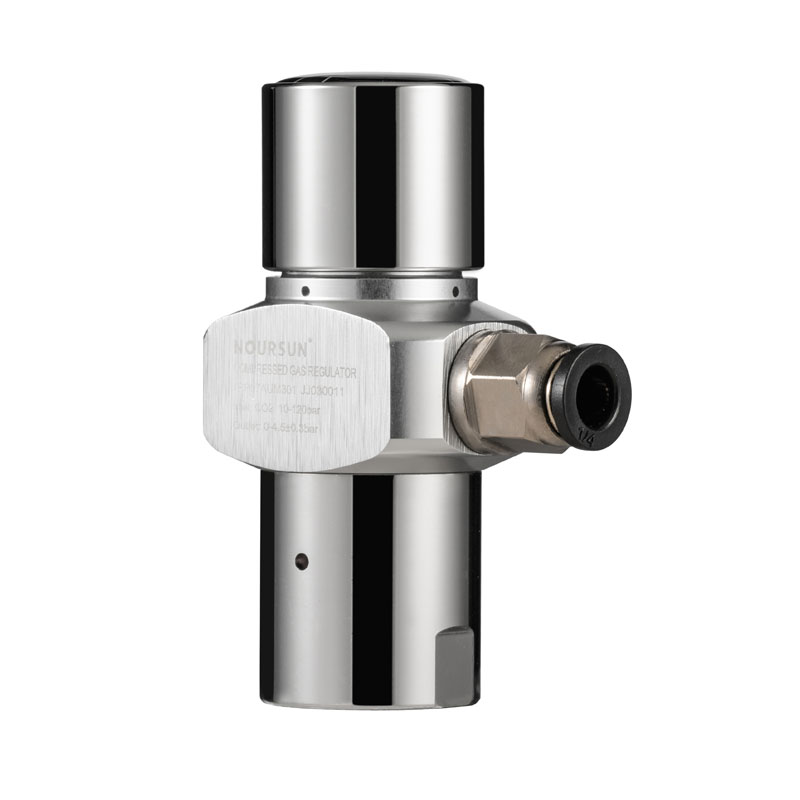 Soda Water CO2 Regulator with Relief Mechanism for Home CarbonationThis compact regulator precisely adjusts output pressure for consistent carbonation, while its relief valve protects the bottle circuit if the high-pressure cylinder fails, making it a key safety component in home soda systems.View Product →
Beer Dispensing Systems
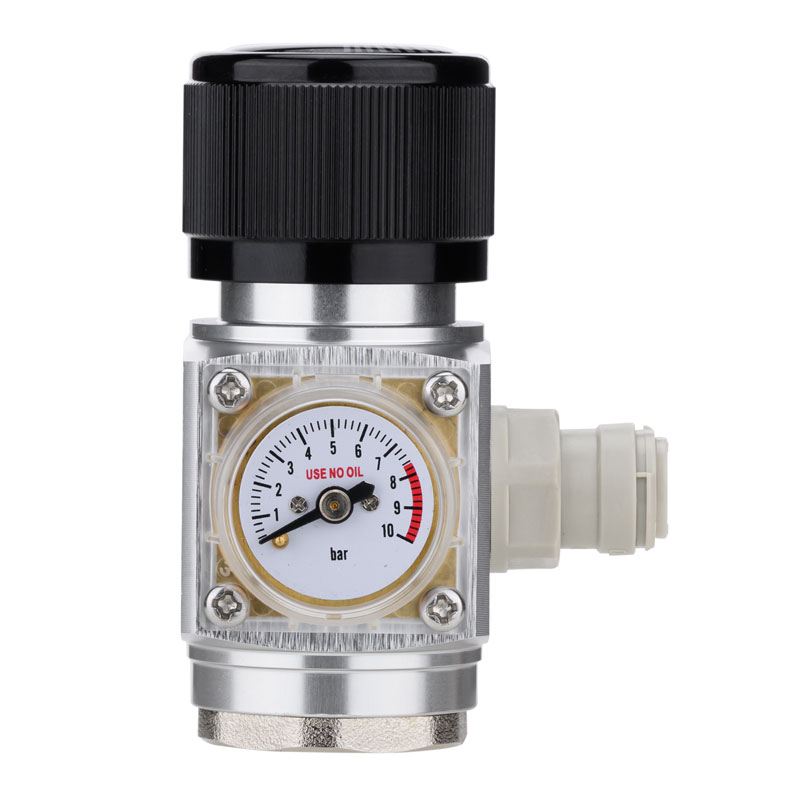 Beer CO2 Regulator for Keg Dispensing with Stable Pressure ControlDesigned for draft beer systems, this regulator delivers steady serving pressure to keep pours consistent and prevent foamy or over-carbonated beer, offering a reliable safeguard against pressure spikes in keg lines.View Product →
Hydroponics and Aquarium Systems
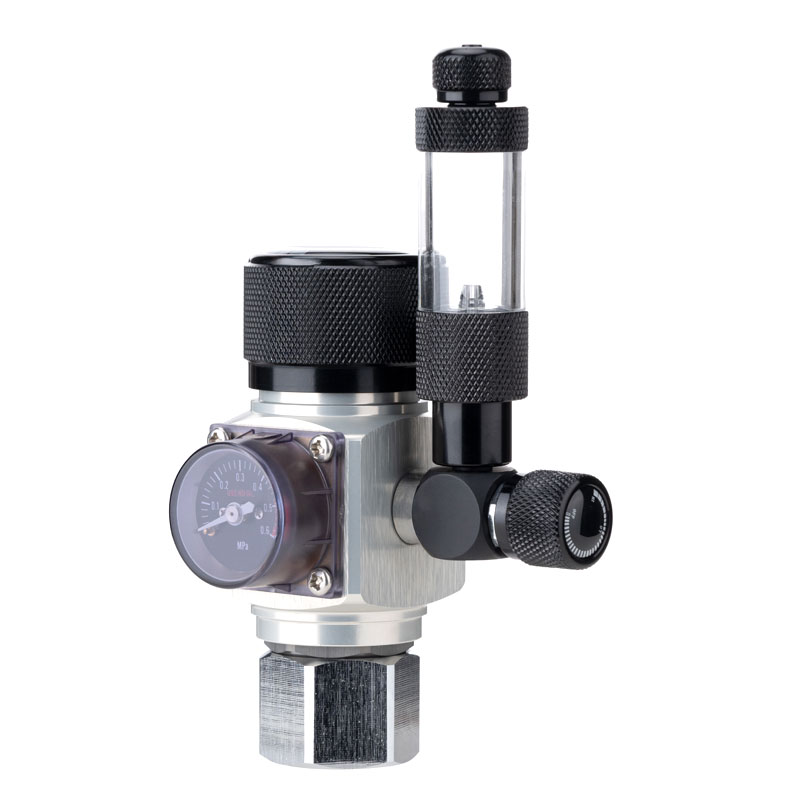 Compact Aquarium CO2 Regulator with Needle Valve and Bubble CounterThis compact regulator steps cylinder pressure down for planted aquariums, featuring a needle valve and bubble counter for precise, adjustable CO2 dosing—ideal for protecting diffusers and tubing when downstream pressure fluctuates.View Product →
Hydraulic Systems
Compressed Air and Industrial Gas Lines
How to Choose the Right Pressure Relief Valve
Step-by-step selection process
Mistakes to avoid
Maintenance and Testing
Frequently Asked Questions
What is the difference between a pressure relief valve and a safety valve?
What is the difference between a pressure relief valve and a pressure regulator?
What does cracking pressure mean?
Why does a pressure relief valve chatter?
How often should a pressure relief valve be tested?
Can one pressure relief valve protect the entire system?

Oct 12, 2026
Set a full CO2 cylinder on a scale and it will read somewhere around 6–7 kg. Inside, the gas is pushing at roughly 830 psi at room temperature. Now look at the plastic bottle in your soda maker. It is designed for about 80 psi maximum. If you connect those two things directly, something will eventually give. A regulator is the component that makes the connection safe, controlled, and repeatable. The short answer: a gas pressure regulator reduces high inlet pressure to a stable, adjustable outlet pressure, and it keeps that outlet pressure constant even as the cylinder empties or the gas flow changes. It is the only component between the gas source and your equipment that actually decides how much pressure your equipment sees. If you want one sentence to remember: a regulator turns "whatever is in the tank" into "exactly what your appliance needs." A pressure regulator performs three tasks at the same time, and every application depends on all three. To understand why these three tasks matter, look at the difference between the pressure in a gas source and the pressure your equipment actually needs. The easiest way to read a regulator is to think of it as a valve that opens when pressure falls and closes when pressure rises. Every regulator, regardless of size, uses the same balancing act between a spring and a gas-driven diaphragm. That balance is continuous, automatic, and entirely mechanical. The same principle applies to a tiny paintball regulator and a large industrial unit. The difference between a single-stage and a dual-stage regulator is a matter of how many reduction steps the gas passes through. A single-stage unit reduces cylinder pressure to outlet pressure in one step. A dual-stage unit does it twice: first from cylinder pressure to an intermediate pressure, then from that intermediate pressure to the final outlet pressure. Why does that matter in practice? In a single-stage regulator, the inlet pressure directly influences the internal balance. As the cylinder empties, its pressure drops, so the outlet pressure drifts slightly depending on the design. A dual-stage regulator isolates that effect, because the first stage always delivers the same intermediate pressure to the second stage, regardless of what the cylinder pressure is. For a home soda machine or a small planted aquarium, a single-stage regulator is usually enough. You will reset the outlet pressure occasionally at the start of each cylinder's life, and that is normal. For a draught beer wall where every keg should pour the same, or for any mixing operation where two gases must be blended consistently, a dual-stage regulator is worth the extra cost because it removes the variable that causes bad pours and inconsistent mixtures. Regulators appear wherever a gas cylinder meets a process. The fields that use pressure control most heavily are beverage, aquaculture, and high-pressure air. On Noursun's application overview, you can see regulators grouped by use case rather than by part number, which is the most practical way to understand what the device does in each setting. Home soda systems carbonate water by dissolving CO2 into cold water under pressure. The sweet spot is usually 40–60 psi, which produces the familiar 3–4 volumes of carbonation found in commercial sparkling water. At these pressures, a PET bottle reaches full carbonation in roughly two to three minutes with agitation. Regulators built for this job, like the RP07 soda water CO2 regulator, offer a clearly marked pressure range and a gauge so you can reproduce the same fizz every time. Draught beer systems balance CO2 pressure against temperature, line length, and beer style. In a typical kegerator running at 38°F (3.3°C), the serving pressure is between 10 and 15 psi. Push too hard, and you get foam and over-carbonated beer; push too gently, and the pour goes flat halfway through the glass. A beer-specific unit such as the RP20 beer CO2 regulator is designed to hold its setpoint within about ±1 psi, which is the tolerance that keeps a pint consistent from the first glass to the last. Planted aquariums and hydroponic grow areas use CO2 at very low pressures, usually 3–10 psi into a diffuser or reactor. At those levels, a small drift in pressure changes the bubble rate enough to stress the plants. Aquarium-specific regulators like the RP23 aquarium CO2 regulator provide a finer low-pressure adjustment than a beverage regulator, and many growers combine them with a solenoid valve on a timer so the CO2 stops at lights-off. Paintball fill stations use high-pressure air or nitrogen at up to 4,500 psi, and the regulator on the fill station steps that down to the tank's working pressure, typically 3,000–3,500 psi. That is a high-flow, high-pressure role rather than a precision low-pressure one. The same principle applies, but the materials, threads, and burst ratings are entirely different from a beverage regulator. A spec sheet can look intimidating, but four numbers tell you almost everything about whether a regulator fits your setup. At 50 psi, a 5 psi error is a 10% swing, which is enough to make a batch of sparkling water noticeably fizzier or flatter. At 10 psi, a 2 psi error is a 20% swing, which will push a draught line from a clean pour into a foamy mess. The lower your operating pressure, the more regulator accuracy matters. Most regulator problems are not mechanical failures. They are selection and setup mistakes made before the gas ever flows. A regulator is a precision component, but it asks for very little. Following a few habits will keep it accurate for years. Noursun's manufacturing process, described on their company background, includes testing each production batch for mechanical strength, durability, and safe operating limits, which is why a regulator from a dedicated manufacturer tends to hold its setpoint for much longer than an unbranded import. Some drop is normal, especially in single-stage units. As gas flows out of the low-pressure chamber, the diaphragm has to rebalance to feed more gas. This "droop" is around 3–8% in a well-designed single-stage regulator at maximum flow. If the drop exceeds 10%, you are probably exceeding the regulator's designed flow capacity and should move to a larger unit or a dual-stage design. A regulator controls pressure; a flow meter controls or measures volume per unit of time. An aquarium system often uses a regulator plus a needle valve, or a regulator with a built-in flow meter, because bubble rate is the variable you actually watch. The regulator keeps pressure constant, and the needle valve or flow meter decides how much gas escapes. Mechanically, many regulators thread onto both gas types, but you need a fitting that matches the cylinder and a pressure range suitable for the gas. CO2 cylinders hold roughly 830 psi when full, while argon cylinders can reach 2,000–3,000 psi. If the regulator's maximum inlet rating is lower than the cylinder pressure, it is unsafe regardless of whether the threads fit. The usual cause is a slow leak rather than a change in the regulator's setpoint. A tiny leak at a threaded joint gradually reduces the gas available and lets dissolved CO2 escape from the water. Close the cylinder valve after each session and test threaded joints with soapy water to confirm the system is sealed. The common warning signs are: the outlet pressure drifts even when the knob is untouched, the gauge shows pressure when the cylinder is closed, gas escapes from the body, or you hear a high-pitched whistle. If the unit cannot hold pressure with all downstream valves closed, the valve seat or diaphragm is worn and should be serviced or replaced. A cylinder-pressure gauge tells you how much gas remains; an outlet-pressure gauge tells you the pressure your equipment actually receives. For carbonated water and beer, the outlet gauge is essential. For aquarium CO2, you are already watching a bubble counter, so the cylinder gauge is the one you will rely on to avoid running the system dry.The Core Job of a Pressure Regulator
Gas source
Typical pressure at 20°C
Needed outlet pressure
CO2 cylinder, full
~830 psi
5–60 psi for most beverage and aquarium uses
CO2 cylinder, nearly empty
~350–500 psi
Same target, held by the regulator
Compressed air tank
up to 3,000 psi
80–120 psi for tools, lower for other uses
How a Regulator Actually Works
The three core parts
What happens while you are using it
Component
Role in pressure control
Adjusting knob
Changes spring tension to set the outlet pressure
Spring
Defines the target pressure level
Diaphragm
Senses outlet pressure and moves the valve seat
Valve seat
Opens and closes to allow or block gas flow
Low-pressure chamber
Holds a stable volume of outlet gas
Single-Stage vs Dual-Stage Regulators: Which One Do You Need?
Feature
Single-stage
Dual-stage
Reduction steps
1
2
Outlet pressure drift as the tank empties
5–15% typical
1–3% typical
Relative cost
Lower
Higher
Best suited for
Soda makers, basic CO2 aquarium setups, simple tools
Gas blending, argon shielding, keg systems, any process where constant pressure is critical
Gauge behaviour
Setpoint can creep as inlet pressure falls
Reading stays visibly flatter
What Do People Actually Use Regulators For?
Carbonating water at home
RP07 Soda Water CO2 Regulator with Adjustable Pressure GaugeThis regulator is highlighted for home carbonation systems, offering precise pressure control between 40–60 psi to achieve consistent sparkling water carbonation. Its built-in gauge and relief mechanism support repeatable results and safety.View Product →
Serving draught beer from a keg
RP20 Beer CO2 Regulator for Draft Dispensing SystemsPositioned after the soda regulator, this unit suits draught beer setups by maintaining serving pressure around 10–15 psi with ±1 psi accuracy. It helps prevent foam and flat pours, making it essential for consistent keg dispensing.View Product →
Injecting CO2 into an aquarium or hydroponic system
RP23 Compact Aquarium CO2 Regulator with Needle ValveThis regulator is ideal for planted tanks and hydroponics, providing fine low-pressure adjustment from 3–10 psi. Its needle valve and bubble counter enable precise bubble rates, with error within ±2 bubbles per minute for plant health.View Product →
Filling paintball tanks
How to Read a Regulator Specification Sheet
Specification
Why it matters
Typical value for home/light commercial use
Outlet pressure range
Must include your target pressure with margin
0–60 psi for beverage; 0–100 psi for multi-use
Max inlet pressure
Must exceed full cylinder pressure
3,000 psi for air; 1,500 psi or higher for CO2
Flow rate
Determines how fast gas reaches your equipment
100–500 L/min for beverage systems
Gauge accuracy
How trustworthy your pressure reading is
±1.5% of full scale
Why small pressure errors matter
Common Regulator Mistakes to Avoid
Safe Use and Basic Maintenance
Frequently Asked Questions About Gas Regulators
Why does my regulator pressure drop when gas flows?
What is the difference between a regulator and a flow meter?
Can one regulator handle both argon and CO2?
Why does my carbonated water taste different after a few weeks?
How do I know when my regulator needs replacing?
Is a cylinder gauge necessary?

Oct 05, 2026
A propane regulator is a mechanical pressure-reducing valve installed between the propane tank and the appliance. It takes the high, fluctuating pressure inside the tank — often 100 psi or more on a warm day — and drops it to a stable, low pressure that a burner can safely burn, normally about 11 inches of water column, which is roughly 0.4 psi. That pressure gap matters far more than most people realize. A typical 20 lb grill cylinder holds liquefied propane under vapor pressure, and that pressure moves up and down with temperature. At 70°F, you are looking at around 110 psi; at 110°F, the vapor pressure of propane climbs toward 196 psi, according to standard industry vapor-pressure tables. The appliance orifices are sized for a low, controlled inlet pressure. Unregulated gas at even a fraction of 100 psi would create violent flames, soot, wasted fuel, and a genuinely dangerous operating condition. This guide explains what a regulator does, how it operates step by step, the main types you will encounter when replacing or specifying one, the specifications that determine whether it fits your equipment, the failures you are most likely to see in service, and when your project should move from commodity hardware to a specialist pressure-regulator manufacturer. A propane regulator is a gas-flow control device that reduces storage pressure from the cylinder to the appliance working pressure, then holds that downstream pressure steady while the appliance draws varying amounts of gas. It is installed either directly on the tank valve or along the gas line between the tank and the equipment. Inside the housing sits a small but carefully balanced mechanical system. The exact design differs from one model to another, but these components are almost always present: The regulator is a purely mechanical device. There is no electronics inside, no motor, no sensor. It behaves like an automatic valve that adjusts itself continuously based on the pressure downstream. That is why a well-built regulator can run for years without attention while still delivering consistent performance. The numbers you see on the packaging — 11" WC, 10 psi, 30 psi — describe the outlet pressure that the spring is calibrated to hold. When someone says a regulator is set for a barbecue or set for low pressure, they are talking about that calibration. A regulator works by balancing two opposing forces: a spring pushing toward the open position, and gas pressure against the diaphragm pushing toward the closed position. When the two forces are equal, the valve stays in a fixed position and gas flows at a steady rate. Here is the sequence in practical terms: This open-close cycle repeats many times per second. During a normal cookout, the valve seat opens and closes continuously, letting only the exact amount of gas through that the burner demands. The result is a nearly constant outlet pressure from the moment you crack the tank valve until the moment you shut it off. With a single-stage regulator, the valve takes full tank pressure and drops it straight down to 11 inches of water column in one step. The trade-off is that no spring is perfect: as tank pressure changes with temperature and as the cylinder empties, the outlet pressure wanders slightly. Most grills tolerate this, which is why single-stage designs dominate outdoor cooking equipment. A two-stage setup splits the work. The first stage steps tank pressure down to around 10 psi. The second stage then reduces that 10 psi down to 11 inches of water column. Because the first stage isolates the second stage from tank-pressure swings, the final output remains exceptionally stable. This is why RVs, boats, and multi-appliance installations use two-stage regulators. Not all regulators are interchangeable. The correct type depends on the appliance, the gas flow rate, and whether the tank feeds a single device or an entire gas system. The table below summarizes the most common categories. The low-pressure single-stage regulator is the unit you see on most outdoor grills. It is compact, affordable, and matched to a specific flow range. The high-pressure regulator is a completely different product family: it is rated in psi rather than inches of water column and is designed for equipment that genuinely needs pressure, such as construction heaters and brazing torches. Two-stage regulators look like two bodies joined together and are normally sold with the first and second stage already matched. If you are wiring up a small camper or a backup household circuit, choose this type. Adjustable regulators are convenient during installation and testing, but once you set the outlet pressure, the adjustment should be secured so vibration cannot change the calibration. Before purchasing a propane regulator, compare these five values against your appliance manual. A regulator can be mechanically sound and still completely wrong for your application. Flow capacity deserves special attention. A typical gas grill draws 30,000 to 50,000 BTU/hr at full heat, while a 60,000 BTU shop heater draws more than that. Read the BTU rating stamped on the appliance and choose a regulator that exceeds it by at least 20%. When in doubt, a larger capacity is safer than a smaller one. Connection sizes are the other common source of frustration. The standard outdoor grill connection in North America is the QCC1/Type 1 fitting with a left-hand thread. RV and bulk-tank systems often use the POL fitting, and some appliance regulators accept 1/4 inch NPT. Measure the threads of the tank valve or hose before ordering, because returns and reordering are the most common cause of project delays. Under normal use, a propane regulator should last many years. But like any mechanical component, it can wear out, freeze, or simply be too small for the connected load. These are the failures you are most likely to encounter in the field: One rule applies across all of these situations: do not attempt to rebuild a regulator yourself. The calibration belongs to the manufacturer, and home repairs rarely hold. Replace the unit with a correct specification and verify that the outlet pressure matches the appliance requirement. For a single grill, replacing a regulator is a simple hardware decision. But for companies that design gas appliances, build beverage machines, or maintain fleet equipment, the regulator becomes an engineering specification. A poorly built regulator creates returns, warranty claims, inconsistent performance, and unhappy end users. This is where experience in pressure control matters. Noursun (Ningbo Noursun Industrial Co., Ltd.), a gas pressure regulator manufacturer established in 2012 in Ningbo, China, treats pressure regulation as its core business rather than a side product line. According to the company profile page, Noursun invests roughly 7% of annual revenue into research and development and holds more than 35 patents in gas pressure control technology. That background directly influences how consistently a regulator holds its calibration over thousands of open-close cycles. The interesting part is that the engineering transfers across gases. A propane regulator and a CO2 regulator are built around the same fundamentals: spring force, diaphragm travel, valve geometry, and tight tolerance on the seat. When you need stable pressure for carbonated beverage lines, aquarium CO2 dosing, or paintball tank filling, you are looking at the same physics with a different gas medium. For example, Noursun produces the RP20 Beer CO2 Regulator for beverage dispensing lines, holding downstream CO2 pressure steady through long pouring sessions so the beer maintains consistent carbonation. For soda and sparkling-water makers, the compact RP06 Sparkling Water Pressure Regulator is a single-stage unit designed for countertop carbonation machines. And for aquariums or hydroponic setups where fish and plants need predictable CO2 dosing around the clock, the RP32 Dual-Stage CO2 Regulator with Manometer removes the outlet-pressure drift you typically get from a single-stage unit. If you are an OEM, importer, or service business that needs consistent gas pressure control, it pays to discuss flow curves, port sizes, and body materials with an engineer before you commit to a part number. The Noursun engineering team can be reached through the contact page for custom pressure-regulator requirements and application-specific tuning. It reduces the high, variable pressure of propane vapor in the tank to a low, stable pressure that the appliance is designed for — normally around 11 inches of water column for household grills and heaters — and then modulates the flow as the appliance draws gas. Replace the regulator if you notice a persistent weak flame, yellow sooty flames, frosting on the body, a hissing leak at the vent, or a gradual loss of heat output that cleaning the burner does not fix. Any visible physical damage is also grounds for replacement. Rapid gas expansion cools the metal components, and moisture present in the gas line condenses and freezes on the surface. This is common on humid days or when a freshly filled tank introduces moisture. Keeping the vent clear and letting the unit warm up usually resolves it. Yes, if the regulator flow capacity exceeds the combined BTU load of all connected appliances. For multiple permanent appliances, use a two-stage regulator with a manifold so each branch receives stable pressure when other devices cycle on and off. They use different units and serve different purposes. One psi equals about 27.7 inches of water column, so 11 inches WC is roughly 0.4 psi. A 10 psi regulator therefore delivers about 25 times more outlet pressure and is intended for high-pressure equipment, not standard grills. No. Propane and CO2 have different vapor pressures, flow behaviors, and material compatibility requirements. Regulators are gas-specific for a reason, and swapping them introduces leakage and combustion risks. Always match the regulator to the gas that will actually flow through it. A quality regulator typically lasts 10 to 15 years indoors and fewer when exposed to harsh outdoor conditions. Inspect it annually, and replace it whenever the tank has been involved in a pressure-relief event, a severe drop, or visible corrosion.What Is a Propane Regulator?
How Does a Propane Regulator Work?
Single-Stage vs Two-Stage Regulation
Types of Propane Regulators
Regulator type
Output pressure
Typical use
Low-pressure single-stage
11 in WC (~0.4 psi)
Grills, patio heaters, fire pits, portable cookers
High-pressure regulator
1 to 60 psi
Propane torches, forced-air construction heaters
Two-stage regulator
First stage ~10 psi; second stage 11 in WC
RVs, trailers, cabins, multi-appliance systems
Integral appliance regulator
11 in WC
Built-in barbecue grills, commercial cooking ranges
Adjustable regulator
0 to 60 psi
Test rigs, custom manifolds, specialty equipment
Key Specifications to Check Before Buying
Specification
Typical range
Why it matters
Outlet pressure
11 in WC for consumer appliances; 1 to 60 psi for high-pressure gear
Wrong outlet pressure causes soot, weak flame, or a hazardous flare-up
Flow capacity
50,000 to 500,000 BTU/hr depending on size
An undersized regulator starves the appliance at high demand
Inlet connection
QCC1/Type 1, POL, or 1/4 inch NPT
Must match the tank valve or hose thread
Outlet connection
3/8 inch flare, 1/4 inch NPT, hose barb
Must match the appliance-side line
Operating temperature
-40°F to 140°F
Cold weather can cause icing and set-point drift
Common Propane Regulator Problems and Troubleshooting
When to Work With a Specialist Regulator Manufacturer
Noursun RP20 Beer CO2 Regulator for Draft DispensingThis beer CO2 regulator maintains steady downstream pressure during long pouring sessions, helping draft beer keep consistent carbonation and predictable foam.View Product →
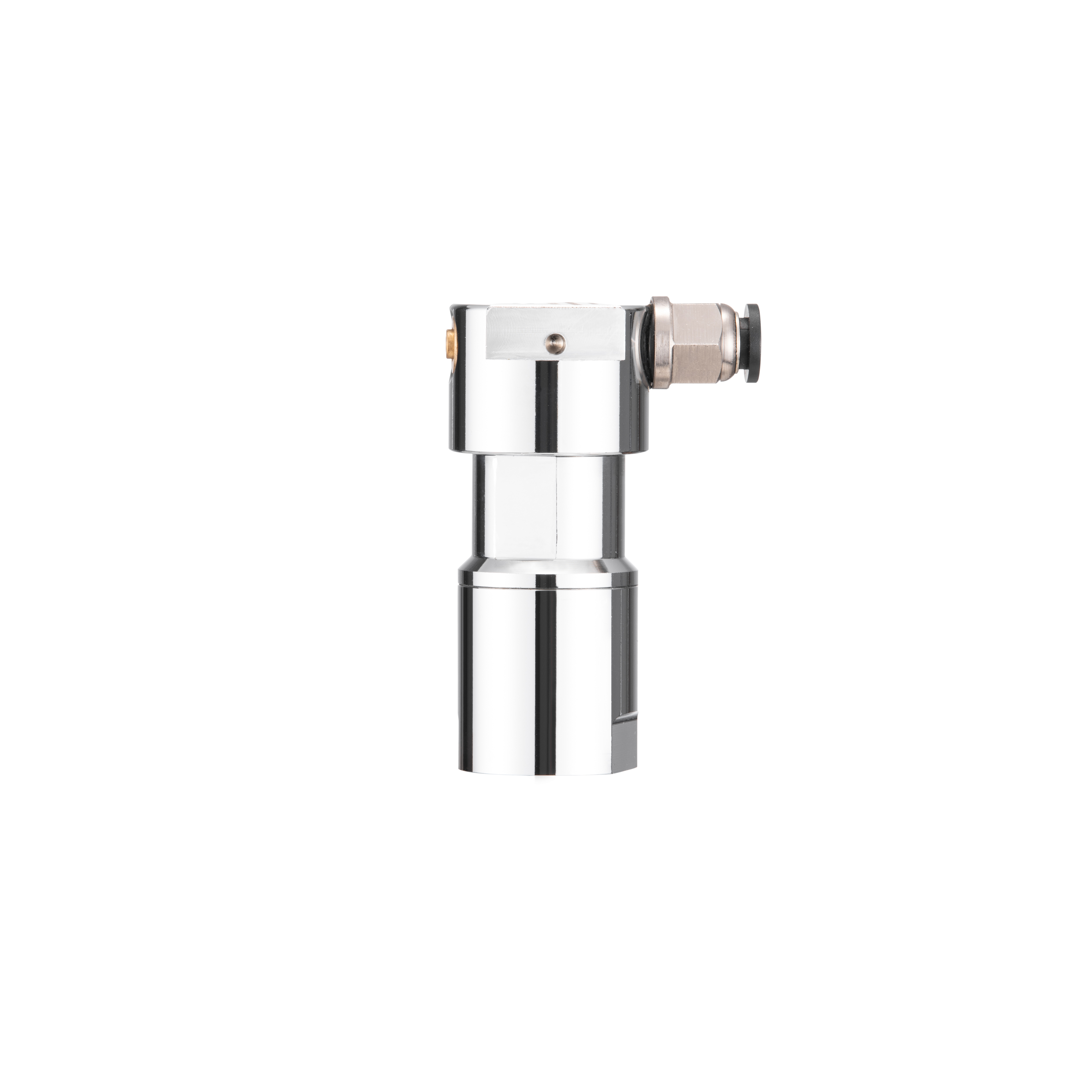 Noursun RP06 Sparkling Water Pressure RegulatorA compact single-stage regulator designed for countertop carbonation machines, featuring a top-outlet layout and built-in relief valve for safe, efficient sparkling water dispensing.View Product →
 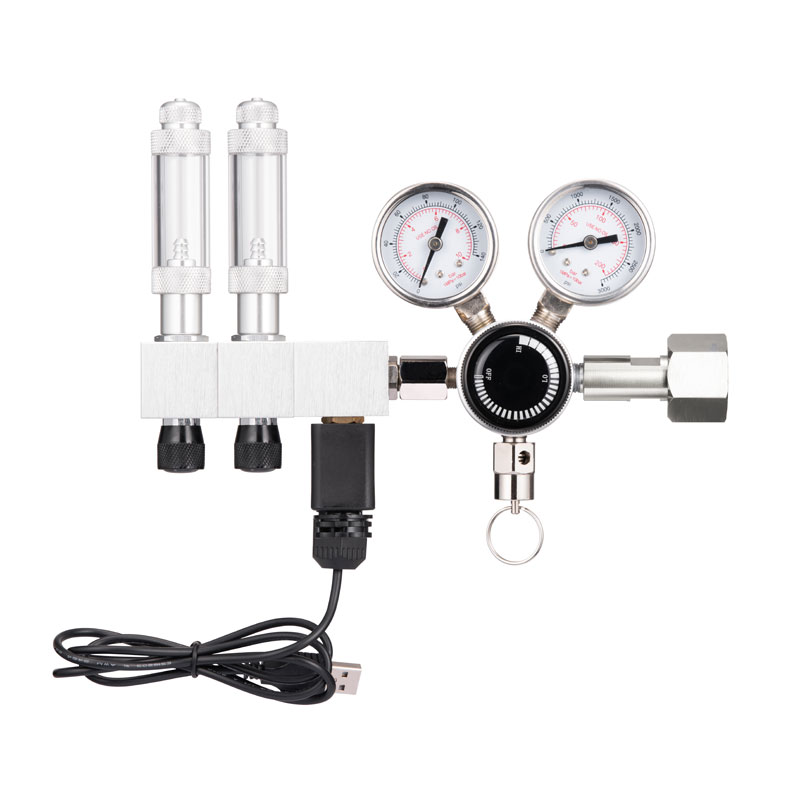 Noursun RP32 Dual-Stage CO2 Regulator with ManometerA dual-stage regulator with manometer for aquarium and hydroponic CO2 dosing, featuring a solenoid valve, needle valve, and bubble counter to keep output stable within ±1 bubble per minute.View Product →
Frequently Asked Questions About Propane Regulators
What does a propane regulator do?
How do I know if my propane regulator needs replacing?
Why does my propane regulator freeze up?
Can I use one regulator for two or more appliances?
What is the difference between a 10 psi regulator and an 11 inch WC regulator?
Can I use a CO2 regulator on a propane tank?
How long should a propane regulator last?
Sep 28, 2026
Your CO2 cylinder holds roughly 800 psi. Your soda machine needs a steady 75 psi to carbonate water consistently. The only component between those two numbers is a gas pressure regulator, and if its output drifts by even 5 psi, the carbonation level changes, the flavor becomes inconsistent, and customers notice immediately. The same pressure-stability principle applies to a beer kegerator at 12 psi, an aquarium CO2 injector at 30 psi, or a paintball gun at 800 psi. The direct answer to the most common buying question is this: choose a gas pressure regulator that delivers stable outlet pressure at your required flow rate, with seals compatible with your gas, and a stage design that matches your application's precision needs. Everything else is secondary. This guide walks through these decisions in depth. A gas pressure regulator is a mechanical device that reduces a high inlet pressure to a much lower, controlled outlet pressure. It does this continuously: as gas flows out, the regulator opens; as pressure builds, it closes. The core mechanism relies on a spring-loaded diaphragm that balances downstream pressure against spring force. Here is the typical sequence inside a single-stage regulator: The most common gas used in consumer and light industrial regulators is carbon dioxide (CO2), which is stored as a liquid in cylinders. At room temperature, a partially filled CO2 cylinder holds a vapor pressure of approximately 800 to 1100 psi. The regulator must safely reduce this to something usable, typically 12 to 100 psi depending on the application. The regulator is the first point of contact between the gas source and your equipment, so by the time gas reaches the final device, the pressure must already match the specification. That is why regulator quality has a direct and measurable impact on product consistency. Buying a gas pressure regulator without checking the key specifications is like buying a pump without knowing the flow rate you need. These are the parameters that define whether a regulator will work in your system: Beyond pressure and flow, check these details: This is one of the most common questions from customers. A single-stage regulator performs one pressure reduction step. It is simpler, smaller, and more affordable. However, its outlet pressure will change as the cylinder pressure changes. As a CO2 cylinder empties, its vapor pressure gradually falls, causing the regulator to slightly reduce its output. The amount of drift depends on the design, but it can be as much as 5 to 15 psi in a typical single-stage unit. A dual-stage regulator reduces pressure in two steps. The first stage drops cylinder pressure down to an intermediate pressure, and the second stage brings it to the final delivery pressure. Because the second stage sees a relatively constant inlet pressure, the output stays remarkably stable. Dual-stage regulators are the preferred choice for applications where pressure fluctuation directly affects product quality, such as: A good rule of thumb: if your outlet pressure is below 50 psi and you are using the regulator until the cylinder is nearly empty, a dual-stage regulator will pay for itself in consistent output and fewer adjustments. For rough-duty applications like paintball or welding where pressure can vary within a wider window, a single-stage regulator is simpler and more cost-effective. The key difference is not better or worse, but which one fits the precision budget of your process. Each gas-driven system has a unique pressure and flow profile. Here is a practical breakdown of the main application categories and the regulator features that matter most for each. For soda water and sparkling water carbonation, the target is consistent gas dosing into chilled water at around 60-100 psi. The regulator must hold that pressure even as the machine cycles on and off. A dual-gauge design helps because you can instantly see whether the output pressure is drifting. The outlet pressure directly determines the volume of CO2 dissolved in the water, so a regulator that holds 75 psi within a tolerance band of plus or minus 2 psi will produce a much more consistent mouthfeel than one that allows drift to 85 psi. For beer dispensing, outlet pressure is much lower, typically 12-30 psi, and the flow rate is modest. Here the key concern is pressure creep. If the regulator creeps upward, the beer will over-carbonate and pour with too much foam. A regulator that includes a check valve downstream prevents beverage backflow from damaging the adjustment spring. For aquarium and hydroponic CO2 dosing, the bubble rate is the only control variable. A dual-stage regulator with a fine adjustment knob and a bubble counter connection is the right tool. The flow rate is tiny, in the range of 30 to 60 bubbles per minute, so the regulator must be very sensitive and smooth in its response. For industrial and commercial systems, the decision is often about flow capacity. Larger systems may need a regulator that can pass more gas per minute. Our engineering data shows that selecting a regulator with 25 to 30 percent more flow capacity than your peak demand avoids pressure sag during high-demand events. Once you know your application, the process of choosing becomes straightforward: decide on outlet pressure, determine peak flow, select stage design, and verify the inlet connection. If you need more help, Noursun provides application-specific guidance and engineering support for OEM projects. Even the highest quality gas pressure regulator will fail prematurely if installed or maintained incorrectly. These practices, drawn from field observations across beverage and hydroponic systems, will help you get the most out of your regulator. Cleaning is straightforward: use only mild soapy water. Never use alcohol-based solvents on the regulator body, as they can degrade the rubber seals. After cleaning, allow the unit to dry completely before reconnecting it to the gas line. Also, when storing spare regulators, keep them in a dry, cool place below 30 degrees Celsius because heat accelerates seal aging. The same regulator can behave differently in a cool basement near a beer keg and in a warm shipping container on its way to a distributor. Understanding the environmental variables helps you build a more reliable system. Temperature is the biggest factor. CO2 cylinder pressure rises with temperature. A cylinder at 20 degrees Celsius shows about 830 psi, while the same cylinder at 30 degrees Celsius rises to about 950 psi. This means the regulator's first stage in a dual-stage design has to handle an inlet swing of over 120 psi across a 10 degree temperature change. In hot environments, the regulator body itself can heat up, which changes the spring force slightly and causes a small output pressure shift. That is why temperature-compensated design matters in high-flow systems. Humidity is a second factor, especially for regulators installed in outdoor or semi-outdoor units. Condensation can enter the bonnet through the adjustment screw thread, causing corrosion of the spring and eventual seizing. Applying food-grade grease to the adjustment thread is a common preventive measure used in commercial beverage installations. Dust and particulates are the third factor. In paintball fields, for example, dust can settle on the valve seat after repeated pressure cycling. A disposable inlet filter is a cheap and effective insurance policy. In our experience, more than 40 percent of field returns come from contamination-related seat issues rather than manufacturing defects. Most regulator issues in the field fall into a few predictable categories. Knowing what they look like before they happen saves hours of troubleshooting. A simple test that most users forget: after closing the supply valve, record the delivery pressure on the gauge, then wait 10 minutes. If the pressure has increased, the valve seat is not sealing. If it has dropped, something downstream is leaking. No. CO2 regulators are designed for CO2's specific pressure ranges and seal materials. Using a CO2 regulator with air or nitrogen can lead to leaks and pressure instability because the seals are not optimized for those gases. Choose a regulator specifically rated for the gas you are using. Open the cylinder valve slowly, then rotate the adjustment screw clockwise to increase pressure. Set the desired pressure while gas is flowing, not while the line is sealed. If a system uses a solenoid or intermittent flow, the pressure should be set at the moment of flow, because the regulator output naturally rises when flow stops. Size is determined by peak flow demand. As a general rule, select a regulator that can deliver 25 to 30 percent more flow than your system needs in its highest demand state. Undersizing causes pressure sag and inconsistent performance. Oversizing by a large margin can create oscillation. Not recommended. Beer systems operate in the 12-30 psi range, while soda systems run at 60-100 psi. Using a soda regulator for beer will over-carbonate the beer and create excessive foam. Using a beer regulator for soda will not deliver enough pressure to carbonate water properly. Freezing occurs when CO2 expands rapidly at the valve seat, absorbing heat. This happens when the flow rate is too high for the regulator's capacity. Move the regulator closer to the point of use, use a larger regulator, or choose a regulator designed for high-flow applications with internal heating features. In moderate-use environments, inspect the diaphragm and seals every 12 months. In heavy-duty or high-duty-cycle applications, replace the diaphragm every 6 months. The adjustment spring can last much longer, but it should be checked for corrosion if the regulator shows signs of moisture exposure. For more information about a manufacturer's quality control approach, see Noursun's quality control process.What Is a Gas Pressure Regulator and How Does It Work?
Critical Specifications to Check Before You Buy
Application
Typical Outlet Pressure
Typical Flow Rate
Regulator Type
Soda water carbonation
60-100 psi
0.5-2 l/min
Single-stage or dual-stage
Beer dispensing
12-30 psi
1-3 l/min
Single-stage or dual-stage
Aquarium CO2 dosing
20-45 psi
0.1-0.5 l/min
Dual-stage with gauge
Paintball air systems
650-850 psi
5-15 l/min
Fixed high-pressure
Single-Stage vs Dual-Stage: Which One Do You Need?
Dual Stage CO2 Regulator with Manometer for Aquarium and Precision ApplicationsThis dual-stage regulator delivers stable output across the full cylinder life, with dual gauges for tank and line pressure. Ideal for aquariums, grow rooms, or greenhouses where consistent CO2 dosing is critical.View Product →
How to Match a Regulator to Your Application
Soda Water CO2 Regulator with Overflow Protection for Carbonation SystemsDesigned for household or commercial carbonation, this regulator lets you fine-tune output pressure for consistent fizz. Its sealing-before-opening mechanism maximizes gas use and safety.View Product →
Beer CO2 Regulator with Leak-Proof Design for Draft DispensingBuilt for beverage distribution, this compact regulator holds steady low pressure to prevent over-carbonation and foamy pours. Its leak-proof technology ensures safe, efficient gas use.View Product →
Installation and Maintenance Practices That Extend Regulator Life
Environmental Factors That Affect Gas Pressure Regulator Performance
Common Operational Problems and How to Solve Them
Problem
Typical Cause
Recommended Fix
Outlet pressure rises over time
Foreign debris lodged inside the valve seat
Disassemble, clean, and inspect the seat surface
Outer body forms ice or frost
Excessive pressure drop or high flow rate
Move regulator closer to the device or upgrade flow capacity
Bubble rate fluctuates in aquarium
Single-stage design on a nearly empty cylinder
Switch to a dual-stage regulator
Leaking gas from bonnet
Diaphragm split or seal flattened
Replace diaphragm and seal
Frequently Asked Questions
Q1. Can a CO2 regulator be used for air or nitrogen?
Q2. How do I set the outlet pressure correctly?
Q3. What regulator size do I need?
Q4. Can I use the same regulator for a beer kegerator and a soda machine?
Q5. Why does my regulator freeze and stop working?
Q6. How often should a regulator be serviced?

Sep 21, 2026
A pressure regulator is a mechanical device that keeps the downstream pressure at a pre-set level even when the inlet pressure fluctuates or when the flow rate changes. It does this by balancing two opposing forces: a spring force that pushes a valve open, and a gas or liquid force on a flexible diaphragm that pushes the valve closed. When the downstream pressure rises above the set point, the diaphragm moves against the spring, the valve closes a little bit more, and the outlet pressure drops back. When the downstream pressure falls, the spring wins, the valve opens wider, and more fluid is admitted to raise the pressure. This simple action repeats thousands of times per minute without anyone touching it. In a typical CO2 beverage system, for example, a cylinder may start at 800 psi and end at 300 psi as it empties, yet the regulator keeps the outlet at 30 psi for consistent carbonation. Every pressure regulator, regardless of application, uses the same three mechanical parts to create its force balance system. Understanding these parts is the key to understanding how the regulator behaves under real conditions. In operation, the sequence is almost continuous. If the outlet pressure drops because someone opens a flow tap, the diaphragm force decreases, the spring moves the poppet toward the open position, and gas flows in until the diaphragm force catches up. If the outlet pressure rises, the poppet moves toward the closed position and restricts flow. The result is a self-correcting system that works entirely on physical forces, with no electronics or external power. A single-stage regulator takes the inlet pressure down to the set outlet point in one step. A dual-stage regulator uses two pressure-reducing chambers in series. This difference is not just technical; it changes how much the outlet pressure drifts as the tank empties. For low-pressure applications like aquariums or small soda makers, a single-stage regulator may be enough. But for industrial CO2 systems where the cylinder pressure changes dramatically in a short time, the added cost of a dual-stage design is usually justified by the tighter output stability. In practice, the difference becomes visible when you run a long bead of beer from a 5 lb CO2 tank: the single-stage output creeps upward, leading to over-carbonation, while the dual-stage model holds the pressure closer to the set point. Different applications stress the regulator in different ways. A pressure regulator that works perfectly in a soda system may fail in a hydroponics setup because of flow demand or wet environment. Let’s look at three common scenarios where regulator behavior matters most. Beverage carbonation: Here the regulator handles between 20 psi and 60 psi on the outlet side, while the inlet may start above 800 psi. The regulator must be sensitive enough to adjust with every small change in flow rate, yet robust enough to avoid freezing from the gas expansion. A mini CO2 regulator designed for compact soda units needs the same mechanical core as a full-size unit but with a smaller footprint and lighter spring. Aquarium and hydroponics CO2 dosing: In planted tanks, CO2 injection rates are controlled in very small increments. A regulator built for aquarium use often includes a needle valve downstream to fine-tune the bubble count. The main regulator needs to maintain its set pressure even when the CO2 cylinder is nearly empty. This is where a dual-stage design or a single-stage with an extra gauge really pays off. Beer dispensing: Draft beer systems typically run at 10 psi to 15 psi, and the regulator must hold that pressure through long serving periods. A beer-specific CO2 regulator also has to resist frosting, since the pressure drop across the valve can create cold temperatures. In this scenario, the manufacturer’s material choice for the body and the seat compounds directly affects long-term reliability. The application-first philosophy in these designs shows up in the shape, the gauge placement, and the adjustment knob. You can see this in the way Noursun organizes its product lines by application rather than by a single technical spec. Their approach puts the user’s real operating conditions at the center of the regulator design, which is a useful starting point when you are selecting a unit for an unfamiliar environment. When you open a regulator datasheet, the numbers look straightforward, but they translate directly into behavior. Here are the spec values that matter most and how they impact the way the regulator works. A practical example: in a sparkling water system, the regulator must sustain about 45 psi to maintain an average carbonation level. If the selected regulator has a maximum inlet of only 500 psi and the beverage cylinder is filled to 900 psi, the regulator will overwork from day one, leading to premature diaphragm failure. Matching the inlet rating to your actual cylinder refill pressure is not optional. If you are not sure how to translate these numbers into your own setup, Noursun’s application guidance takes you through the selection logic by use case, which can save a lot of trial and error in the field. A pressure regulator rarely fails all at once. It usually degrades slowly, and by the time the downstream process is visibly affected, the regulator has already been out of spec for a while. Watch for these five signs. In most cases, the correct response is not to adjust the spring further. Instead, the regulator needs a rebuild kit with a new diaphragm, seat, and spring, or a replacement with a unit that matches the real flow and inlet conditions. Over-tightening the adjustment screw to compensate for degradation can cause the regulator to over-pressurize the downstream side once the worn part finally lets go. The mechanical theory of a pressure regulator is simple, but the practical difference between a mediocre unit and an excellent one is manufacturing tolerance. A tiny variation in the diaphragm’s effective area or in the spring’s force rate can shift the outlet pressure by 1–2 psi, which is the difference between a perfect pour and a foamy one in beer dispensing. Noursun, the company behind many of the regulator designs referenced in this guide, states in its own company profile that it invests about 7% of annual revenue in R&D and holds more than 35 patents, filing roughly 10 new patent applications each year. (Source: Noursun company profile, /about/). This investment shows up in the consistency of the critical parts that control the force balance: the diaphragm material thickness, the spring wire diameter, and the seat surface finish. When those parts are not held to tight tolerances, you can see the results in the same application: one regulator may hold 45 psi perfectly, while another from the same batch runs 47 psi and requires a different adjustment position. That kind of inconsistency creates headaches in production lines where every soda maker has to produce identical carbonation levels. The fix is not a better adjustment knob; it is better machining and stricter quality control during assembly. Yes, liquid pressure regulators use the same principle, but the fluid forces and spring rates are often different. Most industrial regulators are engineered for a specific medium, so a CO2 gas regulator should not be used on water without checking the standard materials and seat compatibility. Gas regulators generally rely on the compression of gas and the resulting pressure drop, while liquid regulators must handle incompressible flow and often need different seal materials to prevent weeping. The regulator cannot add pressure that does not exist. When the inlet pressure falls below the outlet set point, the valve opens as far as possible, but the outlet pressure will simply track the inlet pressure, minus any internal restriction. In a CO2 cylinder, this appears as a rapid drop in carbonation near the end of the tank’s life. That is exactly why dual-stage regulators are preferred in critical processes: the second stage can compensate for the first stage’s decreasing supply pressure until the very end. There is no universal interval because the service life depends on gas cleanliness, operating pressure, and use frequency. In a clean, dry compressed air system with a stable inlet, a regulator might run for three to five years without issues. In a dirty CO2 line with lubricant carryover, the internal valve seat can degrade within six months. A practical recommendation is to check the outlet pressure under load every month and to inspect the diaphragm for cracks or deformation whenever you replace a cylinder. Freezing is caused by the sudden expansion of gas across the valve seat, which absorbs heat from the local metal parts. The phenomenon is known as the Joule-Thomson cooling effect. If the outlet pressure is significantly lower than the inlet pressure, and the flow rate is high, the regulator body can become cold enough to condense moisture from the air or even form ice. Countermeasures include using a pre-heater, selecting a regulator with larger internal passages to reduce the pressure drop velocity, or installing the regulator so that it is not the coldest part of the gas path. Yes, as long as the new set point is within the regulator’s rated range. The adjustment screw changes the spring pre-load, which raises or lowers the force balance point. However, you must always re-check the downstream equipment’s maximum pressure rating before increasing the set point. If you move the set point beyond the range intended for that spring, you may not achieve stable regulation because the spring will either be fully unloaded or fully compressed.The Direct Answer: How a Pressure Regulator Works
Inside the Force Balance: Diaphragm, Spring, and Valve Seat
Single-Stage vs Dual-Stage Regulators: What Changes in Practice
Parameter
Single-Stage
Dual-Stage
Typical outlet drift
±5 psi to ±10 psi as tank pressure falls
±1 psi to ±3 psi under the same conditions
Number of moving assemblies
One diaphragm and one poppet
Two diaphragms and two poppets in series
Best use case
Steady supply pressure, low-stability needs
High-pressure cylinders, processes needing stable output
Cost and complexity
Lower, simpler component count
Higher, more parts to maintain
How Regulators Behave Across Real Applications
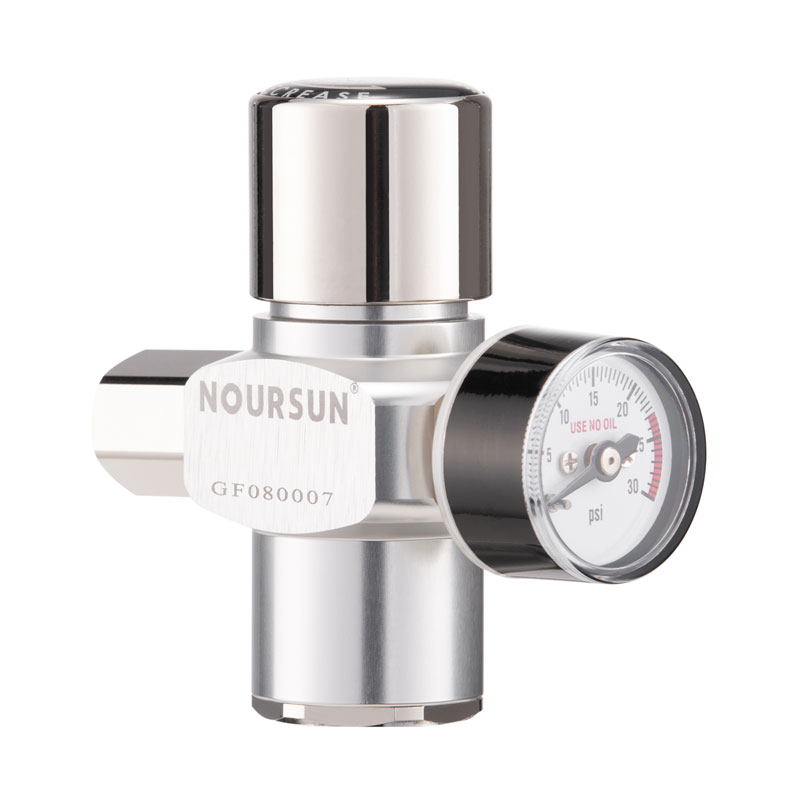 Compact Mini CO2 Regulator for Beverage and Low-Pressure ApplicationsThis mini regulator is tailored for small keg systems and cartridges, offering stable output and a leak-free design. Its compact size suits portable setups, while adjustable pressure and gauge options match diverse low-flow needs.View Product →
Aquarium CO2 Regulator with Needle Valve and Bubble CounterDesigned for planted tanks, this regulator ensures precise CO2 dosing with a built-in needle valve and bubble counter. Its compact form fits 74g cartridges, and the integrated gauge aids monitoring.View Product →
Reliable Beer CO2 Regulator for Draft Dispensing SystemsBuilt for beverage distribution, this regulator delivers steady pressure to prevent over-foaming. Lightweight and portable, it features leak-proof puncture technology and is compatible with various cylinders.View Product →
Compact Mini CO2 Regulator for Beverage and Low-Pressure ApplicationsThis mini regulator is tailored for small keg systems and cartridges, offering stable output and a leak-free design. Its compact size suits portable setups, while adjustable pressure and gauge options match diverse low-flow needs.View Product →
Aquarium CO2 Regulator with Needle Valve and Bubble CounterDesigned for planted tanks, this regulator ensures precise CO2 dosing with a built-in needle valve and bubble counter. Its compact form fits 74g cartridges, and the integrated gauge aids monitoring.View Product →
Reliable Beer CO2 Regulator for Draft Dispensing SystemsBuilt for beverage distribution, this regulator delivers steady pressure to prevent over-foaming. Lightweight and portable, it features leak-proof puncture technology and is compatible with various cylinders.View Product →
Key Specifications That Define Real-World Performance
Five Warning Signs Your Regulator Is Losing Performance
Why Manufacturing Quality and Tolerance Matter
Frequently Asked Questions
Do pressure regulators work with liquids as well as gases?
What happens if the inlet pressure is lower than the set outlet pressure?
How often should a pressure regulator be serviced?
Why does my regulator freeze up?
Can a pressure regulator be adjusted to a different outlet pressure after installation?

Sep 14, 2026
Choosing a gas pressure regulator is not a one-size-fits-all decision. You can narrow the search quickly by answering six questions: what gas are you regulating, what is your inlet pressure, what outlet pressure do you need, how much flow must the regulator deliver, how stable must that delivery stay, and what environment will it live in? Once you have those answers, you can pick a regulator that will not creep, surge, or fail prematurely. Below, we break down each factor with real numbers and product examples so you can make a confident choice. Different gases behave differently across pressure ranges. CO2, for example, can transition from a liquid to a gas inside a cylinder as the temperature changes, which means an unheated regulator can freeze and drop its delivery pressure. Argon is stable but heavier, while compressed air contains moisture that can corrode internal parts if the regulator is not built for it. Your first move is to confirm the gas name, the cylinder pressure at full charge, and whether the cylinder is a high-pressure (2000–3000 psi) or low-pressure (around 300 psi) type. For a soda water system running on CO2, a regulator with a brass body and a stainless steel seat is a safer bet because it resists the moisture that accompanies CO2 expansion. A purpose-built CO2 unit keeps outlet pressure steady even as the cylinder drains, so you avoid inconsistent carbonation levels between bottles. If you work with compressed air, look for an internal filter or a separate moisture trap. For nitrogen or argon, the regulator can be lighter and more compact, but always confirm that the inlet fitting matches your cylinder valve. A mismatch here will cost you a return shipment and downtime. Determine the target outlet pressure. For draft beer, that is usually 12 to 15 psi; for home sparkling water, it can range from 30 to 45 psi; for aquarium CO2, 20 to 30 psi is typical; for paintball tanks, the regulator may need to handle up to 3000 psi inlet and deliver 800 psi to the marker. The lower the operating pressure, the more important the regulator's low-pressure accuracy becomes. Single-stage regulators are simpler but they output a higher pressure when the cylinder is fresh and lower pressure when it is nearly empty. The difference can be 2–3 psi on a 30 psi setpoint, which is enough to affect carbonation or dosing. If your process tolerates no more than 0.5 psi of drift, you need a dual-stage regulator. For a dual-stage unit, the first stage drops the incoming pressure to an intermediate level (often around 250–400 psi), and the second stage delivers the precise setpoint. This arrangement keeps the outlet almost rock-solid from a full cylinder to the last shot of gas. Flow rate is often the most underestimated factor. A regulator can have perfect pressure control at 0.1 cubic feet per minute but starve your equipment at 1.0 CFM. Match the regulator's maximum flow capacity to your highest instantaneous demand. Undersizing leads to pressure drop at the moment of draw, which causes flat beer or weakly carbonated water. When you compare models, ask for the rated CFM at the outlet pressure you plan to use, not just the maximum inlet pressure. Also check the regulator's Cv value if the manufacturer publishes it. A higher Cv indicates a larger internal passage and a better ability to handle surges. Pressure stability is what separates a good regulator from a great one. Look for a regulator with a diaphragm that responds quickly to changes in outlet demand, and a spring that is designed for the specific outlet range. Do not use a 100 psi spring to deliver 12 psi—the adjustment will be coarse and unreliable. A dual-gauge regulator shows both cylinder pressure and delivery pressure, which lets you know how much gas is left and whether the outlet is holding steady. For aquarium applications, a 0–50 psi delivery gauge is ideal; for draft beer, a 0–30 psi gauge is easier to read at a glance. A built-in manometer is particularly useful when you are running a dual-stage regulator, because you can instantly see the intermediate pressure and the output pressure. This diagnostic capability saves time when you are tuning a new installation or troubleshooting a system that is not performing as expected. Materials affect both durable life and gas compatibility. For dry gases like argon, a zinc alloy or aluminum body works well. For CO2 with the risk of condensation, brass or stainless steel wetted parts are more reliable. For food and beverage environments, avoid regulators with oil-based lubricants in the path of the gas. Connection size and thread type are just as important. Common regulators use 1/4 inch NPT or BSP, while the cylinder connection may be CGA-320, CGA-580, or DIN. Always take a photo of your existing cylinder and regulator connection before ordering. Mismatched threads are the number one cause of regulator returns. Where the regulator sits matters. In a home carbonation cabinet, look for a compact regulator that fits under the counter. In a brewery, you might need wall-mounted brackets. In an aquarium room, humidity can corrode gauges, so choose a regulator with a sealed gauge. In a paintball tank bag, the regulator should be shock-resistant and light. A good example is a mini CO2 regulator, which is engineered for small spaces like soda makers and beverage dispensers. It gives you the same pressure control in a footprint that fits neatly inside a kitchen cabinet or a product enclosure. For a full view of how these regulators are applied in a range of settings, you can look at our application pages. If the regulator will be exposed to vibration, tighten the adjustment screw with a locking nut or use a model with a locking feature. If it will operate in a hot environment, verify that the diaphragm material can handle the temperature at full load. Single-stage and dual-stage regulators solve different problems. A single-stage regulator reduces cylinder pressure to delivery pressure in one step. It is compact and inexpensive, but its outlet pressure changes as the cylinder empties. A dual-stage regulator uses two internal stages: the first stage drops high pressure to an intermediate pressure, and the second stage precisely controls the output. If you have multiple regulators on the same high-pressure line, ensure that each regulator has sufficient upstream pressure to feed the first stage. A die-cylinder regulator may operate from 300 psi to a full 2000 psi, but a low-pressure line will not. Always check the minimum inlet pressure specification. Three mistakes cause most regulator problems: The cost of these mistakes can be measured in product waste, setup time, and replacement parts. A single miscalculated CO2 system in a bar can waste a full keg of beer every week when the pressure drifts by 3 psi. In an aquarium, the same drift may cause pH fluctuations that stress fish and plants. Before you buy, request the regulator's performance curve. Look for data on outlet pressure across the inlet range, hysteresis, and temperature behavior. Run a simple leak test with soapy water on the connections. Verify that adjustment screws are stable and do not creep under vibration. A good supplier will explain the limit of the diaphragm and the recommended service intervals. For a B2B relationship, it is also useful to ask how the factory handles custom fittings and whether they offer pilot samples. You can learn more about our engineering background on our About page. If the regulator will be used for a craft beverage application, ask about the internal smoothness and whether the factory performs a 100% leak check before shipment. Also, ask how the regulator's performance changes after 50,000 cycles, because that is often where a low-quality spring will begin to shift. Once you have defined the six variables above, you can map them to the existing product family: This map is only a starting point. In practice, every installation has its own quirks, and an engineered solution often involves adjusting a standard regulator's spring range, gauge scale, or inlet fitting. That is why it is better to talk with someone who understands the real-world behavior of gas pressure rather than simply matching a model number. A single-stage regulator reduces the full cylinder pressure to the delivery pressure in one step. A dual-stage regulator does it in two steps. The dual-stage design maintains a more constant outlet pressure as the cylinder empties, which is critical for processes that cannot tolerate pressure drift. Most home sparkling water makers operate between 30 and 45 psi. Commercial systems may run at 50 psi or higher. Check the manufacturer's recommendation for your specific machine, and always choose a regulator that can be adjusted precisely within that range. When CO2 expands through the regulator, the gas temperature drops rapidly. If the ambient humidity is high, moisture can condense and freeze on the regulator body. Moving to a dual-stage regulator or increasing the distance between the cylinder and the regulator can reduce freezing because the pressure drop is spread over two stages. Generally yes, because both are inert gases and do not react with common regulator materials. However, you must verify the inlet connection and the pressure rating. Nitrogen cylinders often use a different valve than argon, so the regulator inlet fitting must match the cylinder model. The most common tool-side connection is 1/4 inch NPT or 1/4 inch BSP. The cylinder-side connection depends on the gas and the country, with common options being CGA-320, CGA-580, and DIN. Always confirm both ends before placing an order. No matter what you regulate, the same decision framework will help you choose. Start with the gas, define the pressures, calculate the flow, verify stability, check materials, and match the environment. If you have questions about a specific application, a quick conversation with an engineering team will save you weeks of trial and error.Start with the Gas Type and Its Inlet Condition
Soda Water CO2 Regulator for Consistent CarbonationThis regulator is designed for household carbonation systems, letting you precisely adjust output pressure for preferred fizz levels. Its internal relief and sealing-before-opening mechanisms ensure safe, efficient gas use in compact installations.View Product →
Define the Pressure Range and Outlet Setpoint
Dual Stage CO2 Regulator with Manometer for AquariumsA two-stage regulator with dual gauges, relief valve, and bubble counter, compatible with multiple cylinder standards. It delivers stable pressure and precise bubble output, making it ideal for planted tanks and greenhouses.View Product →Match the Flow Rate to Your Equipment's Demand
Evaluate Pressure Stability and Gauge Visibility
Choose the Right Materials and Connection Style
Material
Best For
Cost
Maintenance
Brass
CO2, argon, air
Moderate
Occasional cleaning
Stainless Steel
Most gases including wet CO2
Higher
Minimal maintenance
Zinc Alloy
Argon, dry air
Low
More frequent surface inspection
Think About the Application Environment
Mini CO2 Regulator for Portable Kegs and DispensersCompact and lightweight, this regulator fits small kegs and cartridges for beer or soda dispensing. It provides steady pressure and flow, minimizing foam, and offers adjustable output with optional gauge and cartridge holder.View Product →
Single-Stage vs. Dual-Stage Regulators
Feature
Single-Stage
Dual-Stage
Output Drift
2–3 psi typical
Less than 0.5 psi
Cost
Lower
Higher
Size
Compact
Larger
Best For
Manual beer dispensing, non-critical
Carbonation, aquarium, precision dosing
Common Selection Mistakes and Their True Cost
How to Validate a Regulator Before You Buy
How Noursun's Product Lineup Helps You Narrow the Choice
Frequently Asked Questions About Choosing a Gas Pressure Regulator
What is the difference between a single-stage and a dual-stage regulator?
How do I know what outlet pressure my soda water system needs?
Why does my CO2 regulator freeze up?
Can I use an argon regulator for nitrogen?
What size connections do most regulators use?
ADD: No. 50, Zhongxing East Road, Xikou Town, Fenghua District, Ningbo City, Zhejiang Province, P.R. China
0086-574-88881358
0086-574-88473625
About Us
Industry Applications
News & Events
